Mysuru Palace explosion raises alarms over missing CCTV footage

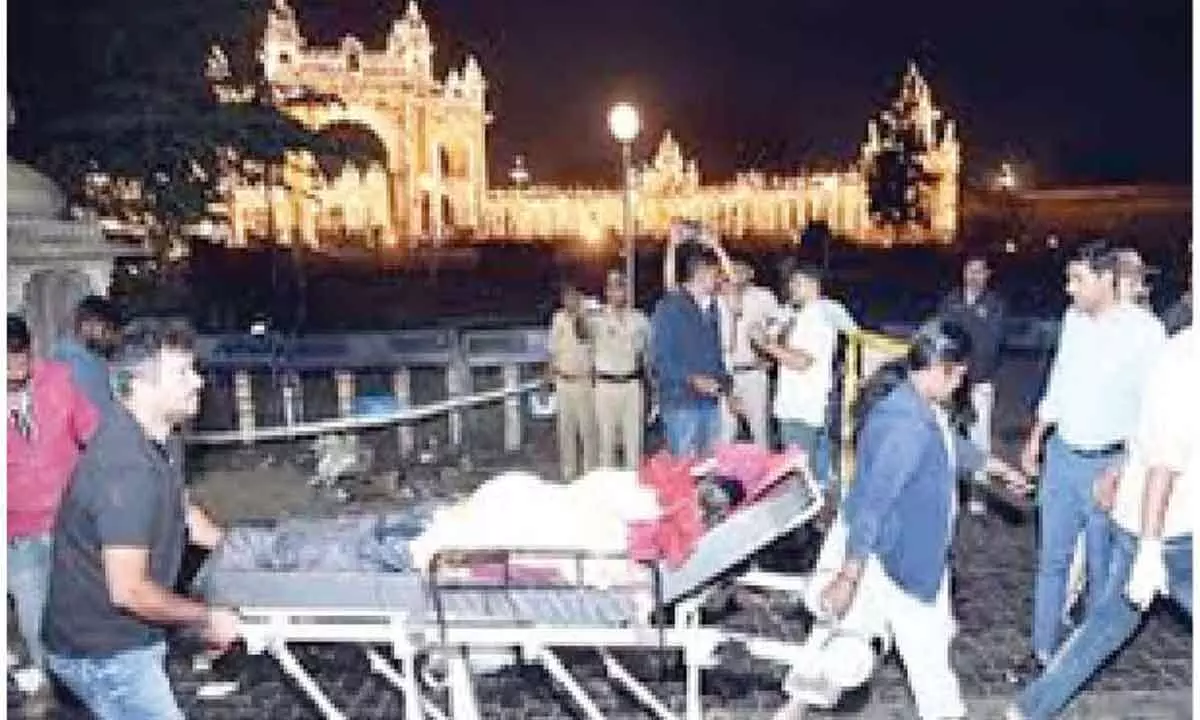
Mysuru: Questions swirl around the helium gas cylinder explosion that occurred directly in front of the Jayamarthanda Gate at Mysuru Palace, prompting intense scrutiny from the National Investigation Agency (NIA). Multiple suspicions have emerged, including why the high-tech CCTV camera installed nearby for security purposes did not capture the event.
Reports suggest the 360-degree device faced another direction at the precise moment of the blast, raising concerns about potential vulnerabilities in surveillance at this key location. A senior heritage conservationist of Mysuru City told Hans India that the Amba Vilas Palace gets more foot falls than the Buckingham palace on a year on year basis, still such callousness of the administration was unpardonable.
Among those injured and hospitalised following the incident, two women succumbed to their wounds despite medical efforts. Manjula, aged 28 and a resident of Chamalapura Street in Nanjangud, passed away on Friday due to cardiac arrest stemming from her severe injuries. Lakshmi from Bengaluru also died while under care in the emergency unit at KR Hospital in the city. This brings the total fatalities to three. Treatment continues for the remaining survivors, Shahin Shabbir from Kolkata and Kotresh from Ranebennur, both still recovering from the trauma.
The vendor at the centre of the tragedy, Salim, 40, originally from Tofiya village in Uttar Pradesh’s Kannauj district, sold helium balloons from a bicycle near the palace. Around 8:30 pm, the cylinder detonated, hurling sharp metal fragments that inflicted grievous harm on bystanders. Salim lost his life immediately at the scene.
Authorities have detained and interrogated Salim’s friends in connection with the case, which is registered at Devaraja police station. Arbaz, Rizwan, and Raju, who shared accommodations with him at Sharif Lodge in Lashkar Mohalla, provided statements.
An NIA team of three representatives visited the site to gather details and also recorded accounts from these associates, according to police sources. Forensic fingerprint experts and various police units conducted thorough inspections, collecting evidence from the area.
Doubts persist about the cylinder’s contents, as helium is typically considered safer and less prone to explosions compared to the banned nitrogen gas previously used for balloons. Speculation arises that the exploded unit might have contained sodium hydroxide or caustic soda, or possibly the prohibited nitrogen. Further probes are needed to confirm these theories.
Experts suggest that helium, being an inert gas, rarely causes cylinders to burst naturally. Such events are uncommon unless excessive pressure overwhelms the container during filling. A possible contamination, perhaps with hydrogen gas, could trigger a blast if mixed improperly. It is believed that deviations in the filling process or unintended hydrogen inclusion might explain the violent rupture.