Why Indian Cities Look the Way They Do

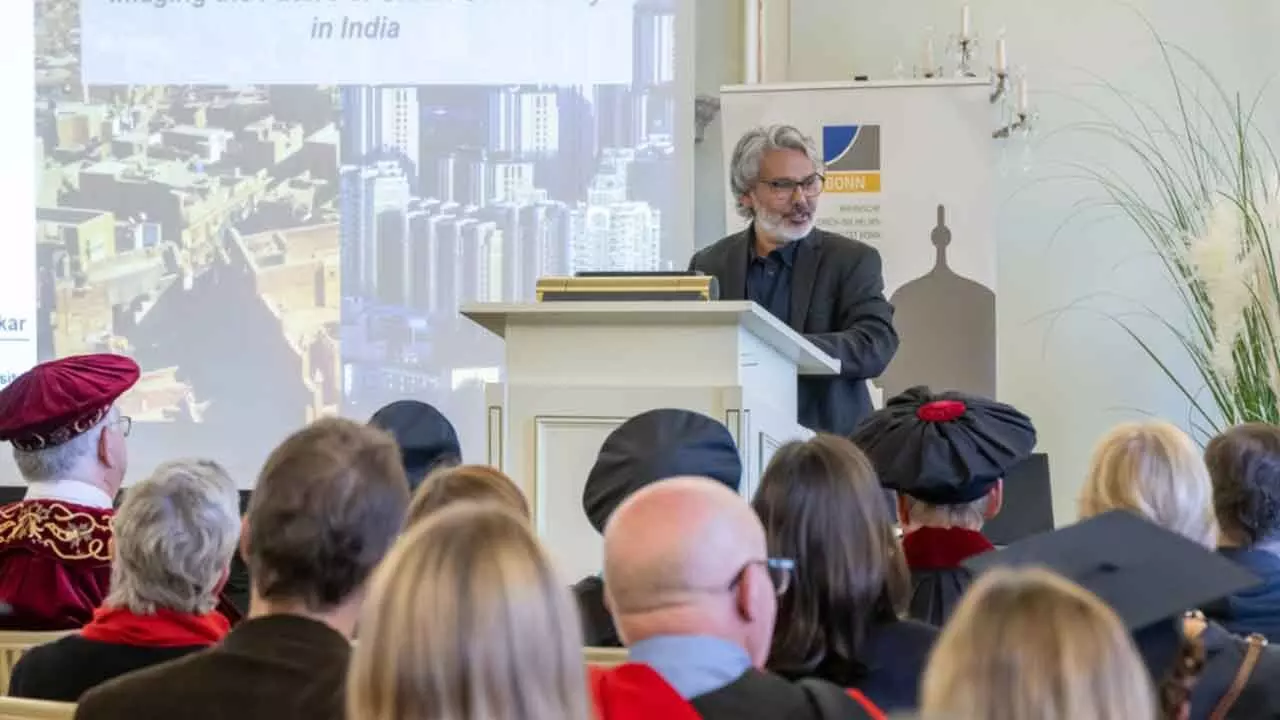
University of Bonn | Photo © Barbara Frommann
Vadodara (Gujarat) [India], December 23: India’s cities are expanding faster than ever—rising skylines, new transport corridors, and ambitious redevelopment plans signalling a nation on the move. Yet, behind this visible transformation lies a deeper urban story, one shaped over centuries. Understanding this layered past is essential to grasp how Indian cities function today and how they might evolve tomorrow.
India’s rapidly transforming urban centres reflect the country’s aspiration for growth and modernity. Beneath this contemporary surface, however, lie historical layers that continue to influence how cities respond, adapt, and endure. Understanding the origins of a city proves useful for researchers and planners in identifying the functional ideas that led to its formation. It is this perspective—where history and modern development coexist—that forms the intellectual foundation of Urban History of India, a scholarly work published by Oxford University Press.
Authored by Prof. Pratyush Shankar, a practicing architect and academic, the book presents Indian cities as outcomes of long-term interactions between space, society, governance, and culture. Currently the Provost and Dean of the School of Environmental Design and Architecture (SEDA) at Navrachana University, Vadodara, Prof. Shankar argues that many present-day urban challenges cannot be fully understood without recognising how cities were historically structured—how public spaces emerged, how institutions guided urban growth, and how housing patterns responded to social change.
A Historical Reading of Urban India
The book traces the evolution of Indian cities from the earliest settlements of the Indus Valley civilisation to the major urban transformations of the nineteenth and early twentieth centuries. Drawing on forty-two detailed case studies from across the Indian subcontinent—including the Himalayan region—it shows how geography, political authority, and civic institutions collectively shaped urban form.
Analytical drawings and spatial mappings support the narrative, enabling readers to visualise how cities evolved over time. The study explains why Indian cities often display distinctive layouts and spatial textures that do not always align with contemporary, standardised planning models. For students of architecture and planning, as well as policymakers and urban practitioners, the work offers historical grounding that is increasingly relevant in an era of rapid urban expansion.
Taking Indian Urban Thought to Global Forums
The academic influence of the book has extended well beyond India. Prof. Shankar has been invited to share his research at leading international universities, engaging with scholars, students, and urban researchers across Europe and the United Kingdom.
During these engagements, he delivered lectures and participated in discussions at institutions such as the University of Cambridge, Sciences Po, Paris, RWTH Aachen University, and the University of Bonn. A key highlight was his keynote address at the State Prize Ceremony at the University of Bonn, titled “The Promise of the City – Future of Urban Communities in India.” The address connected historical insights with contemporary questions of governance, community life, and sustainable urban growth, drawing strong engagement from academic audiences.
Through these global interactions, Prof. Shankar demonstrated how historical understanding of cities can inform future-oriented thinking, making his work relevant not only to historians but also to those shaping urban policy and design.
Scholarly Recognition and Wider Relevance
The importance of historical layers in understanding Indian cities has also found resonance in wider academic discourse. In an analytical article by noted political scientist Christophe Jaffrelot, published on The Wire, the historical foundations of Indian urban spaces are examined to explain their present-day character.
By situating modern urban challenges within a historical continuum, Urban History of India stands out as a timely and relevant contribution. It encourages a more informed reading of Indian cities—one that acknowledges growth and modernisation while recognising the enduring influence of history embedded within their streets, institutions, and public spaces. For students, planners, and policymakers alike, the book offers a reminder that the future of India’s cities is best shaped with an understanding of where they come from.
Prof. Pratyush Shankar is Provost and Dean, School of Environmental Design and Architecture (SEDA), Navrachana University, Vadodara. His book Urban History of India is published by Oxford University Press.
For more details - History of Urban Form Of India