Chilling terror plot for Babri revenge!

32 cars, multiple cities on ‘doctor-module’ target: Intel
New Delhi: Intelligence agencies on Thursday revealed that terrorists were planning to use 32 cars to carry out coordinated attacks across different cities, sources close to the investigating agencies said.
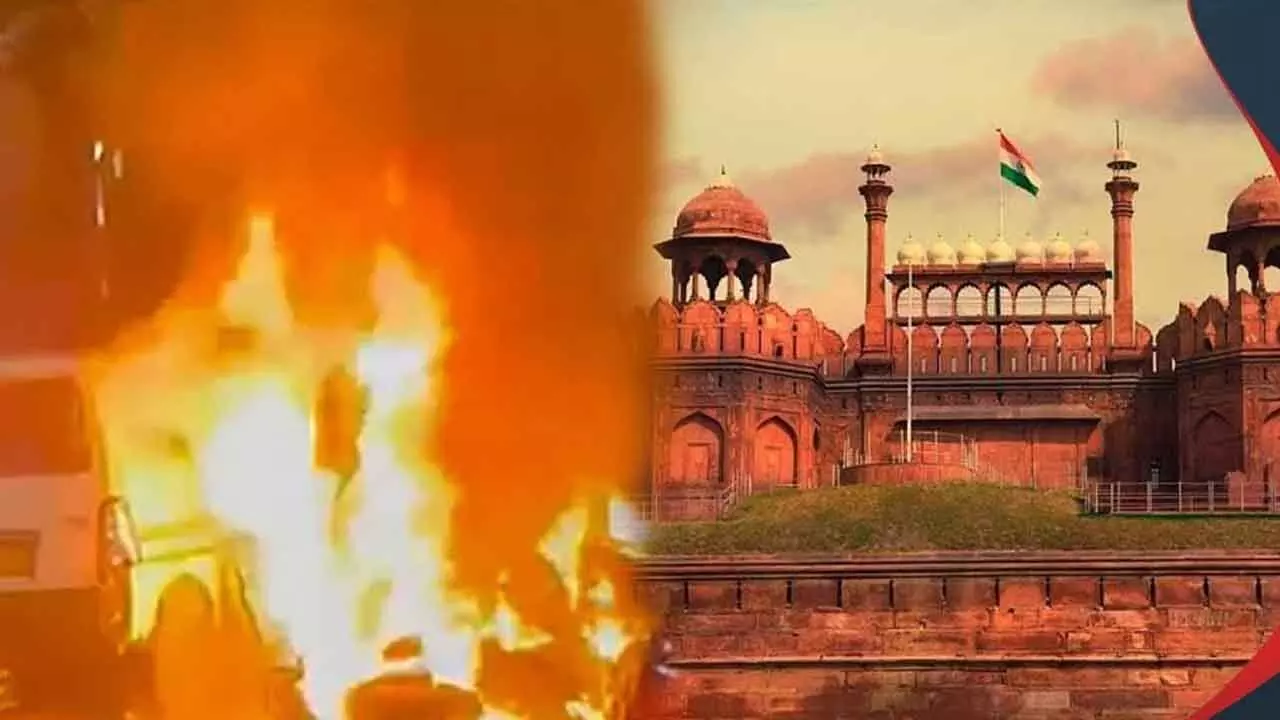
The cars, including Hyundai i20 that exploded on Monday, were meant to be part of a serial 'revenge' attack targeting multiple locations, including six in Delhi on December 6, when the 16th century Babri Masjid in Ayodhya was torn down by a mob.
During an investigation into the Delhi car blast, the security agencies found out that the accused involved in the explosion had already started modifying two cars, the Hyundai i20, used in the blast, and the Ford EcoSport, recovered on Wednesday by the agencies.
“After the i20 and EcoSport, it came to light that preparations were underway to ready 32 more old vehicles which could be fitted with explosives,” an intelligence source said.
Earlier reports also surfaced that eight people from the Faridabad terror module were selected to carry out these blasts. Each pair was allegedly assigned to a specific target city.
On Monday, Dr Muhammad Umar Nabi carried out the blast at 6:52 pm outside the Red Fort Metro Station gate number 1. He detonated his explosive-laden Hyundai i20 car. The blast is linked to the Faridabad terror module. Meanwhile, reports claimed that the perpetrators of the terror module were planning to carry out explosions in different cities on December 6 to avenge the Babri Masjid demolition.
The explosion took place hours after Al-Falah Medical College doctors, Muzammil Shakeel and Adeel Ahmad Rather, were arrested in connection with the seizure of 2,900 kg of explosives. Umar was reportedly a close aide of Muzammil.
Meanwhile, Dr Shaheen Saeed was also arrested in connection with the blast and the seizure of a large quantity of explosives.
The accused had jointly raised approximately Rs 20 lakh in cash, which was handed over to Nabi for operational expenses, sources said citing the investigating agencies. The funds were reportedly used to procure over 20 quintals of NPK fertiliser and could be used to extract explosive material worth around Rs 3 lakh from Gurugram, Nuh, and adjoining areas. This raw material would have been used for the preparation of IEDs.
Security agencies said the plot originated in Turkey in 2022, with Umar operating under the guidance of a Turkey-based handler, known by the codename Ukasa. The terror cell was run by the Pakistan-based Jaish-e-Mohammed terror group.