Apple Shifts Focus to Mac Studio as Mac Pro Faces Uncertain Future

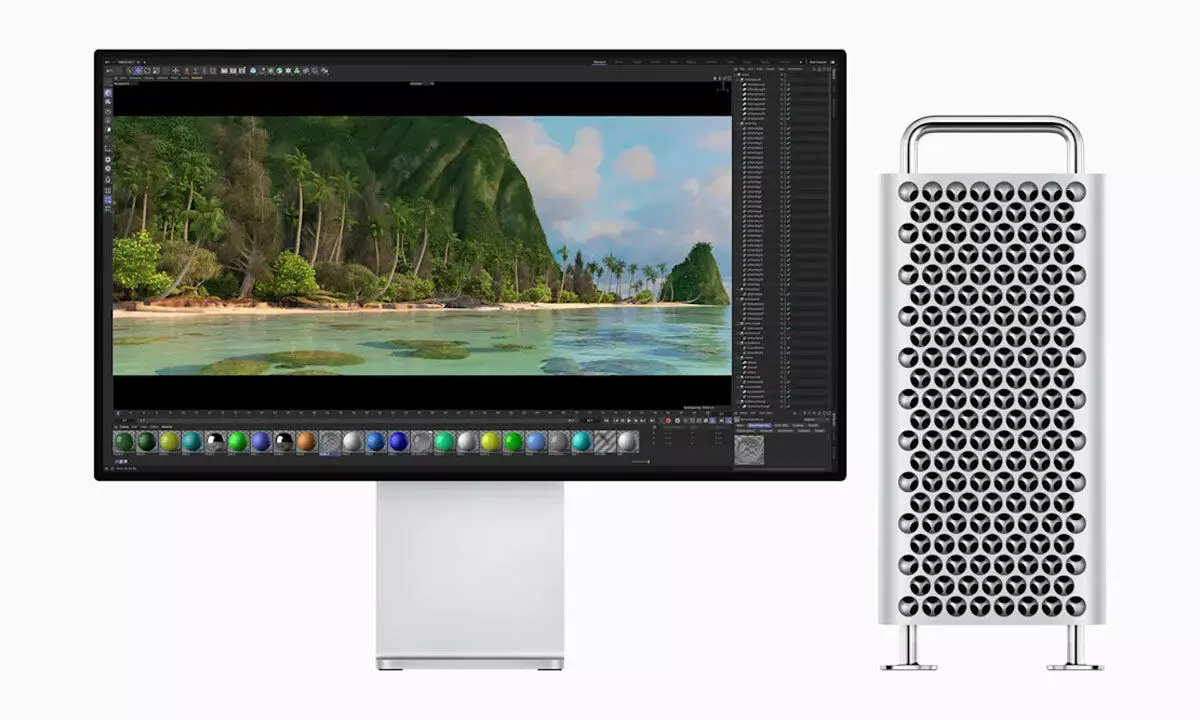
Apple is gradually repositioning the Mac Studio as its primary pro desktop, leaving the once-iconic Mac Pro with an uncertain future.
Apple appears to be redefining the future of its professional desktop lineup, and the change is becoming more evident with each passing update. The Mac Pro—long considered the gold standard for creative professionals—seems to be losing its place at the center of Apple’s pro strategy. Instead, the compact and increasingly powerful Mac Studio is emerging as the company’s new flagship desktop for demanding workflows.
For more than a decade, the Mac Pro tower earned a dedicated following among filmmakers, VFX artists, animators, and designers, primarily because of its unmatched upgradeability and sheer performance headroom. The classic aluminum towers were known to last for years and evolve with growing workloads. That narrative shifted sharply in 2013 when Apple unveiled a bold, cylindrical Mac Pro. Although visually striking, the design became infamous for its thermal constraints. Apple later admitted that the unique form factor limited its ability to scale performance, ultimately making the machine one of the company’s most controversial releases.
In 2019, Apple attempted to course-correct by reintroducing a modular, metal-tower Mac Pro, ensuring professionals that regular updates would follow. But its refresh cycle didn’t match expectations. The next significant update arrived only in 2023, when the Mac Pro moved to Apple Silicon with the M2 Ultra—a transition that retained the familiar tower design but did little to push performance boundaries compared to the rapidly evolving Mac Studio.
During the same period, the Mac Studio quietly gained traction. Its compact form factor, efficient engineering, and compatibility with Apple’s silicon strategy allowed it to receive updates more frequently. While the Mac Pro still runs on the M2 Ultra, the Mac Studio has already advanced to the M3 Ultra and, according to sources familiar with Apple’s internal roadmap, will be the first to adopt the upcoming M5 Ultra chip.
What’s even more telling is the absence of an M4 Ultra in Apple’s plans. With no M4 Ultra-based Mac Pro in development, and the M5 Ultra destined exclusively for a new Mac Studio, industry insiders say Apple is treating the Studio—not the Pro tower—as its core professional desktop going forward. If this trajectory continues, 2026 may arrive without any substantial Mac Pro update, signaling a potential shift away from the modular tower philosophy altogether.
People aware of Apple’s internal discussions describe the company as having “moved on” from the Mac Pro as a strategic priority. The Mac Studio, with its fixed-memory architecture and tightly integrated design, aligns better with Apple’s vision for Apple Silicon—where efficiency, consistency, and unified engineering take precedence over user-upgradeable components. But for professionals who relied on PCIe slots, massive internal storage, and modular GPU options, this shift represents a significant departure from Apple’s historical approach to pro computing.
The timing aligns with Apple’s broader strategy of focusing on fast-moving product lines with high global demand. Its 2026 iPhone lineup is set to expand, with the iPhone 18 series, a long-rumoured foldable model, and a potential iPhone Air expected to arrive in a staggered schedule—reflecting Apple’s growing emphasis on annual cadence and diversified launches.