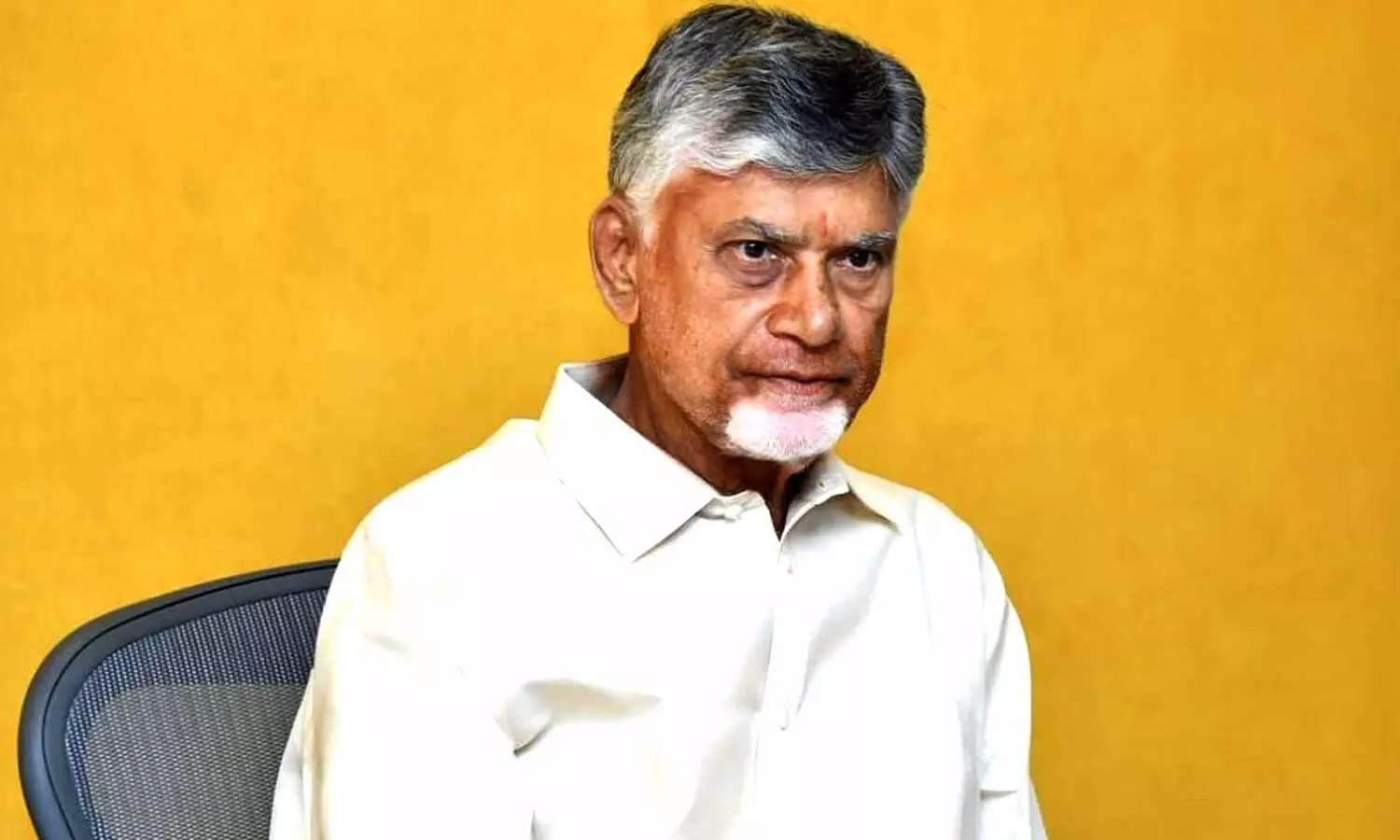
AP CM Orders Speedy Cyclone Relief, Power Restoration and Compensation
In Short
Andhra Pradesh CM Chandrababu Naidu directs officials to speed up Cyclone Arnab relief, restore power, assess crop damage and provide compensation to affected people.
Taking stock of the devastation caused by severe Cyclone Arnab on Wednesday, Andhra Pradesh Chief Minister N Chandrababu Naidu on Thursday directed officials to fast-track relief operations, prioritising the restoration of power supply and the disbursement of compensation to affected people.
Addressing district collectors and other officials via video conference, Naidu stressed the need to expedite relief and restoration measures and sustain the efforts until normalcy was fully restored.
Naidu directed officials to immediately remove fallen trees from roads and clear debris left by the cyclone. He also stressed the need to take precautions to prevent breaches in tanks and canals.
Officials informed the Chief Minister that a preliminary report on the damage caused by the cyclone would be submitted by Thursday evening.
Naidu directed officials to expedite damage assessments and provide compensation to affected people, excluding crop losses, as a government order on compensation had already been issued.
He commended the state machinery for its proactive response during the cyclone and stressed the need to support people affected by natural disasters through effective planning and timely assistance.
The Chief Minister said that while coastal regions were reeling from the devastation caused by Cyclone Arnab, the Rayalaseema region was facing the effects of El Niño. He asked officials to focus on both situations and ensure that people did not suffer.
He noted that conditions were unfavourable for sowing crops in Rayalaseema, while farmers in North Andhra, the coastal districts and the Godavari river region had suffered damage to standing crops and coconut trees.
Naidu asked agriculture officials, scientists and students to assess the extent to which waterlogged crops could be saved and explore measures to prevent further damage.
He also directed officials to assess the feasibility of replanting uprooted coconut trees and other horticultural crops and implement suitable schemes to compensate affected farmers.
Naidu said technology should be used to expedite crop damage assessments and ensure that relief reached affected people without delay.
The Chief Minister is also scheduled to address a vido conference with the farmers who were affected by the Cyclone Arnab around 1.30 pm.
Meanwhile, the Centre has announced that it would extend all necessary help to the states affected by Cyclone Arnab.
Taking stock of the damage caused by the cyclone, the Union Home Minister Amit Shah spoke to the chief ministers of Andhra Pradesh, Odisha, Puducherry, and Chhattisgarh on Thursday morning.
He appreciated the work of the NDRF and the SDRF which have been working round the clock to provide assistance to the affected people. He said that soon the centre would send special teams to assess the damage caused due to Cyclone Arnab.
A Journey of Three Decades Time passes faster than we realise. What feels like a journey that began only yesterday has today grown into more than three decades of a meaningful and fulfilling life devoted to education, journalism, and the empowerment of young minds. My professional journey began with journalism training in New Delhi in 1979. I went on to work as an independent journalist, drawing on my fluency in both English and Telugu. Over the years, I have edited and worked on Telugu articles in both languages, an experience that strengthened my command of language and sharpened my understanding of society, people, and contemporary issues. Yet, my principal profession and enduring passion have always been teaching. My decision to become a teacher was not merely a career choice—it was a calling. Teaching offered me the rare privilege of inspiring young minds, guiding them through their formative years, and making a lasting difference in their lives. I found immense satisfaction in simplifying complex concepts, nurturing curiosity, encouraging independent thought, and building confidence among students. Every moment in the classroom—every question, every moment of discovery, and every spark of understanding—reminded me why I had chosen this path: to empower young people through knowledge, values, and essential life skills. My teaching career began at the grassroots level as a Montessori teacher and gradually progressed to the position of Vice Principal. I had the opportunity to work in reputed educational institutions, including Dilsukhnagar Public School in Hyderabad, where I shouldered both teaching and administrative responsibilities. Although I have always considered myself, at heart, a teacher, my administrative experience enabled me to understand and contribute to the education system from a much broader perspective. For my students, I have always tried to be an approachable and dependable presence—someone they could turn to not only for academic support, but also for guidance and emotional encouragement. At the same time, I developed a reputation as a firm disciplinarian who believed that integrity, fairness, responsibility, and discipline were fundamental to education. I was also consistently appreciated for maintaining clear communication with parents and staff and for ensuring that examinations and other academic processes were conducted with transparency, fairness, and efficiency. As my career progressed, however, I began to feel that academic education alone was not enough. This realization led me to work more closely with students following the SSC and CBSE curricula, while consciously bringing life-skills education into my teaching. I came to understand that education becomes truly meaningful when it prepares children not merely to pass examinations, but to face life. Teaching emotional resilience, self-reliance, social awareness, communication, decision-making, and other practical life skills often had a deeper and more lasting impact than academic achievement alone. I saw how these skills could help students navigate challenges with greater confidence, maturity, and responsibility. My academic background provided a strong foundation for this approach. My degree in Psychology from the University of Madras helped me develop a deeper understanding of young people's minds, their emotional needs, and the influence of their family and social environments. My M.A. in Telugu with First Class from Osmania University.