




- ‘Fit Cop’ app to be launched for 90,000 personnel
- AP govt committed to holistic development
- Higher turnout recorded in Kotia region
- BRS launches grassroots drive for graduate MLC polls
- Vizagites excited over India–Sri Lanka ODI
- No code, no laptop: IT professionals build 57 AI agents in 35 minutes
- Nalgonda woman goes missing during morning walk in Boston
- Students told to stay away from drugs
EESL pushes energy saving e-cooking with Diwali offer
In Short
Launched by Union minister for power, housing and urban affairs Manohar Lal, the NECP represents an important step towards transforming India’s household cooking ecosystem through energy-efficient electric cooking solutions.

Share :
EESL pushes energy saving e-cooking with Diwali offer
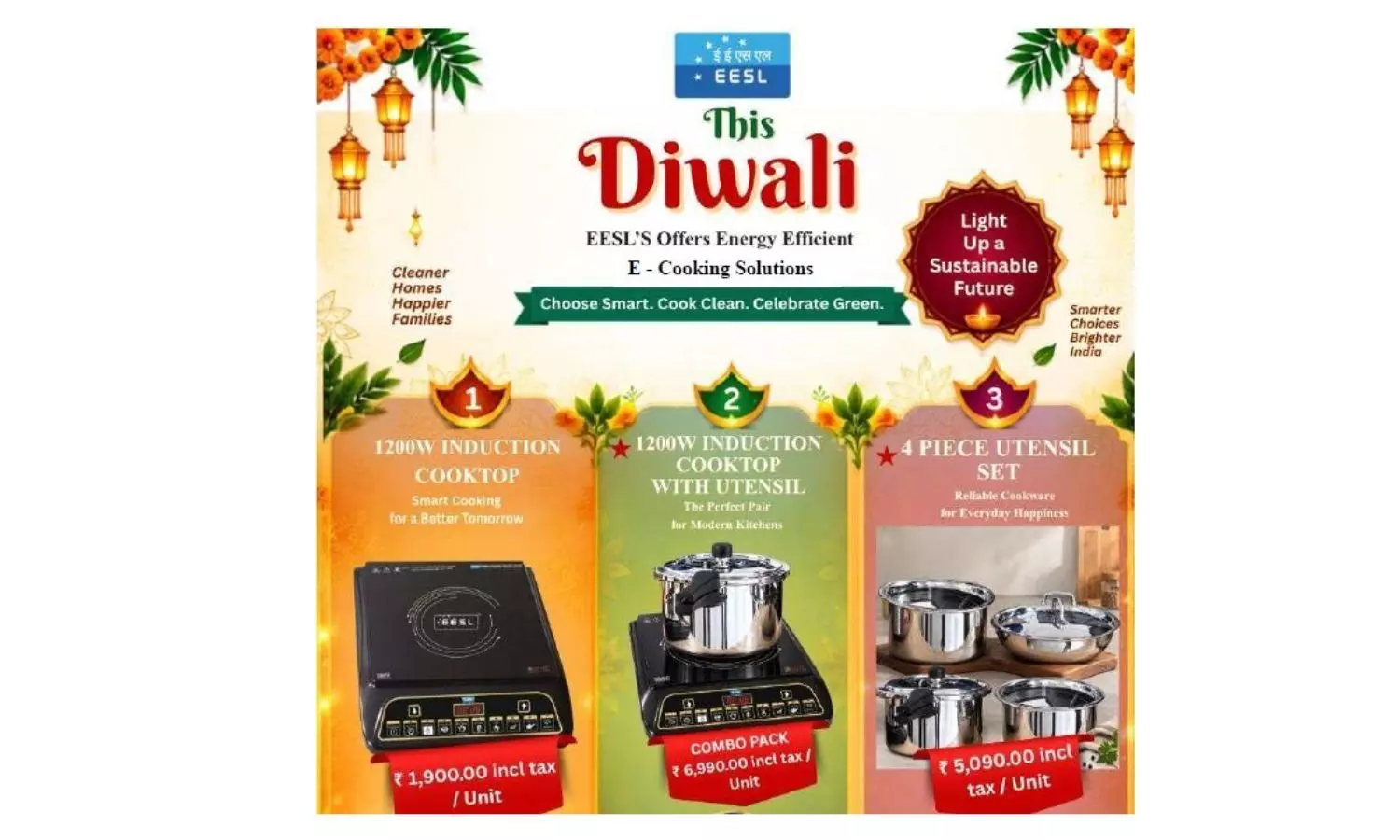
Vijayawada: As part of its resolve to promote affordable e-cooking solutions, Energy Efficiency Services Limited (EESL) under the ministry of power, unveiled a multi-pronged strategy to accelerate the adoption of electric cooking (e-cooking) across the country under the National Efficient Cooking Programme (NECP). EESL’s special Diwali package, offering an induction cooktop and compatible utensil at Rs 6,990, is aimed at making the transition to modern electric cooking more accessible and affordable without compromising convenience or performance.
Launched by Union minister for power, housing and urban affairs Manohar Lal, the NECP represents an important step towards transforming India’s household cooking ecosystem through energy-efficient electric cooking solutions.
Marking the occasion of Diwali, EESL CEO Akhilesh Kumar Dixit extended festive greetings to households and stakeholders and unveiled a special report on accelerating e-cooking solutions and technologies. He announced an exclusive public and household offer featuring a 1,200W induction cooktop with compatible cookware at just Rs6,990 per unit, inclusive of taxes.
Andhra Pradesh has become champion of e-cooking practices by completing the implementation on saturation basis in all Anganwadi centres by women and child welfare department, which will have major impact on economic and environmental sustainability. Dixit said that Diwali and Dhanteras are occasions when families come together to prepare festive delicacies and celebrate traditions passed down through generations. E-cooking, he said, offers households an opportunity to preserve these cherished traditions while embracing safer, cleaner and more energy-efficient cooking practices. Induction cooking eliminates open flames and combustion within the kitchen, substantially reducing the risks associated with conventional flame-based cooking, including fire hazards and accidental gas leakages. It also provides greater temperature control, convenience and a cleaner indoor cooking environment.
With induction cooktops transferring nearly 85 per cent of the energy directly to the cooking vessel, compared with approximately 40 per cent efficiency in conventional LPG cooking, e-cooking offers significant potential for reducing energy wastage. Depending on prevailing electricity tariffs and LPG prices, it can also deliver considerable savings to households, particularly those using non-subsidised LPG.
EESL is positioning e-cooking not merely as an alternative cooking technology but as a practical component of India’s larger clean energy transition. Wider adoption can help reduce dependence on imported fossil fuels, improve energy utilisation and strengthen the country’s long-term energy security.


