




Stand Together, Stay Safe: AP Govt Appeals to People Ahead of Cyclone Arnab
In Short
The exact information on whether or not it will be an extremely severe cyclone would be available in about two hours, IMD officials said.

Share :
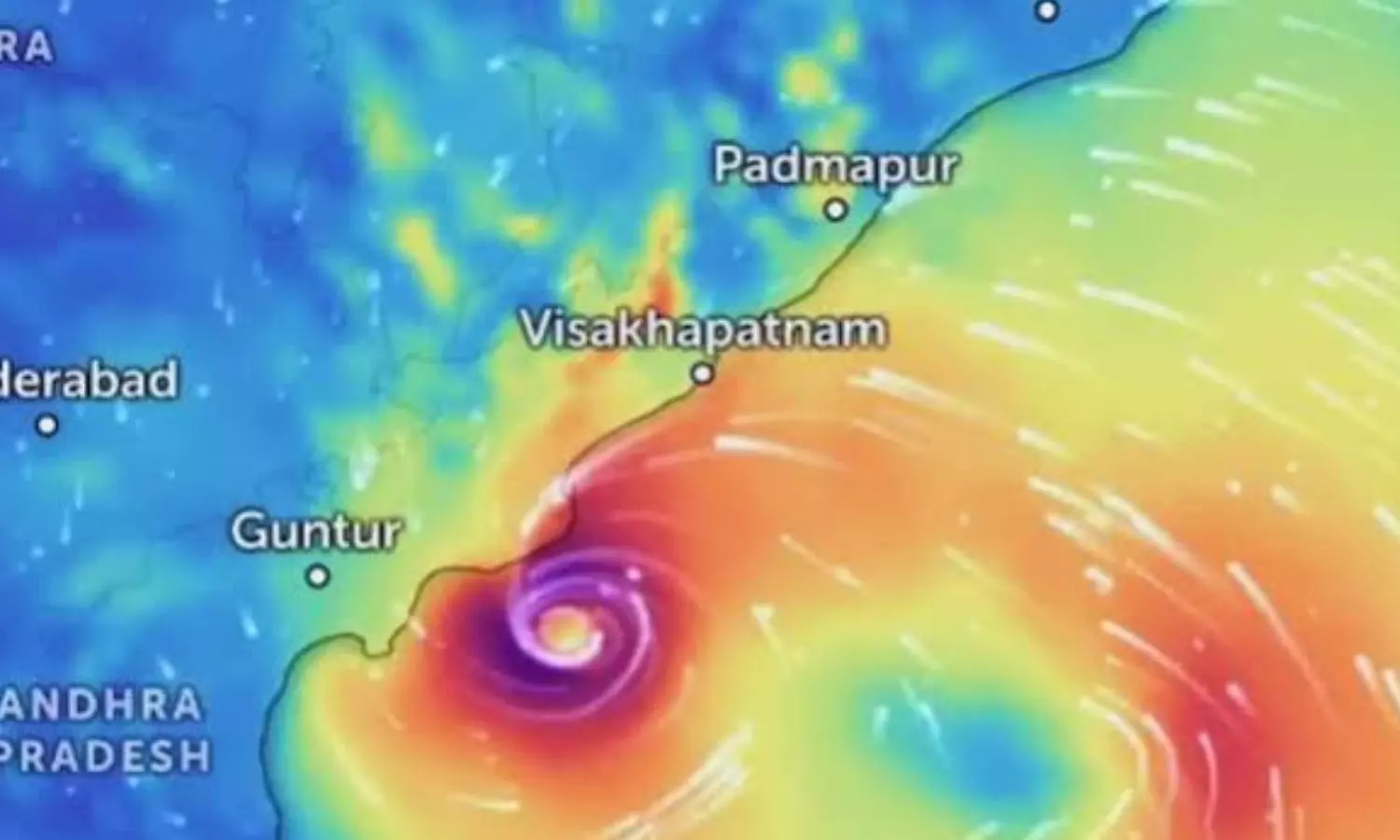
Cyclone Arnab
Cyclone Arnab, as of now, is unlikely to intensify further into an extremely severe cyclone. The very severe cyclonic storm moved west-northwestwards at a speed of 20 kmph during the preceding six hours and was centred over the west-central Bay of Bengal at 8.30 am on Tuesday.
The exact information on whether or not it will be an extremely severe cyclone would be available in about two hours, IMD officials said.
Though the indications are that it may not be an extremely severe cyclone, the administration has been put on high alert and efforts to meet the challenges are being made to meet any eventuality. The Chief Minister N Chandrababu Naidu directed the officials to ensure evacuations and take all precautionary measures to avoid loss of life and property. Already, over 1300 pregnant women have been shifted to hospitals.
In Kakinada district's Pithapuram area, rising sea waves have reached coastal areas, hitting Uppada, Konapapet and Moolapet, causing concern among residents.
According to the Andhra Pradesh State Disaster Management Authority (APSDMA), the cyclone's effects had begun to be felt, with heavy rainfall likely shortly in north coastal Andhra districts. Srikakulam district was likely to witness heavy rainfall accompanied by strong winds, while strong winds had begun in coastal districts such as Visakhapatnam and Kakinada.
CM, who is monitoring the cyclone continuously, directed officials to shift people living in low-lying areas to safer locations, ensure essential supplies at relief camps and minimise cyclone-related damage, as Cyclone Arnab is likely to cross the Andhra Pradesh and Yanam coasts between Bapatla and Visakhapatnam on October 28, with heavy rainfall expected in north coastal districts.
"The cyclone, which was earlier classified as a severe cyclonic storm over the west-central Bay of Bengal, has intensified into a very severe cyclonic storm and is expected to cross the Andhra Pradesh and Yanam coasts near Yanam, between Bapatla and Visakhapatnam, by the forenoon of October 28," the Met department said in an official press release.
The system was located 220 km south-southeast of Visakhapatnam, 240 km east-southeast of Kakinada, 340 km east-southeast of Machilipatnam, 370 km south of Gopalpur in Odisha and 410 km east of Bapatla, the IMD said.
At the time of landfall, the very severe cyclonic storm is expected to pack maximum sustained wind speeds of up to 135 kmph, with gusts reaching 150 kmph, according to the IMD.
On Tuesday, Naidu held a review of the situation, seeking details on the storm's effects and the heavy rainfall expected across various districts.
The chief minister spoke to collectors of various districts likely to face the impact of the cyclone through a teleconference and directed them to shift people living in low-lying areas to safer locations. He also instructed officials to ensure the availability of food, drinking water and other essential supplies at relief camps.
Naidu directed district collectors to take precautionary measures to prevent loss of life and property and restore power supply as quickly as possible in the event of disruptions. He also instructed officials to promptly remove fallen trees and hoardings caused by strong winds to prevent traffic obstructions.
Officials should make full use of National Disaster Response Force (NDRF) and State Disaster Response Force (SDRF) personnel deployed in cyclone-affected areas. He also asked district collectors to continuously monitor ground-level conditions through control rooms established in their respective districts.
Meanwhile, APSDMA Managing Director Prakhar Jain urged people to remain alert and follow safety precautions. Residents have been advised to stay indoors during the cyclone and avoid venturing outside amid strong winds. They should move to the nearest cyclone shelters if instructed by officials and avoid going near the sea, rivers and ponds.
Sea waves are likely to rise to heights of one to two metres, while extremely heavy rainfall is forecast in north Andhra and coastal districts as the cyclone approaches.
Authorities have established 2,131 cyclone shelter locations across 20 districts, while continuous cyclone alerts are being sent to mobile phones of 2.70 crore people across 18 districts, Jain said.
More than 30,000 fishing boats have been secured along the coast, while 1,087 medical teams have been deployed in cyclone-affected areas to provide emergency assistance to residents, he said.
Officials have readied 8,281 emergency beds and 1,274 ambulances, while hospitals have stocked 21,536 doses of anti-snake venom to protect people against possible snakebite incidents.
Two months' worth of essential commodities have been stocked in advance at 14,686 ration shops, while advisories have been issued to 35.96 lakh farmers to protect their crops from damage.
Meanwhile, two IndiGo flight services connecting Vijayawada with Chennai and Bengaluru were cancelled on Tuesday due to the impact of cyclone Arnab.
Railway authorities have placed around 600 km of track under close surveillance ahead of the cyclone's expected landfall, with safety protocols and rapid restoration measures in place across the Vijayawada and Visakhapatnam divisions. As a precautionary measure, they have cancelled several trains, including Godavari Express, Garib Rath, Falaknuma Express, Narsapur Express, and other trains starting from Hyderabad, Secunderabad, and Lingampally stations.
Residents of Uppada, Konapapet, Moolapet, Subbampet and other nearby areas have expressed concern over rising sea waves and the possible impact of Cyclone Arnab.


