Antyodaya Foundation’s Vastra Bank- A beacon of hope for the underserved in the villages

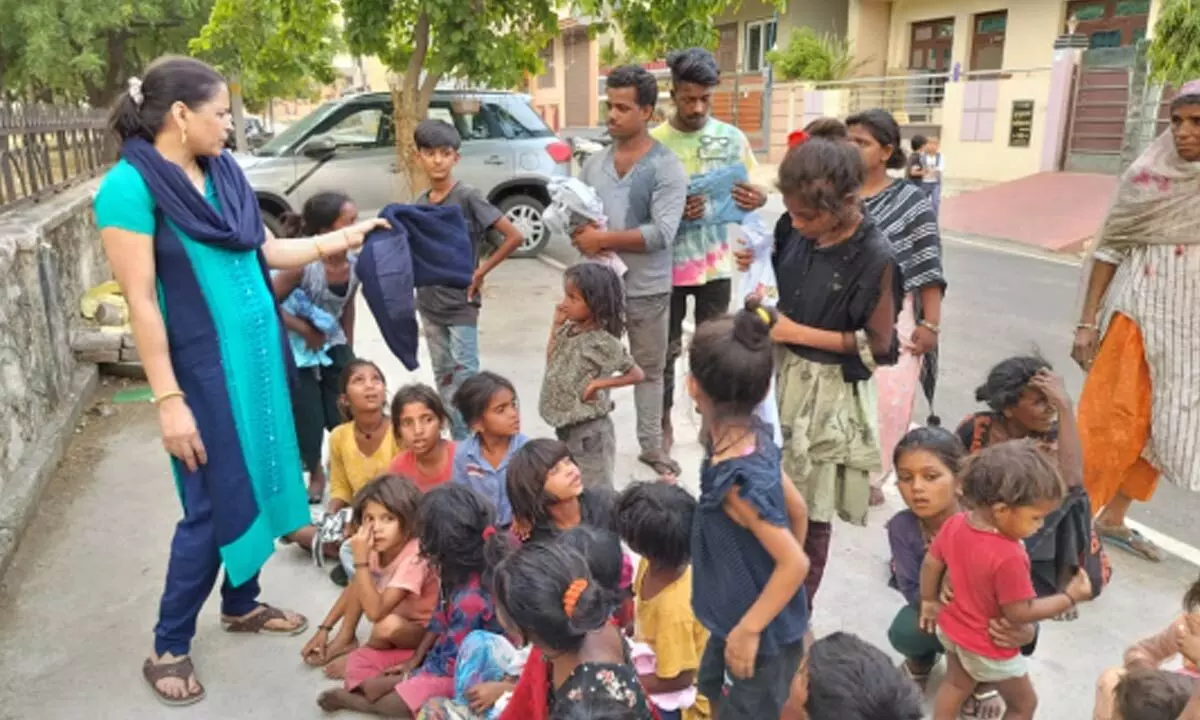
Antyodaya Foundation’s Vastra Bank has been bridging the gap between rural and urban communities since 2012, addressing the essential need for clothing—an integral part of the "Roti, Kapda, Aur Makaan" trinity.
Antyodaya Foundation’s Vastra Bank has been bridging the gap between rural and urban communities since 2012, addressing the essential need for clothing—an integral part of the "Roti, Kapda, Aur Makaan" trinity. The initiative of recycling clothing from affluent of cities to poorest of villages creates a mesmerising connection that even divine imagination would find hard to conceive. India’s wealthy population discards enough clothing that can meet the needs of the underprivileged in villages, making this redistribution a perpetual celebration. Through an ever-expanding network of over 1500 villages across eight states, the Foundation is effectively channelising the distribution, with an ambitious vision to reach 10,000 villages by 2030.
Genesis of Vastra Bank
In 2012, the founder Mahendra Mehta, an IITian who left the US to transform the quality of life in rural India, visited a few villages near Mavli in Udaipur District, predominantly inhabited by the Gameti tribes, to oversee a vaccination camp. What he witnessed was absolutely shocking and heartbreaking. Despite the biting cold, children and the elderly had only a few worn-out clothes, often unwashed due to lack of means. This stark reality deeply moved him, igniting a strong resolve to bridge this gap.
A closer examination revealed that this issue was widespread across numerous small villages in many densely populated states of India. In this adversity, the trustees- Sanjay Bordia, Surendra Lavti and Prahlad Kulkarni, saw a huge PanIndia opportunity for a meaningful impact. They realized that Mumbai’s residents, constrained by limited space, would be willing to donate clothes and household items in large quantities—if only a structured collection system was in place.
Understanding the immense benefits this could bring to the underprivileged, the trustees committed to absorb the collection costs, ensuring a smooth flow of household items. This realization marked the birth of a mission—to act as a "bridge of relief," channelising the surplus of the affluent to those in need.
The Dynamics of Collection Journey
The collection process is designed to be seamless and efficient, ensuring that surplus household items from urban homes reach those in need in rural villages.
Recognizing that many city dwellers are willing to donate but often lack the time or means to drop off items, the initiative offers doorstep collection. A dedicated team collects clothing and household essentials directly from donors' homes, making the process convenient and encouraging greater participation.
Once gathered, the items undergo sorting, quality checks, and packaging to ensure they are in usable condition. The donated items are then systematically distributed to villages where the need is most pressing, ensuring that every contribution serves its intended purpose.
This well-structured journey designed by the trustees, transforms urban surplus into rural relief, fostering a compassionate connection between the affluent and the underprivileged.
Dividends Accruing To The Stakeholders
1 Relief To The Needy
Inspired by the adage, "Clothes Will Soothe a Trembling Heart," the foundation has been consistently collecting pre-owned clothes, curtains, bed sheets, and utensils from households across Mumbai since 2012.
A dedicated network of volunteers in villages plays a crucial role in distributing these essentials, including clothing, bed sheets, curtains, and even small stationery items like used pencils, erasers, and pens. These resources reach remote villages and hamlets with populations ranging from 200 to 2000.
Each year, the foundation collects over 2,50,000 household items, benefitting more than 75,000 individuals. To date, over 15 lakh household items— including suits, sarees, salwar-kurtas, jeans, T-shirts, shirts, pants, Bermudas, sportswear, baby clothes, frocks, and bags—have been distributed across 350+ villages in Rajasthan, UP, MP, Maharashtra and Gujarat, benefitting over 3 lakh individuals, ensuring dignity and comfort for those in need.
2 Donors Perception- Charitable Giving Is the Cornerstone of Our Society
Our scriptures have long emphasized the profound truth that "Giving is truly beneficial for our wellbeing." Acts of generosity not only enrich the donor’s life but also strengthen their bond with the community, fostering connections with people and ideas that leave a lasting positive impact.
Beyond emotional fulfilment, giving has been linked to tangible health benefits, including lower blood pressure, reduced stress, increased happiness, and even a longer life span—all driven by the release of endorphins. Moreover, the act of giving instils a deep sense of purpose and personal fulfilment.
To keep donors and supporters engaged, volunteers actively share photographs, news, and videos, showcasing the real-world impact of their contributions and reinforcing the power of generosity.
3 Promoting Circular Economy for Environment Protection
While the current linear economic model has brought unprecedented wealth, technology, and opportunities to urban populations—far beyond what previous generations could have imagined—it has also contributed to a growing environmental crisis, threatening both the planet and human well-being.
To secure a sustainable future, we must shift toward a circular economic model—one that works in harmony with nature. Recycling clothing and household items aligns perfectly with this approach, reducing waste while placing no financial burden on donors, yet providing essential relief to the underprivileged.
The foundation actively supports the United Nations' vision for sustainability, recognizing that the survival of our societies and our shared planet depends on adopting responsible and regenerative practices for a more sustainable world.
Embracing Technology For Scaling Up and Replication
Foundation is committed to significantly expanding its community reach by leveraging technology to source surplus items and build a strong volunteer network for free distribution to the underprivileged. Plans are underway to establish a Pan-India network of donors and volunteers, ensuring the efficient collection and distribution of clothing from urban, affluent communities to those in need in rural areas.
The foundation aims to serve at least 50,000 villages or more, with a vision of being a beacon of hope and bridging the gap between abundance and scarcity while working to reduce social inequalities. The adopted model has a potential to be replicated across all developing countries working towards achieving the UN's SDG# 10, which focuses on reducing inequality.