






Changed Jobs in 2026? Check Whether Your Personal Term Insurance Still Matches Your New Income
In Short
Changed jobs in 2026? Find out why you should review your personal term insurance coverage after a salary change, promotion or career switch to ensure your life cover matches your new income and financial responsibilities.

Share :
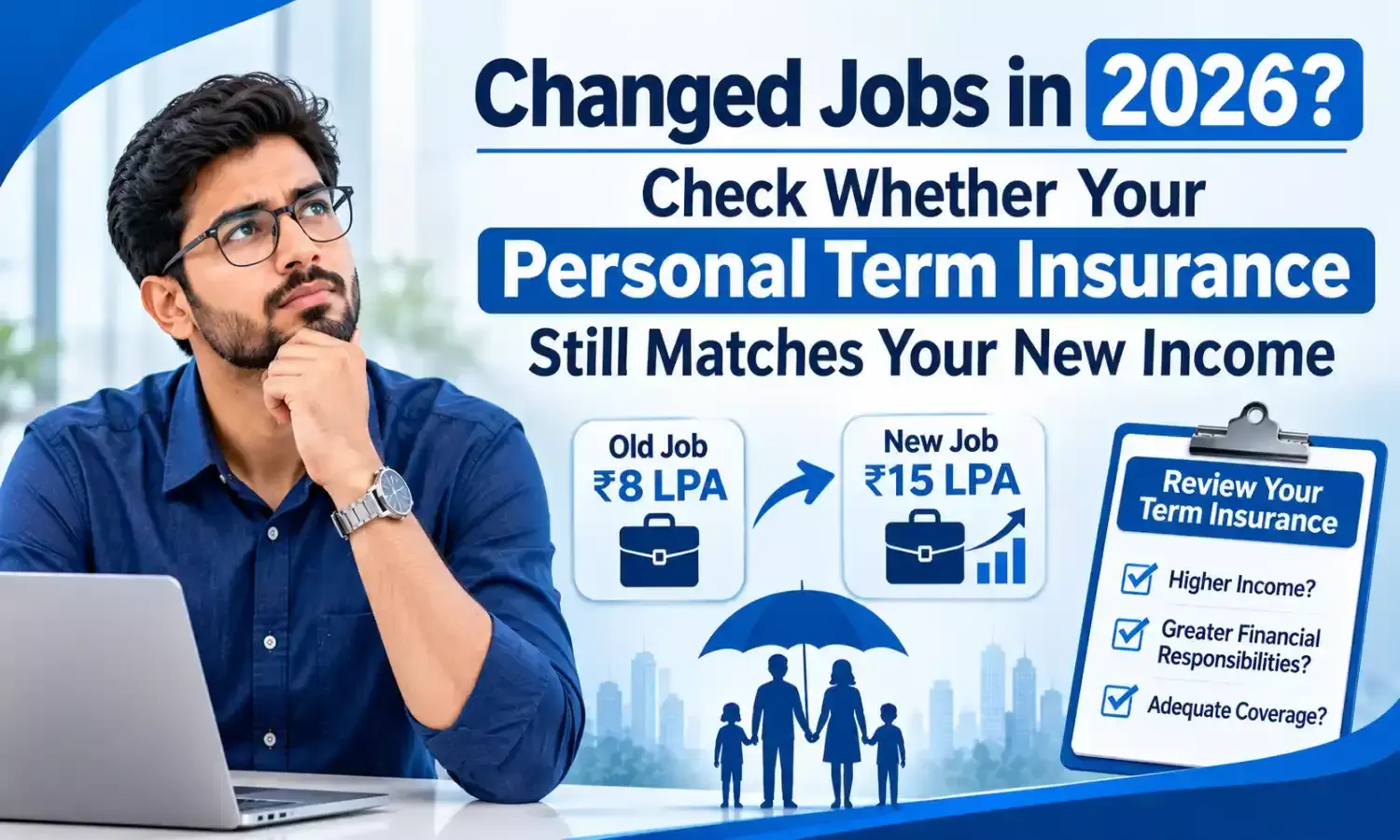
Changed Jobs in 2026? Check Whether Your Personal Term Insurance Still Matches Your New Income
The offer letter is signed, the notice period is over and your new salary brings a welcome increase. Your lifestyle will probably catch up with that pay quickly. Your cover may not. Many people bought their term insurance policy back when they earned less and then never looked at it again. A job change is a good moment to review that, because your income has changed and your old employer's cover may be about to end. This blog basically explains what to check and how to bring your cover in line with your new income.
Why a new salary can leave your cover behind
Consider a person who has a sum assured of ₹1 crore while earning ₹10 lakh a year. His sum assured is 10 times his income. This is a common starting point for many people to estimate their insurance needs. But now his new salary is ₹18 lakhs. That would make his cover Rs 1.8 crore if we apply the same logic. However, the actual amount needed will depend on the following factors:
- Financial responsibilities
- Dependants
- Liabilities
- Existing savings
As your income increases, so may the costs associated with it (higher EMIs, general living costs, and costs of raising children). The 10 times multiplier may change depending upon any loans, number of dependents and savings. So compare the level of cover to your increased income, new costs and current savings.
Not to rely just on employee cover
Many people will have cover through their employer. This is often part of your employee benefits package, and is included in the welcome pack you get. It is however, likely to be part of a master cover provided by the company, with you as just one of the insured people. Depending on what is in the contract; if you leave the company, the cover may stop.
Some group contracts will let you convert to an individual policy, but only if the contract says so, so don't count on it. Ask HR for the end date of the old cover. Get it in writing. If you wait even a few weeks, your family could be left unprotected by that group policy. Hence your own term insurance policy should be the primary cover and that of the employer's should be supplementary protection.
How can you tell if your cover still fits
More loans and bigger expenses
First, let's see the price of the new life. Does the job require a move to a more expensive city, a car loan or a bigger home loan? When assessing how much cover you need, take account of any new loans, after allowing for existing insurance and assets. Then add in the extra monthly expenses that come with making more money, like a better school or higher rent. Prices keep going up, so leave a little room.
Reflect on changes in your life stage
Sometimes the job change comes with bigger news, be it a wedding or baby on board. All they can add are people who rely on you. A cover for one person might be sufficient for one household, but definitely not for a family of three. It needs a new computation, based on the people who are now depending on you.
Look at your add-ons and nominee
If you have add-ons to your policy, like critical illness cover, see if they still suit your income and health needs. And look at your nominee. If there has been a change in your family situation. you should consider changing it. Also, tell that person where the papers are kept.
How to raise your cover
See if you can increase it under your policy
Some plans have a life stage option which allows you to increase the cover after certain milestones, subject to the conditions and underwriting requirements of the insurer. Usually, it is connected to things like a marriage, the birth of a baby or in some plans, a mortgage, and you have to use it within a certain timeframe. A pay rise or a change of job on its own is generally not a trigger for this benefit. Depending on the plan, your age, remaining policy term and the benefit selected, increased cover can also mean a higher premium. Your policy document will tell you if you have this option.
Add a second policy and declare the first
If your policy can’t be increased, you might want to consider buying another policy. You can have two term covers, subject to the underwriter’s requirements. A bigger income can be a good reason to reassess your total cover.
The new insurer will ask you about your income and the policies you already have. The new insurer may ask for income proof on a larger cover. Tell me the whole story. Failure to report existing insurance may cause complications in the assessment of claims and, if permitted by applicable law, may result in the rejection of claims.
Final words
Starting a new job brings with it a whole lot of changes and it’s easy to let looking at your insurance fall down the priority list. But your income may have changed and your coverage needs may have changed as well. Now, given your new salary and financial obligations, take some time to review your existing policy to see if there are any gaps.
If you are reviewing your current cover or looking for more cover then take a look at options such as Young Term Plan, which offers different levels of cover to suit your needs. Also ask your former employer when your group coverage ends. These steps can help ensure your family has the right financial protection as you begin your new job.


