




- Jaishankar, Advani, Sisodia get SIR notices
- System run by six individuals
- Reappointment of Chandra not valid
- Vaishnaw cautions industry about cyberattacks
- Bengal: SER takes steps to supply clean water at stations
- TN: Singapennu task force marks 100 days, acts on 4231 complaints
- Punjab CM launches door-to-door election campaign
- Alliance with NC won’t stop Congress from raising public issues: Tariq Karra
Engineering education: Bridging theory with hands-on learning
In Short
Automation, artificial intelligence, data-driven systems and connected devices are influencing the way engineers design, test and operate systems.

Share :
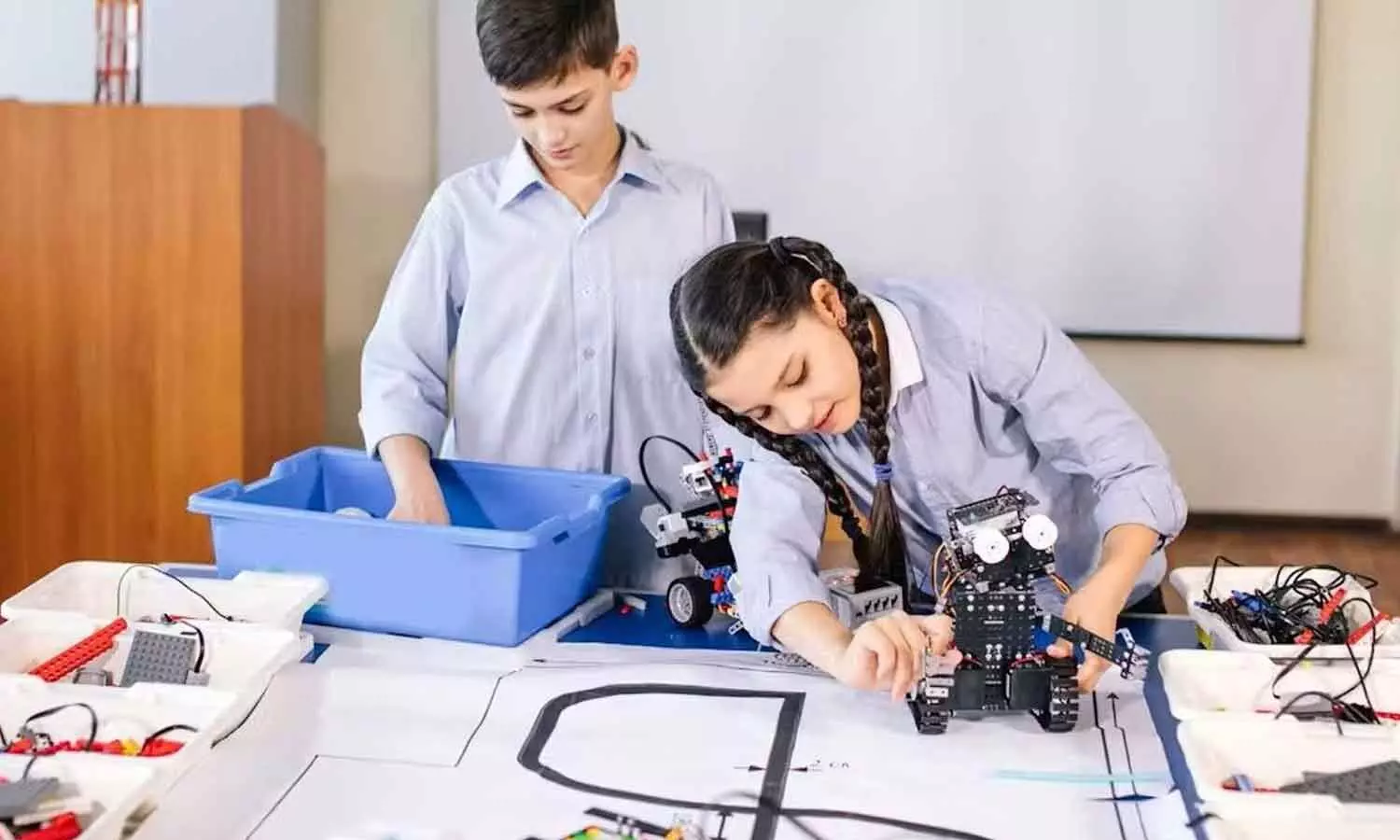
Bridging theory with hands-on learning
Engineering education is evolving as technology becomes increasingly interconnected. Automation, artificial intelligence, data-driven systems and connected devices are influencing the way engineers design, test and operate systems. As a result, engineering students are expected not only to understand fundamental concepts but also to apply them across hardware, software and data. This changing environment has renewed attention on the connection between classroom learning and practical application. Strong theoretical foundations remain essential, but students also benefit from opportunities to experiment, test ideas, interpret results and understand how different components of a system work together. Connecting theory with application
Traditional laboratory education provides an important foundation for engineering students. However, practical learning can become more meaningful when students are able to work with systems that reflect real engineering challenges. In fields such as electronics, embedded systems, the Internet of Things, signal processing and control engineering, the ability to build, measure, test and troubleshoot is closely linked to understanding how concepts work in practice.
Simulation and graphical system-design environments can support this process by allowing students to visualise concepts and observe how systems respond to different inputs. The value of such platforms lies less in the technology itself and more in the learning process they enable: students can develop a system, test it, identify problems, make changes and evaluate the results.
K. Kalaimaamani, Assistant Professor of Electronics and Communication Engineering at Mahendra Engineering College, Tamil Nadu, has observed that students can sometimes find it difficult to connect theoretical concepts with real-time implementation. Workshops and mini-projects that allow students to experiment with signal generation, modulation and data analysis can help make these concepts more tangible. According to fellow faculty member G. Gopalakrishnan, interactive environments can also help students observe signals and outputs in real time. Such approaches can be useful in areas including embedded systems, biomedical signal processing and control systems, where understanding the relationship between theoretical models and physical or digital outputs is important.
Learning through experimentation
For students, the transition from theory to application can often happen through experimentation. Nandha Kumar S, a student, had limited prior programming experience and initially found it challenging to understand hardware integration, communication protocols and data visualisation as connected concepts.
Working with graphical programming and data-acquisition systems provided an alternative way of approaching these topics. Instead of beginning with extensive lines of code, he could work with visual representations of system functions and observe data generated by connected hardware. The ability to connect a system and see measurements in real time helped translate abstract concepts into something more concrete. He subsequently developed a test system capable of reading instrument signals and displaying measurements in real time.
Developing systems thinking
Such experiences point to a broader change in engineering education: the growing importance of systems thinking. Modern engineering problems rarely exist within a single discipline. A product or application may require electronics, software, communication systems, data analysis and mechanical components to work together.
Engineering programmes are ther efore increasingly incorporating multidisciplinary projects, digital simulation environments and specialised laboratories. Facilities related to areas such as digital twins, battery management systems, electric mobility and semiconductor design can provide students with opportunities to explore how individual technologies operate within larger systems. Project-based learning and design competitions can complement these facilities by giving students opportunities to define a problem, develop possible solutions, test prototypes and learn from unsuccessful attempts. These experiences can also encourage teamwork, communication and structured problem-solving.
Preparing students for changing engineering roles
For educators, practical and integrated learning can provide a way to explain multidisciplinary concepts through application. It can also create opportunities to connect classroom discussions with engineering workflows involving measurement, testing, validation and troubleshooting. For students, the benefits extend beyond familiarity with particular software or laboratory equipment. The more important learning comes from understanding how to approach an engineering problem: defining requirements, selecting appropriate methods, collecting and interpreting data, identifying errors and refining a solution.
Looking ahead
The future of engineering education does not require a choice between theory and practical learning. Both have complementary roles. Fundamental principles provide students with the knowledge needed to understand why systems behave in particular ways, while hands-on experiences provide opportunities to apply those principles under practical conditions. As engineering systems become more connected, students will increasingly need to understand relationships between hardware, software and data. Educational institutions can support this development by creating more opportunities for experimentation, interdisciplinary projects and system-level problem-solving.
(The author is Country Head, University Relationships, NI India, Emerson.)


