




Govt unveils 'Air Pollution Analysis' facility to identify real-time sources of air pollution in Delhi-NCR
In Short
Known as the 'Integrated Atmospheric Chemistry and Aerosol Toxicity Analysis Laboratory ' (AATAL), it is also equipped to identify real-time sources of air pollution.

Share :
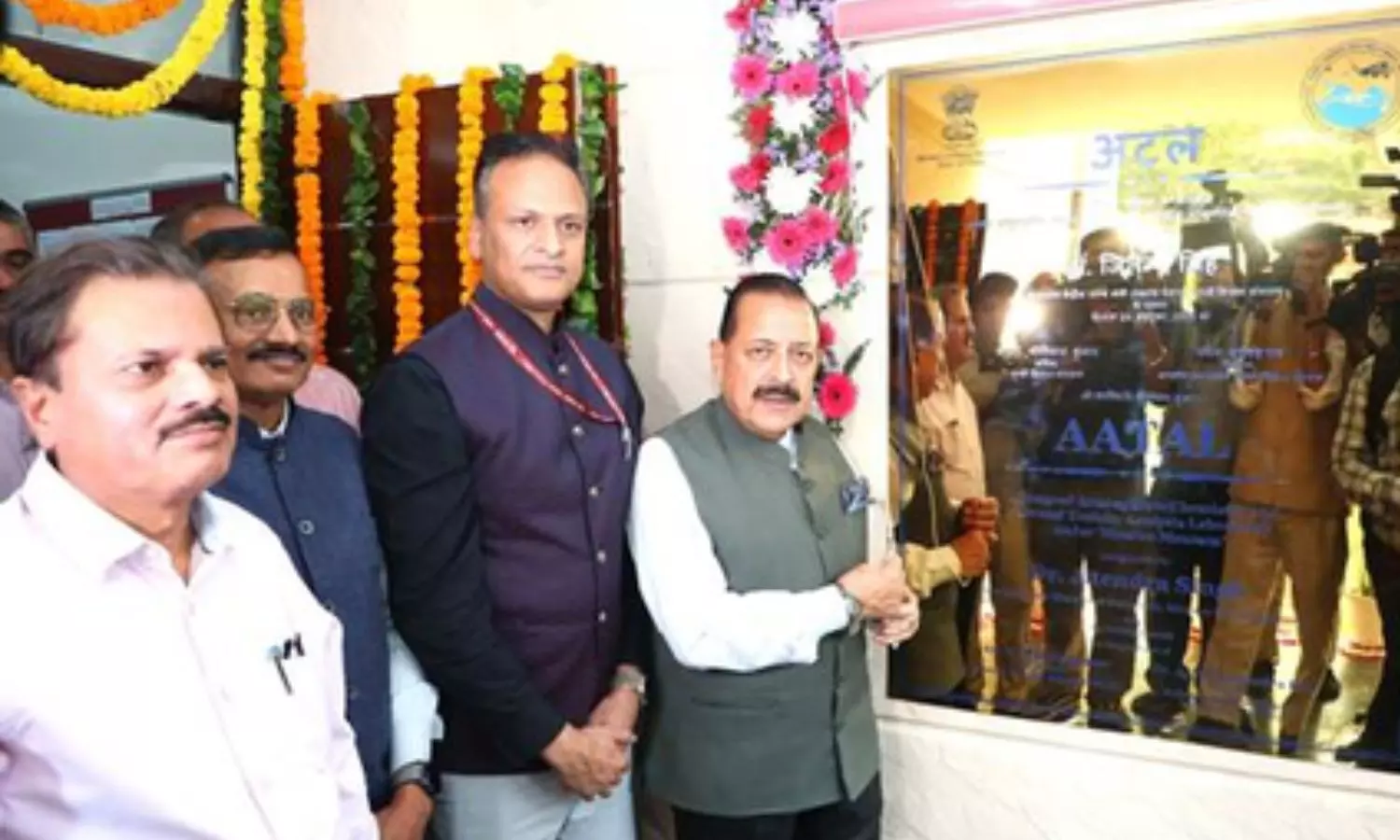
Union Minister of State (Independent Charge) for Science and Technology, Dr Jitendra Singh
New Delhi: Union Minister of State (Independent Charge) for Science and Technology, Dr Jitendra Singh, on Saturday inaugurated a first-of-its-kind 'Air Pollution Analysis' facility for the Delhi-NCR region.
Known as the 'Integrated Atmospheric Chemistry and Aerosol Toxicity Analysis Laboratory ' (AATAL), it is also equipped to identify real-time sources of air pollution.
The inauguration took place at IITM’s Delhi Branch in the presence of Dr. T. Srinivasa Kumar, Secretary, Ministry of Earth Sciences; Dr. A. Suryachandra Rao, Director, IITM and DG IMD, Dr Mahapatra.
AATAL will help scientists distinguish between different sources of air pollution, including vehicular emissions, industrial activity, biomass and crop-residue burning, construction and road dust, and pollutants transported from surrounding regions.
By estimating the relative contribution of these sources, the facility will help authorities understand which activities are driving poor air quality at a particular time and where interventions may be most effective.
The laboratory is equipped with advanced instruments for analysing the chemical composition of atmospheric gases and aerosols, including fine particulate matter (PM2.5), metals, toxic elements, and other components.
The facility has been established under 'Mission Mausam' announced by Prime Minister Narendra Modi to strengthen scientific understanding of atmospheric pollution and provide actionable evidence for air-quality management in Delhi-NCR.
The laboratory brings together advanced atmospheric measurement instruments, detailed chemical analysis, pollution-source identification, and decision-support capabilities within an integrated framework.
Dr Singh said Delhi-NCR had been chosen in view of the serious public concern over air pollution. He said the facility would take air-quality assessment beyond simply reporting pollution levels to identifying the composition of pollutants, their sources, their relative contributions and their potential health implications, while providing real-time information and advance forecasts to support timely action.
India had made substantial progress over the past 10–12 years in air-quality forecasting and analysis.
He said the new facility represented a significant step forward because it would help establish not only how much pollution is present in the atmosphere, but also what it consists of and where it originates.
“Earlier, the discussion would largely revolve around whether the pollution level was 100 or 200. This facility will help us understand the composition of pollution as well as the contribution of different sources. This is important for addressing the concerns of the people of Delhi and ensuring that action is based on scientific evidence,” the minister said.


