






- Telangana Minister Sridhar Babu invites Mumbai industry to " Global Summit" 2026 at Future City in Hyderabad
- Prince William, Princess Kate to meet PM Modi in Delhi today
- Congress Party’s New Poll Slogan: "Bahut hui mehengaai ki maar, ab Jawaab de Modi Sarkaar,"
- Naga Chaitanya’s Vrushakarma Second Single ‘Chalo Padhave’ Will Be Out Tomorrow
- Zepto Co-founder Recalls Near Shutdown Scare After Major Technical Failure
- Most-Wanted LeT Terrorist Lateef Bhat Killed After Standoff Inside Kulgam Mosque
- AI Could Be Behind Global Tech Outages, US Official and CEOs Suggest
- AP on high alert ahead of Cyclone Akvan, AP Home Minister calls for vigilance
How Cable Flexibility Matters In Electrical Installations
In Short
Understand why cable flexibility matters in electrical installations, including easier routing, efficient wiring, improved safety, durability and reliable performance in residential, commercial and industrial applications.

Share :
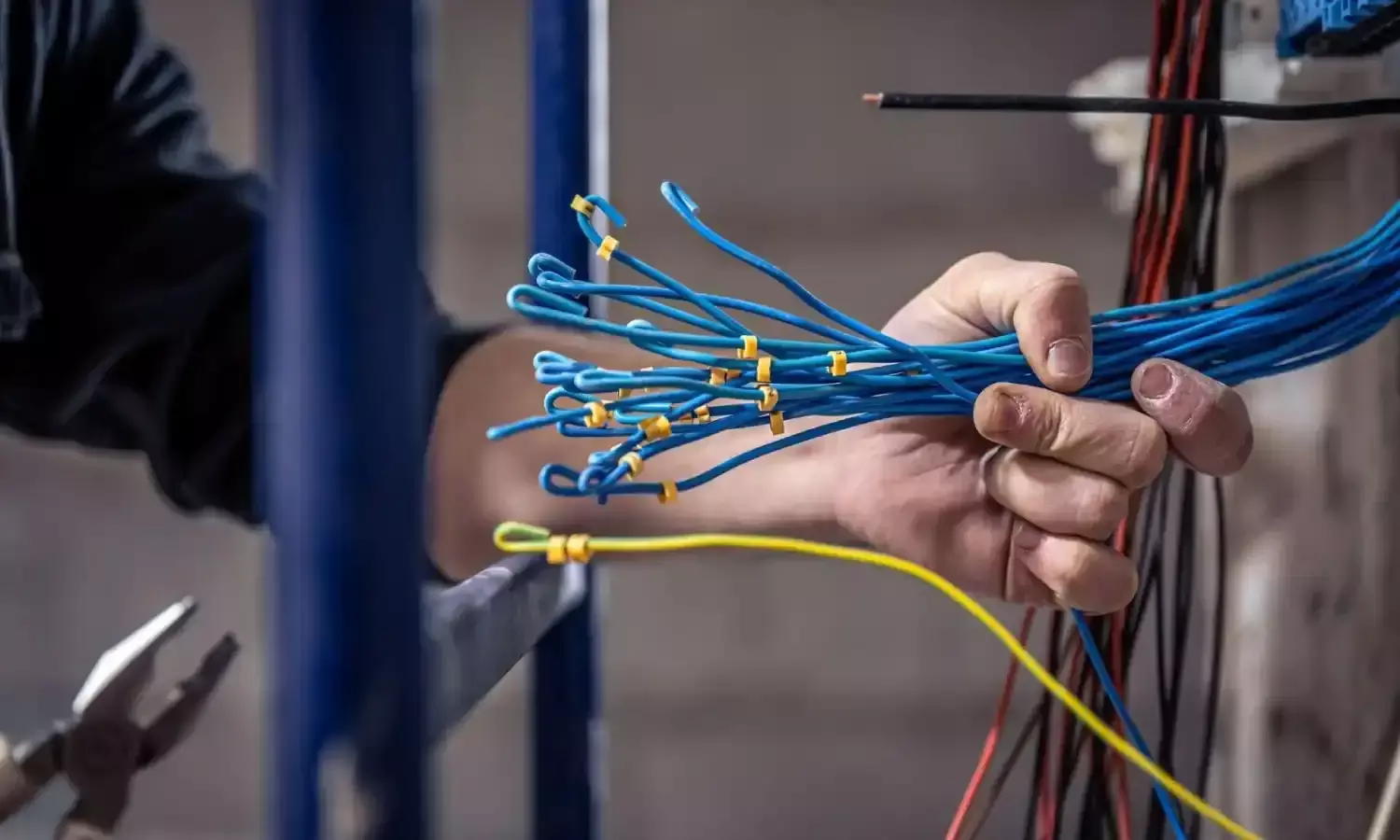
How Cable Flexibility Matters In Electrical Installations
An electrical setup is a maze of wires that have different colours, sizes (in sq mm), purposes and operations. Some wires are fixed in a switchboard, and others need to be flexible so that they can fit in tight spaces and be suitable for movable devices that are always connected to wires. Because of that, how a cable is made and its flexibility affect the ease of installing it in different components.
How the cable is made, its insulation, where it will be connected and how much it will move help in choosing the right one for electrical work. Being aware of the features of different cables can help you plan the installation of devices.
Easy To Install Across Ducts and Narrow Spaces
Flexible cables have thin, multiple-strand copper conductors, which enable them to easily turn and curve around sharp angles. Due to the small amount of force required to move the cable through congested areas, an installer can pull the cable through difficult areas such as small ducts and narrow areas.
Lower Physical Strain
Flexible electrical cables use hundreds of very thin, hair-like wires wrapped around each other to form a flexible core that reduces overall strain compared to rigid cables. Because of multiple strands, flexible cables also reduce the risk of wire breaks.
Better Cable Management For Both Home and Office Use
Cable management is an important part of any system, be it fuse boxes or control panels. To achieve simpler cable management, flexible wires are useful for bending and passing through narrow spaces, which reduces the risk of tangles. A better-organised cable system also helps the operator to detect the location of each cable.
Meets Different Installation Requirements
Electrical system installation differs depending on its purpose. Residential wiring, control panels, industrial systems and machinery may have different wiring needs. For example, to run household items, 0.5 to 4 mm wires can be sufficient. To operate larger machines, 6 mm or larger wires are required. Flexible wires can be attached to machines or joined with other wires easily because of their multi-strand construction.
Simpler to Perform Scheduled Maintenance and Modifications
Flexible wires can be shaped into a suitable curve for concealed wiring as well as machinery. A simple-to-manage wire also helps the electrical team to arrange similar wires in an organised manner so that they can be inspected later without much complexity.
However, any work should be performed as per the applicable safety requirements and under the supervision of professionals.
Longer Life Span
Flexible cables last considerably longer than their counterparts that are not flexible. The multi-copper cores of flexible cables act as stress absorbers to stop the wires from snapping internally when they bend, vibrate or move. With their rugged jackets, which do not crack, these cables can withstand millions of flexes without breaking down. To achieve a longer-lifespan cable, you should also look at the installation method, environment and how it will be used alongside flexibility.
Conclusion
Flexible cables are very important for a safer and more effective installation of electrical systems. Flexible cables allow easy bending inside tubes, narrow areas, and around machinery. The use of stranded conductors in these cables minimises stress while installing them and avoids any chance of damage to the cables. Moreover, these cables allow easy cable management in domestic, office, and industrial environments.
Telangana Minister Sridhar Babu invites Mumbai industry to " Global Summit" 2026 at Future City in Hyderabad
Supreme Court Issues Notice On Contempt Plea Against Lawyer Over Remarks Against CJI Surya Kant
Raptadu case accused discharged from hospital after treatment
2027 Punjab elections: BJP chief Nitin Nabin to visit Jalandhar today
1 cr families will get Rs 5 Lakh insurance: CM Revanth
CM Revanth seeks Chhattisgarh nod for Sammakka Sagar
Government officials more corrupt than politicians: Congress MLA Anirudh
‘No Mention Of State In Memoir’: No place for Telangana in Sonia's heart, says KTR
Health alert: Fake silver waraq units busted in hyderabad
NTG refuses to stay Musi Riverfront project; seeks state govt’s response


