India witnessing rapid growth in aviation as economy flourishes

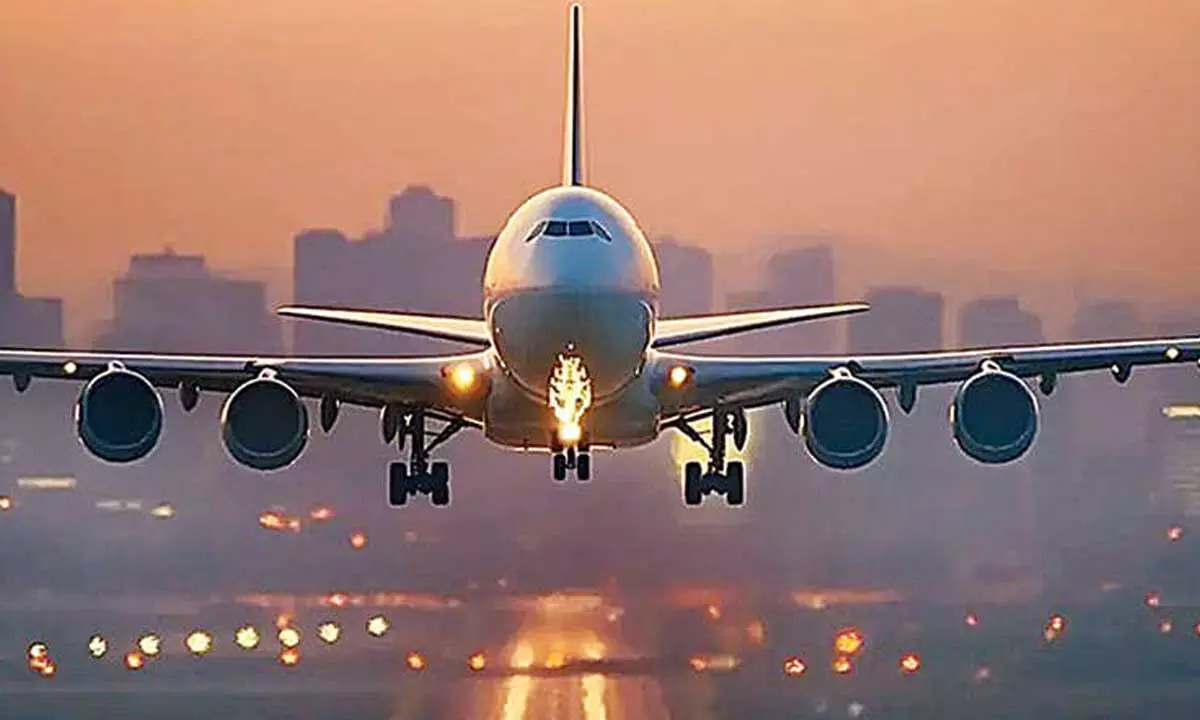
The December 7 every year is observed by International Civil Aviation Organisation (ICAO) as International Civil Aviation Day, which signifies signing of the ‘Chicago Convention’ by 54 nations on December 7, 1944.
This is an apt time to provide information to common air passengers briefly about the establishment, and role of ICAO in their safe air journeys.
How ICAO was established?
On the invitation of the United States government, representatives of 54 nations met at Chicago from November 1 to December 7, 1944, to "make arrangements for the immediate establishment of provisional world air routes and services" and "to set up an interim council to collect, record and study data concerning international aviation and to make recommendations for its improvement".
The conference has adopted an international convention famously called the “Chicago Convention”. The Provisional International Civil Aviation Organisation was established and started functioning from June 6, 1945, and ICAO came in to being on April 4, 1947, after ratification of the Chicago Convention by all the 54 Nations.
Subsequently, ICAO became a specialised agency of United Nations Organisation in October 1947, revolutionising development of civil aviation globally.
To quote the ‘purpose’ of the Chicago Convention… "Whereas the future development of international civil aviation can greatly help to create and preserve friendship and understanding among the nations and peoples of the world, yet its abuse can become a threat to the general security; and whereas it is desirable to avoid friction and to promote that co-operation between nations and peoples upon which the peace of the world depends; therefore, the undersigned governments having agreed on certain principles and arrangements in order that international civil aviation may be developed in a safe and orderly manner and that international air transport services may be established on the basis of equality of opportunity and operated soundly and economically; have accordingly concluded this convention to that end."
This Convention was signed by 54 nations including India, and now the number of membership of ICAO has grown to 193 nations. The international cooperative spirit and commitment among the member nations of ICAO to come together, has, all along these eight decades resulted in the emergence of commercial aircraft as the safest mode of transport globally, leaving aside the divergences that the member countries might have, otherwise.
The role of ICAO
ICAO works with the member states and industry groups to reach consensus on international civil aviation Standards and Recommended Practices (SARPs) and policies in support of a safe, efficient, secure, economically sustainable and environmentally responsible civil aviation sector. These SARPs and policies are used by ICAO Member States to ensure that their country’s civil aviation operations and regulations conform to global norms, to enable safe and reliable operation of more than 100,000 daily flights globally, with expectation of global air passenger traffic reach 9.8 billion by 2025. The member nations of ICAO have also agreed to achieve the target of “Zero” fatalities in the civil aviation by the year 2030.
India’s contribution to global civil aviation:
India’s has immensely contributed in development of the global civil aviation sector with its continued presence on the 36-member Governing Council of ICAO since its inception, playing active part in the functioning of ICAO in setting international civil aviation standards, and policies.
During these eight decades, India has grown as the third-largest domestic aviation market in the world, driven by a rapidly growing passenger traffic, expanding airline fleet, and a significant increase in the number of airports, reflecting country's growing economy and the increasing preference for air travel among its large population.
Highlights of India’s achievements in the sector:
•The annual passenger traffic is over 240 million and is expected to reach 500 million by 2030.
•The number of airports has grown from 74 in 2014 to 162 as of September 2025, supporting the expansion of regional connectivity.
•The domestic airline capacity doubled in the last decade, from 7.9 million seats in April 2014 to 15.5 million in April 2024.
•The aircraft fleet more than doubled from 400 in 2014 to more than 800 in 2025, with airlines placing orders for about 1700 new aircraft.
(The author is a retired Joint General Manager, Airports Authority of India)