




- Telangana CM Revanth Reddy says cabinet will review caste census data errors
- After cop stops ministers during Mysuru Dasara, Karnataka BJP accuses govt of hypocrisy
- Gwalior accident: Patwari questions safety arrangements, seeks action against those responsible
- Meghalaya govt spends Rs 4,000 crore annually on education: Conrad Sangma
- Jantar Mantar protest: Saurav Das, Ranka, Shinde seek more time to appear before police
- India, Poland agreed to deepen ties in defence, space and nuclear energy: PM Modi
- CM Shivakumar's Delhi visit amid sting operation row triggers speculation in Karnataka
- Raihan Vadra’s Protest Photos Pulled Down: Priyanka called is censorship
India’s aerospace industry likely to grow twice as fast as global market: Report
In Short
The report from Forbes cited Arkam Ventures as saying that the sector is currently valued at $13 billion and is forecast to over triple to $40 billion by 2030, with some estimates projecting a $44 billion space economy by 2033.

Share :
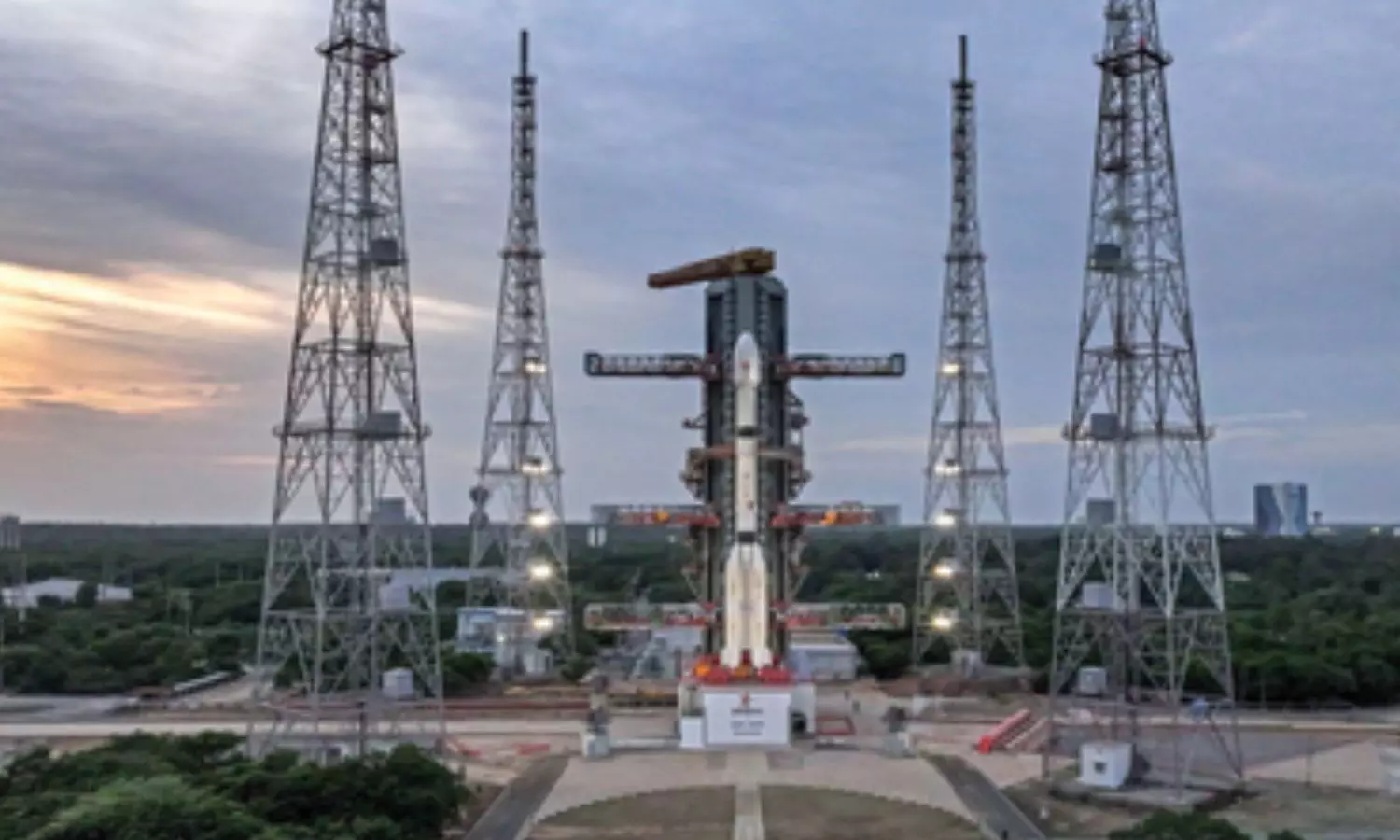
India’s aerospace industry is expected to grow twice at the pace of the global market
New Delhi: India’s aerospace industry is expected to grow twice at the pace of the global market, driven by state‑backed reforms, rising private capital and closer collaboration with the Indian Space Research Organisation (ISRO), a new report has said.
The report from Forbes cited Arkam Ventures as saying that the sector is currently valued at $13 billion and is forecast to over triple to $40 billion by 2030, with some estimates projecting a $44 billion space economy by 2033.
"To win the celestial race, India’s space startups need to strongly leverage the nation's unique attributes in software development to cater to the downstream market of data mining from satellites," the report said.
Private firms are expected to participate in up to 45 launches a year for international customers by 2030 and to manufacture one‑third of the world’s earth‑observation satellites, it added.
India is also likely to emerge as a major exporter of avionics, Global Navigation Satellite System (GNSS), Satellite Communication (SATCOM) and ground Radio Frequency (RF) systems.
However, the realisation of ambitions depends on startups’ ability to attain recurring global launches, contracts, and reliable satellite services.
The total cumulative private investment in this sector has reached $600 million over the years. Space tech startups have raised nearly $256 million in 2026, and the sector is expected to raise up to $3.5 billion of venture capital and private equity investments over the next five years.
“Capital is making a beeline for India’s space startups because the country can build sophisticated aerospace systems at a fraction of the cost of the US and Europe," the report cited Sanjay Kumar, cofounder of EON Space Labs, as saying, who added that India’s engineering talent is deep and manufacturing is cost-efficient compared to other nations.
Small technology-driven private companies are building rockets for carrying payloads, developing satellites, using technology transfer agreements transferred by ISRO’s commercial arm, NewSpace India Limited (NSIL).


