




- UP CM Yogi holds Janata Darshan in Gorakhpur, orders action over false IGRS reports
- PM Modi announces Rs 2 lakh ex-gratia for kin of 8 labourers killed in Rajasthan electrocution incident
- Every diya of Ayodhya's Deepotsav brings livelihood opportunities for potters, farmers, families: UP CM Yogi
- Three AAP MLAs Join BJP Ahead Of Punjab Polls, Accuse Party Leadership Of Interference
- 7 fisher men caught in the sea reached shore to the shore safely after 3 hours
- BJP says LoP Rahul Gandhi's remark shows he accepts PM Modi will remain in power
- Cyclone Murasu: 21 Flights Cancelled In Chennai And Vijayawada As Severe Storm Nears Andhra Coast
- Repolling at Tirupati booth records 21.62 percent turnout by 11 am
India's onshore wind potential much higher than estimated, hits 2,933 GW at 200 m: Report
In Short
The statement from The Energy and Resources Institute (TERI) said offshore potential is estimated at approximately 220 GW and 277 GW, respectively, at a minimum wind speed of 7.0 m/s.

Share :
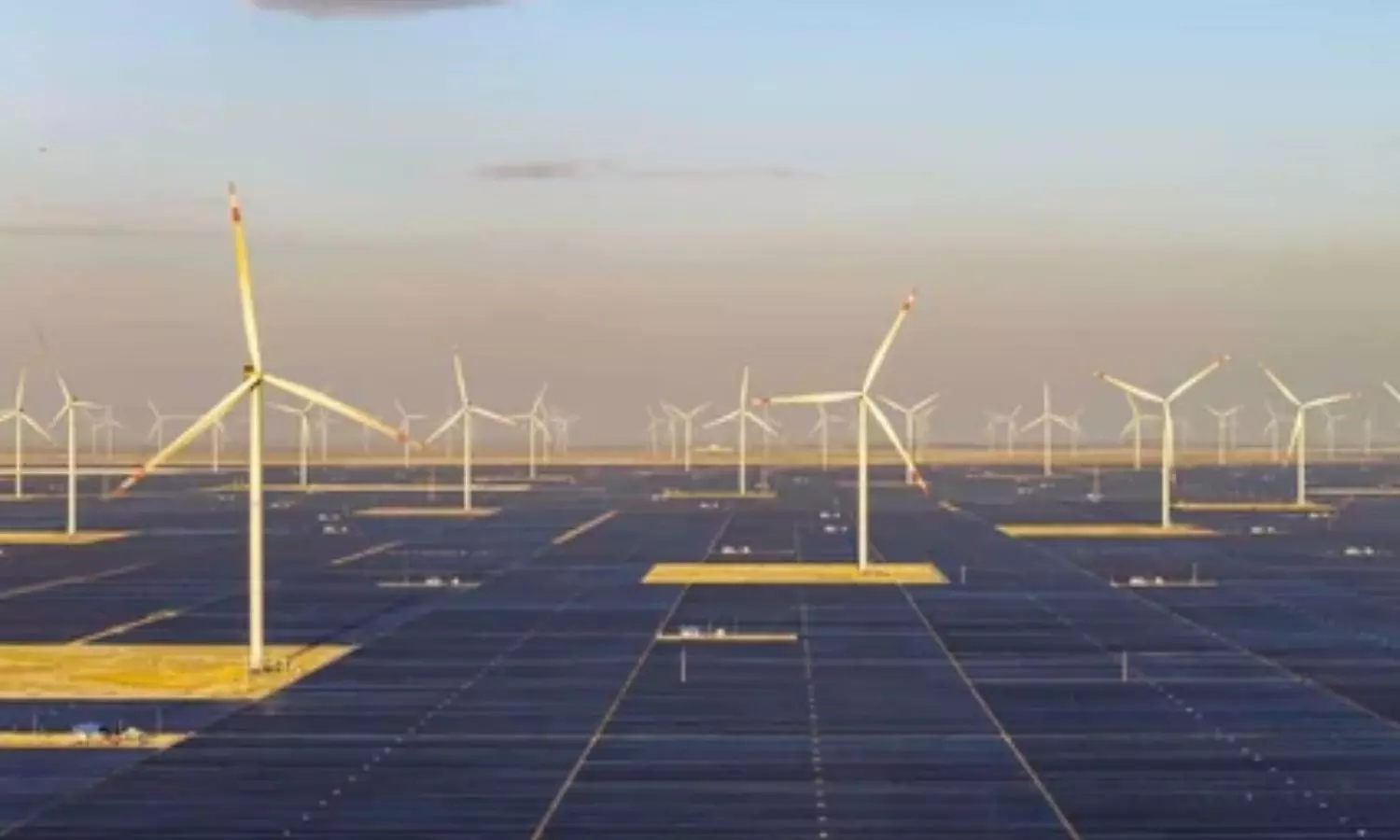
India's onshore wind energy
New Delhi: India's onshore wind energy potential is significantly higher than previously estimated, placing the country's theoretical onshore wind potential at 1,209.7 GW at a hub height of 150 metres and 2,933.9 GW at 200 metres, a statement from a think-tank said on Monday.
The statement from The Energy and Resources Institute (TERI) said offshore potential is estimated at approximately 220 GW and 277 GW, respectively, at a minimum wind speed of 7.0 m/s.
The study identified priority areas for further resource validation and outlined pathways to strengthen wind development, supporting infrastructure and industry capabilities.
India’s installed wind capacity stood at 59.20 GW on September 30, 2026, following record additions of about 6.05 GW in FY26.
“As India’s electricity demand grows and renewable energy deployment expands, a better understanding of wind resources can help inform generation planning, renewable energy procurement, and transmission investment,” the report noted.
Rajasthan, Gujarat and Karnataka account for about 61 per cent of the estimated potential at 150 m, while the inclusion of Maharashtra and Tamil Nadu raises the combined share to nearly 79 per cent.
The electricity-transition study projected roughly a 11-fold increase in India’s on-grid electricity demand by 2070.
Its net zero scenario includes 891 GW of wind capacity by 2070, illustrating the scale of possible expansion under one set of technology-cost and system assumptions.
As India plans for its net-zero objective, more spatially resolved wind assessments can help test where renewable capacity can realistically be developed and which investments in transmission, flexibility and manufacturing are needed.
The report identified six pathways for industry utilisation, including, greenfield onshore development, repowering of existing wind farms, higher-hub-height wind development, wind-solar-storage integration and industrial procurement, fixed-bottom offshore wind, and floating offshore wind.
Not democracy but your own position in danger: Nitin Nabin taunts Oppn over anti-CEC stir
India's economic resilience driven by aspirations and domestic demand: FM Sitharaman
Mehbooba Mufti blames NC for creating mistrust between Kashmiris & Centre
HM Shah offers prayers at Bhagyalakshmi temple in Hyderabad ahead of padyatra
Siddaramaiah meets Venugopal in Delhi, likely to brief Rahul Gandhi on sting operation case
Security beefed up at Bengaluru Police Commissioner’s Office; CCB raids Kannada news channel in sting case


