




- Saswata Chatterjee on why ‘quality over quantity matters’
- AlUla turns night sky into storybook with the Odysseus asterism
- MyVoice: Views of our readers 6th September 2026
- ECLGS 5.0 issues guarantees worth over Rs 2.5 lakh crore
- Jassper Shipping lines up $50-million investment
- Indigenous Kamikaze platform gets a boost
- Personality rights - where does the buck stop and with whom?
- MDR charges could shatter India’s payment revolution
Personality rights - where does the buck stop and with whom?
In Short
The recent observations of Delhi High Court in Aaradhya Bachchan issue opened a debate that extends far beyond celebrity violation of personality rights

Share :
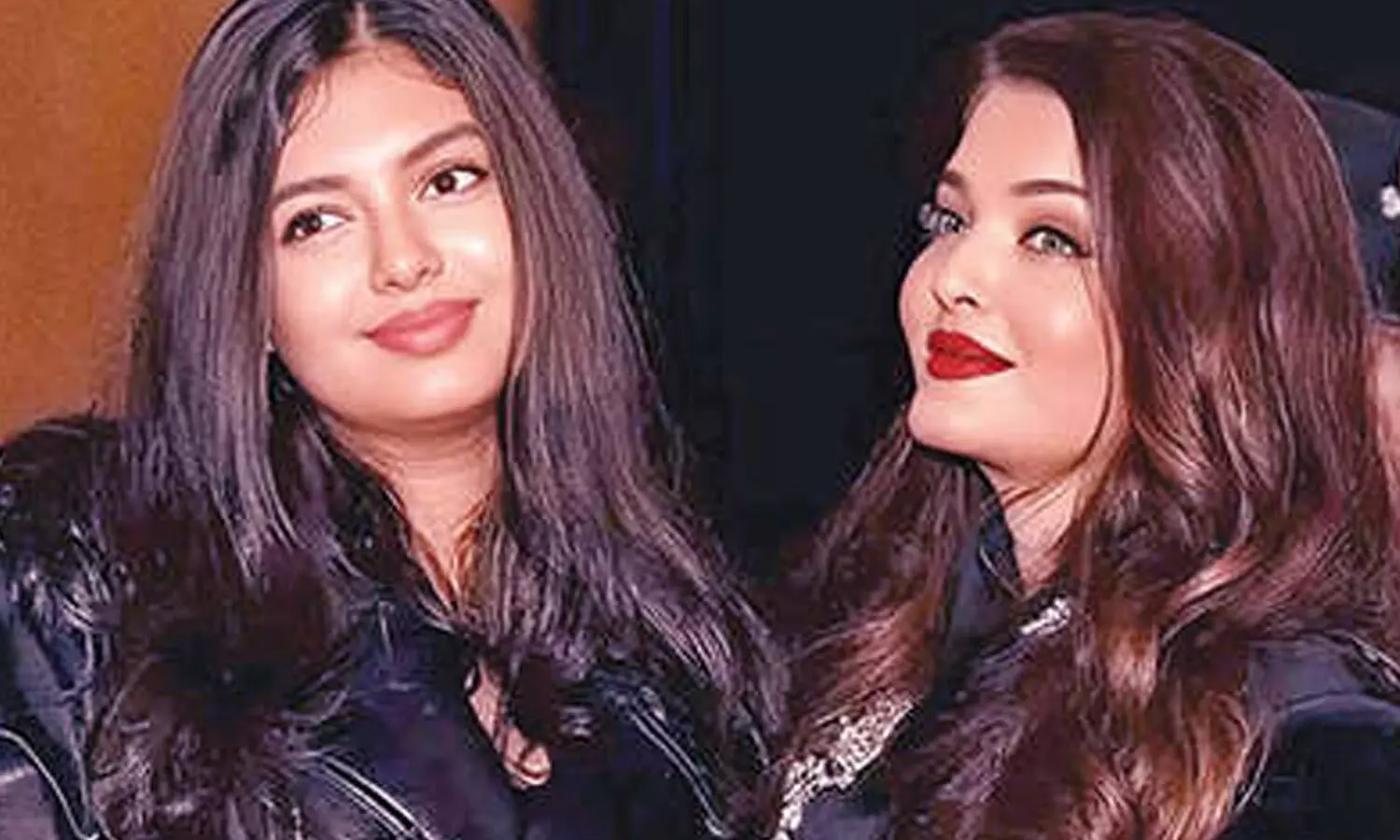
Personality rights - where does the buck stop and with whom?
The recent observations of the Delhi High Court in the Aaradhya Bachchan personality rights matter of 2023, have opened a debate that extends far beyond celebrity violation of personality rights. The court’s question whether the reputation of a celebrated family name can automatically extend across generations will define the next chapter of personality rights jurisprudence in India.
There can be little disagreement that the law must protect individuals from deepfakes, defamatory content, false endorsements and digital impersonation. In today’s AI-driven world, personality rights have become an essential shield against the unauthorized exploitation of one’s identity. Courts have rightly stepped in to protect actors, sportspersons and public figures from misuse of their names, likeness, voices and images.
However, the present case presents a more profound question: Can personality rights become hereditary? Does accumulated reputation can be legally protected like a trademark, and how far down generations that protection flows and finally whether malicious fake news can constitute a direct violation of intellectual property or personality?
In my respectful view, the answer should be subjective. Personality rights are fundamentally personal. They are acquired through an individual’s own public recognition, commercial goodwill, and distinct identity. They are not rights that flow automatically by virtue of birth into a famous family. If courts begin to recognize inherited fame as a sufficient basis for personality rights, the doctrine risks expanding beyond its intended purpose.
A celebrated surname may undoubtedly attract public attention, but attention is not the same as an independently protectable persona. If lineage alone becomes the threshold, where does the law draw the line? Would every descendant of a famous actor, industrialist, politician or sportsperson acquire enforceable personality rights from birth? Such an approach would create uncertainty and could gradually transform personality rights into an inheritable monopoly over family reputation.
This does not diminish the need to protect minors. In the Aaradhya Bachchan case, the alleged circulation of false information concerning a child deserves judicial scrutiny because every individual, particularly a minor, is entitled to privacy, dignity and protection from harmful misinformation. That protection, however, should stem from constitutional rights, privacy, defamation and child protection laws, rather than from an automatic extension of inherited celebrity status.
The Delhi High Court has expressed concern that personality rights litigation is expanding rapidly and cautioned against allowing the doctrine to grow without principled limits. The law must therefore distinguish identity from inheritance. Personality rights should protect an individual’s own commercially valuable and publicly recognized persona not merely the prestige of a family name.
As artificial intelligence and digital media continue to blur the boundaries of identity, courts must undoubtedly strengthen protection against misuse. But while the law should evolve, it must not lose sight of its foundational principle: personality rights belong to the individual who has built the personality not to the surname they inherited. The concept of personality rights is acquiring amoebic proportions and can go beyond individual reputation where it involves a prominent family name and standing. Trademark-like protections to safeguard personal reputation is a question but passing off law protects much wider than trademarks, where in false news, fake news and dragging members of family in to controversies without facts and causing harm is where the buck must stop.
Kallanai set to release Cauvery water for Delta irrigation today
'Heartbreaking news': Jharkhand CM Soren mourns passing away of Minister Sudivya Kumar Sonu
Ukraine says ready to observe ceasefire during negotiations
Dinesh Sharma thanks Prez Murmu, PM Modi after appointment as Andaman and Nicobar Islands L-G
CM Yogi to visit Chitrakoot, distribute relief material to 800 flood-affected families
PM Modi interacts with National Teachers' Award winners; discusses innovative teaching, student confidence
CM Revanth Reddy attacks Centre on mass deletion of votes
Bonanza for AP govt staff: CM Naidu clears 12th PRC, 2 pending DAs for employees
Naidu for overhauling edn to make students future-ready
AP to reconstitute 28 Zilla Praja Parishads


