




Survival of adapted: How India’s banks will get separated into winners, losers
In Short
A single 25-basis-point hike rarely rattles a banking system as large and liquid as India’s. What should command attention is the signal embedded in ‘calibrated tightening’. It effectively rules out rate cuts for the rest of this policy cycle

Share :
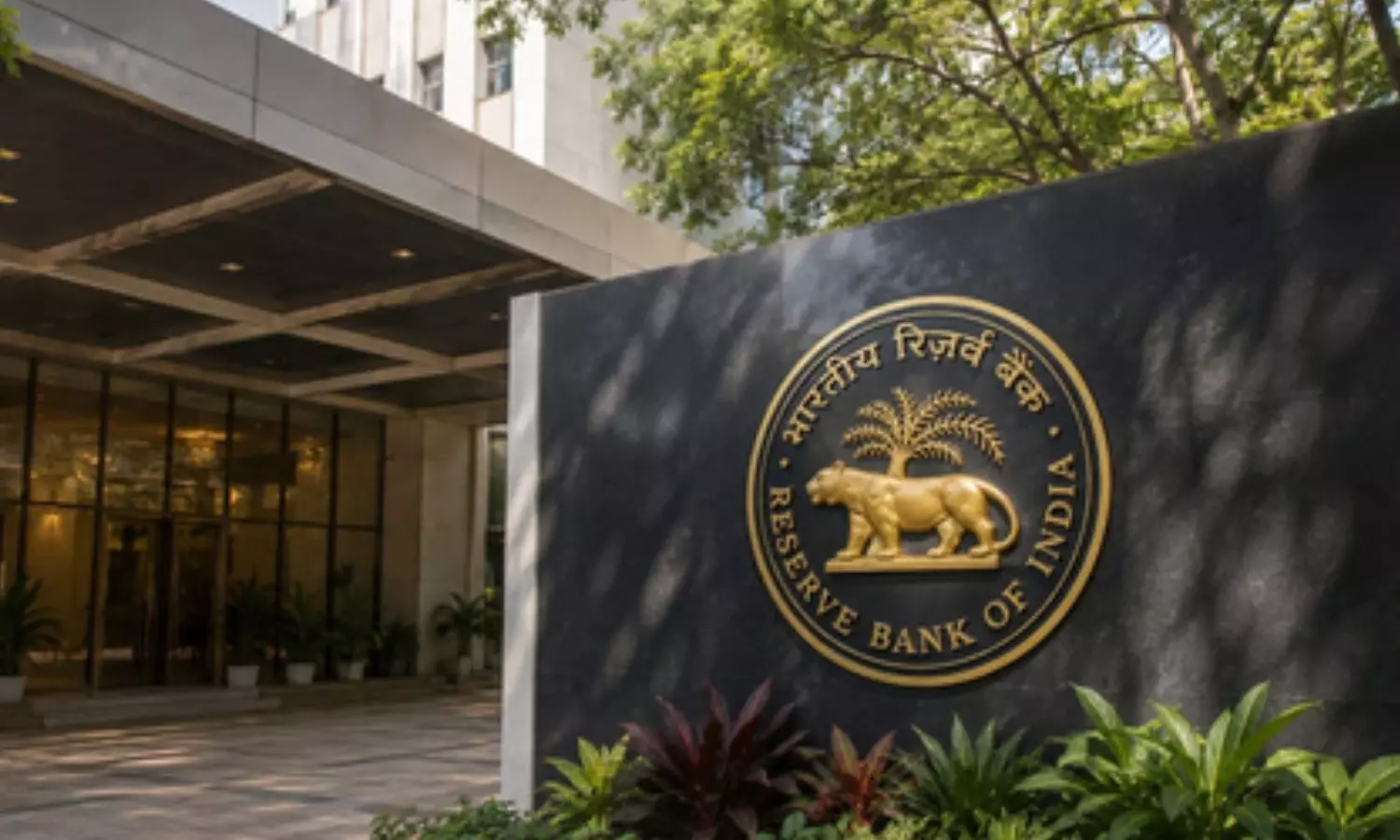
Reserve Bank of India (RBI)
India’s banking and financial system has just received a clear signal from its central bank, and the message deserves careful unpacking. On October 7, 2026, the Reserve Bank of India (RBI) raised the repo rate by 25 basis points to 5.50 per cent, marking its first rate hike in nearly four years amid rising inflation and strong economic growth. But more importantly, it shifted its policy stance from ‘neutral’ to ‘calibrated tightening’. For bankers, NBFCs, borrowers, and policymakers alike, this shift matters more than the hike itself.
Why the Stance Shift Is the Real Story
A single 25-basis-point hike rarely rattles a banking system as large and liquid as India’s. What should command attention is the signal embedded in ‘calibrated tightening’. It effectively rules out rate cuts for the rest of this policy cycle. The last time the RBI used this exact phrase was in October 2018, and it reversed course within four months, cutting rates. Whether history repeats is uncertain, but the comparison tells market participants that the RBI is drawing a firm line against future easing, at least for now.
The context explains the central bank’s caution. August CPI inflation rose to 4.82 per cent, core inflation edged higher, and elevated crude prices, aggravated by prolonged geopolitical tensions in West Asia, are adding to imported-inflation risk. The RBI has revised its FY27 inflation forecast upward by 20 basis points to 5.2 per cent, with H2FY27 inflation now expected to average 5.9 per cent, against an earlier projection of 5.7 per cent. A deficient monsoon, running 13 per cent below normal, compounds the risk. Maharashtra alone has declared drought conditions across 265 of its 358 talukas, covering nearly three quarters of the state. If food inflation flares further, the RBI’s room to ease will shrink even more.
Yet strong growth actually posed a different challenge for the RBI. Q1 FY27 GDP grew 7.8 per cent, faster than expected. In response, the RBI raised its full-year FY27 growth forecast from 6.7 per cent to 7.1 per cent, and upgraded its forecasts for Q2 and Q3 by 0.8 and 0.4 percentage points respectively. The problem wasn’t sluggish growth that needed stimulus. It was robust growth that left no room for the central bank to ease rates. Capital goods production grew 17.9 per cent year-on-year in July-August, and central government capex rose 8.5 per cent over the same period, both signalling that investment momentum remains intact even as consumption shows some softness in non-durables and air travel. In short, the RBI is tightening into strength, not weakness, which is precisely why it can afford to be assertive.
Banks: Comfortable Cushions, But Margins Will Be Tested
For banks, the near-term picture is reassuring. They enter this tightening cycle from a position of considerable strength, The net NPA ratio stood at just 0.4 per cent in Q1FY27, down from 0.5 per cent a year earlier. Capital adequacy (CRAR) was a healthy 17.9 per cent and liquidity coverage stood at 126.7 per cent as of end-June 2026. Outstanding credit grew 18.1 per cent year-on-year as of September 15, against deposit growth of 17.3 per cent, a credit-deposit gap that has actually narrowed to 81 basis points from 89 basis points a year ago, aided significantly by $132.9 billion in FCNR(B) inflows that have strengthened banks’ deposit base.
Because 68.2 per cent of bank lending is now linked to external benchmarks, loan rates will reprice almost immediately, giving banks near-term margin support. Deposit costs, by contrast, adjust more slowly, cushioned by older deposits yet to mature. This asymmetry is a genuine, if temporary, advantage. But it will not last indefinitely. As the RBI absorbs surplus system liquidity, which is currently around Rs 1.9 trillion, through VRRR operations and open market operations, money market and marginal funding costs will increasingly track the policy rate, and the benign deposit-pricing environment will fade within a few quarters. Banks that hold large quantities of government bonds in their trading or available-for-sale portfolios should prepare for paper losses. When bond yields rise, the market value of these bonds falls. The benchmark 10-year government bond yield has already crossed 7 per cent and is expected to stay high, around 7.3 to 7.4 per cent, by the end of FY27.
The more structural concern lies in retail lending quality. Retail loans, including housing, gold, auto, and personal loans, now make up about one-third of total bank credit. While overall asset quality remains strong, any stress is likely to emerge first among highly leveraged borrowers with thin income buffers, a cohort worth monitoring closely as funding costs climb.
NBFCs: Funding Mix Will Decide Winners and Laggards
For non-bank lenders, the equation is more delicate. NBFCs depend heavily on bank loans, market borrowings, and commercial paper, while many of their core products - vehicle finance, microfinance, gold loans, small-ticket consumer credit - are fixed-rate or reprice slowly. This mismatch between fast-rising funding costs and slow-adjusting loan books is the central vulnerability of this cycle.
Larger, better-capitalised NBFCs do have real buffers: total CRAR of 25.5 per cent and improving asset quality, with net NPAs down from 1 per cent to 0.84 per cent year-on-year, and expanding net interest margins. But smaller NBFCs reliant on wholesale funding or concentrated borrowing sources, operating in competitive segments, will feel the squeeze fastest, forced either to pass on higher costs and risk slower growth, or absorb the hit and accept thinner profits.
Notably, NBFC bond yields have already hardened to 8.18 per cent from 7.89 per cent in a single month, a sharper move than banks have faced. This reflects growing concerns about credit quality and funding sustainability.
The Credit Growth Story: Resilient, But Normalising
Encouragingly, Crisil Ratings projects domestic bank credit growth of a healthy 14.5-15.5 per cent for the current fiscal, modestly above last year’s pace, even as growth normalises from the elevated ~19 per cent levels seen in August, a high-base effect following last year’s GST-driven surge. MSME lending remains the standout performer, projected at 23-25 per cent growth, aided by schemes like ECLGS 5.0, which extended roughly Rs 2.1 lakh crore to small businesses between May and August alone. Retail credit should grow 15-16 per cent, led by gold loans, while corporate credit, benefiting from banks’ rate advantage over increasingly expensive bond markets, should expand 10-11 per cent. Agricultural credit, however, faces a likely moderation to 13-15 per cent from over 15 per cent last year, with El Niño-related climatic risks posing a genuine threat to farm incomes and, by extension, rural credit demand.
The Bottom Line for Stakeholders
The message for India’s banking and NBFC sector is one of resilience tempered by vigilance. The system enters this tightening cycle well-capitalised, liquid, and growing. But the comfortable gap between fast-repricing loans and slow-repricing deposits will not persist. Three variables deserve close tracking over the coming quarters: how quickly the RBI absorbs surplus liquidity, whether inflation proves transitory or persistent, and how effectively lenders can exercise pricing power without choking credit demand. For NBFCs especially, funding diversification is no longer optional. It is the difference between weathering this cycle and being squeezed by it. The RBI has made its intent unmistakable. This is not a one-off adjustment but the opening move of a sustained, calibrated tightening phase.
This is not a crisis, yet. But it is a reckoning. India’s financial system will separate into winners and losers based on decisions made in the next two to three quarters: who can raise deposits without diluting margins, who can grow credit without compromising quality, and who can navigate tightening without abandoning shareholder returns. The RBI has set the stage. Execution will determine the outcome.
(The writer is with the Cholleti BlackRobe Chambers, Hyderabad, and writes on the economy, politics and law)


