




- Yuva morcha waves black flag at Chennithala, Priyanka Gandhi in Kozhikode
- India’s UPI payment system is forging ahead
- CM Satheesan demands CEC Gyanesh Kumar’s resignation after former Kerala CS's allegations
- Amit Shah flags off India’s first LNG-powered train from Sabarmati
- ‘Good news for prepaid mobile users’: Raghav Chadha welcomes new 30-day recharge rules
- Fight over SIR deletions: BJP claims 2.8 crore voters were deceased; Cong questions 10.2 crore excluded names
- Daughters Day 2026: Date, Significance, Wishes And Celebration Ideas
- ‘Kalki’ sequel regular shoot to begin in Oct, targets mid-2027 wrap
Nanomedicine to drive next generation of precision medicine, personalised healthcare: Dr Jitendra Singh
In Short
Nanomedicine to drive next generation of precision medicine, personalised healthcare: Dr Jitendra Singh

Share :
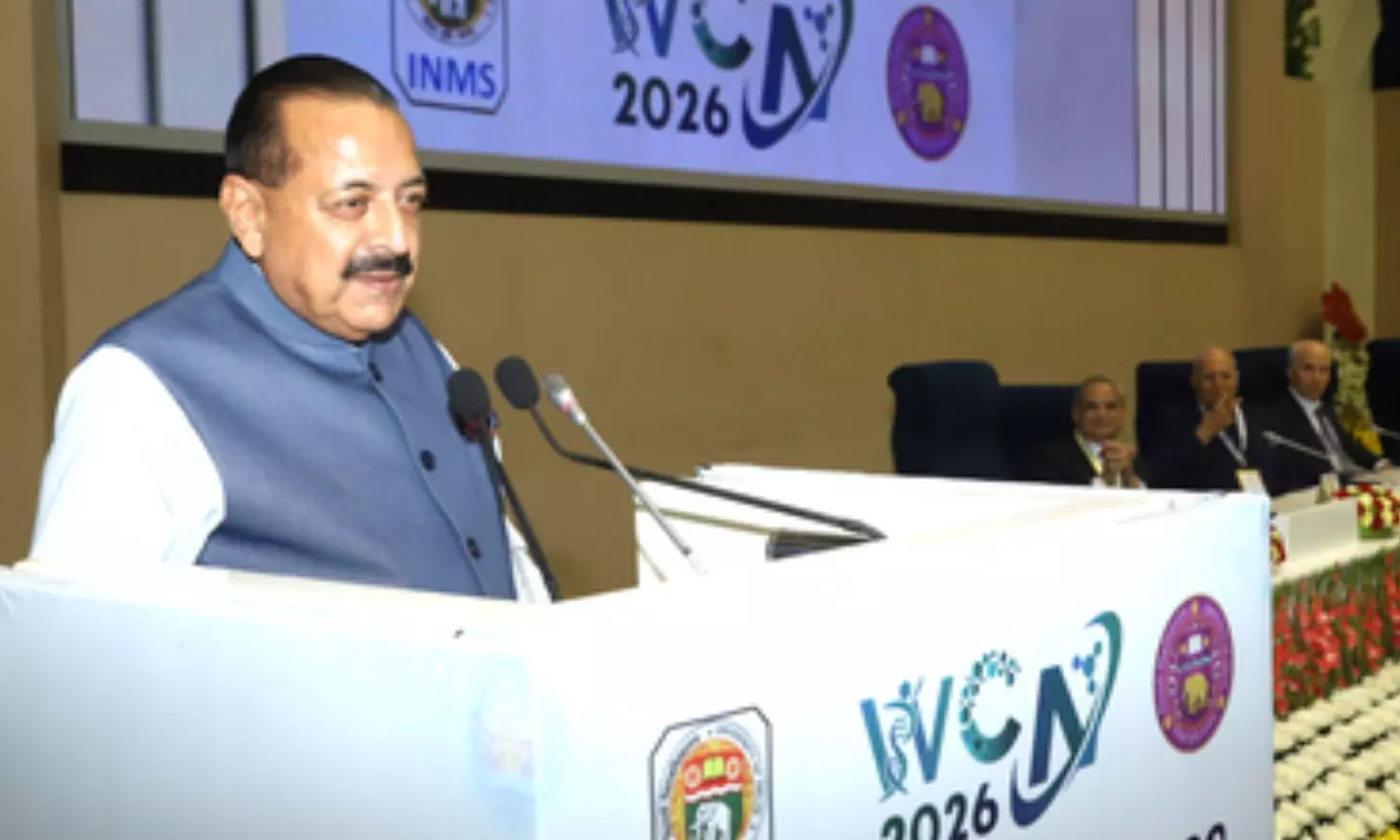
Science and Technology and Earth Sciences, Dr Jitendra Singh
New Delhi: Nanomedicine will play a pivotal role in shaping the future of precision medicine and personalised healthcare, Union Minister of State (Independent Charge) for Science and Technology and Earth Sciences, Dr Jitendra Singh, said on Sunday.
Addressing scientists while inaugurating the World Congress on Nanomedicine 2026 here, the minister described nanomedicine as one of the most transformative developments in modern medical science.
He said healthcare is increasingly moving towards personalised treatment approaches, where therapies are tailored to an individual's genetic profile, lifestyle, dietary habits and environmental factors.
According to him, nanotechnology offers unprecedented opportunities to achieve such precision by enabling interventions at the cellular and molecular levels.
The World Congress on Nanomedicine 2026, hosted by the Institute of Nano Medical Sciences (INMS), Faculty of Medical Sciences, University of Delhi, has brought together more than 2,000 participants, including leading scientists, researchers, industry experts and students from across the world to discuss emerging developments and applications in the field.
Dr Singh explained that nanomedicine involves the application of nanotechnology in medicine through structures and materials operating at the scale of one-billionth of a metre.
As medicine evolves towards greater precision, patients suffering from the same disease may increasingly require different treatment strategies based on individual biological and environmental characteristics, he noted.
The minister said nanomedicine's impact is expected to extend beyond healthcare outcomes and influence the economics of healthcare delivery by improving efficiency and cost-effectiveness.
He added that the growing global interest in nanomedicine reflects the immense opportunities emerging in the sector.
At the same time, Dr Singh cautioned against overdependence on technology in clinical practice. While innovations such as Artificial Intelligence and nanotechnology are opening new frontiers in medicine, he stressed that they should complement, rather than replace, the clinical judgement and experience of doctors. He said the challenge lies in integrating advanced technologies with the human aspects of healthcare.
Calling for reforms in medical education, the minister underscored the importance of preserving core clinical skills even as healthcare becomes more technology-driven.
He noted that traditional methods of patient diagnosis through observation and physical examination continue to remain relevant despite rapid technological advances.


