




- Delhi HC To Hear Habeas Corpus Plea In Swatantra Bhardwaj Arrest Case
- Will Tim Cook present the iPhone 18 Pro at Apple's September 9 event? Yes and no
- Bangladesh court grants bail to Chinmoy Krishna Das, but release remains blocked
- Vijay accuses DMK of corruption, warns against derogatory remarks on women
- Quadric IT Inaugurates Delivery & Innovation Centre in Hyderabad
- Gouri Tonnk: Making a 30-sec reel isn’t acting
- Assam to set up state-of-the-art wildlife safari in Dibrugarh
- Ian Somerhalder revisits Damon days with ‘The Vampire Diaries’ rewatch
On This Teachers’ Day: How Vijay Shekhar Sharma Helped India Learn Mobile Payments
In Short
On Teachers’ Day, explore how Vijay Shekhar Sharma helped transform India’s digital payments landscape and made mobile payments accessible to millions.

Share :
On This Teachers’ Day: How Vijay Shekhar Sharma Helped India Learn Mobile Payments
Before mobile payments became routine, India had to first learn that a phone could be used in place of cash.
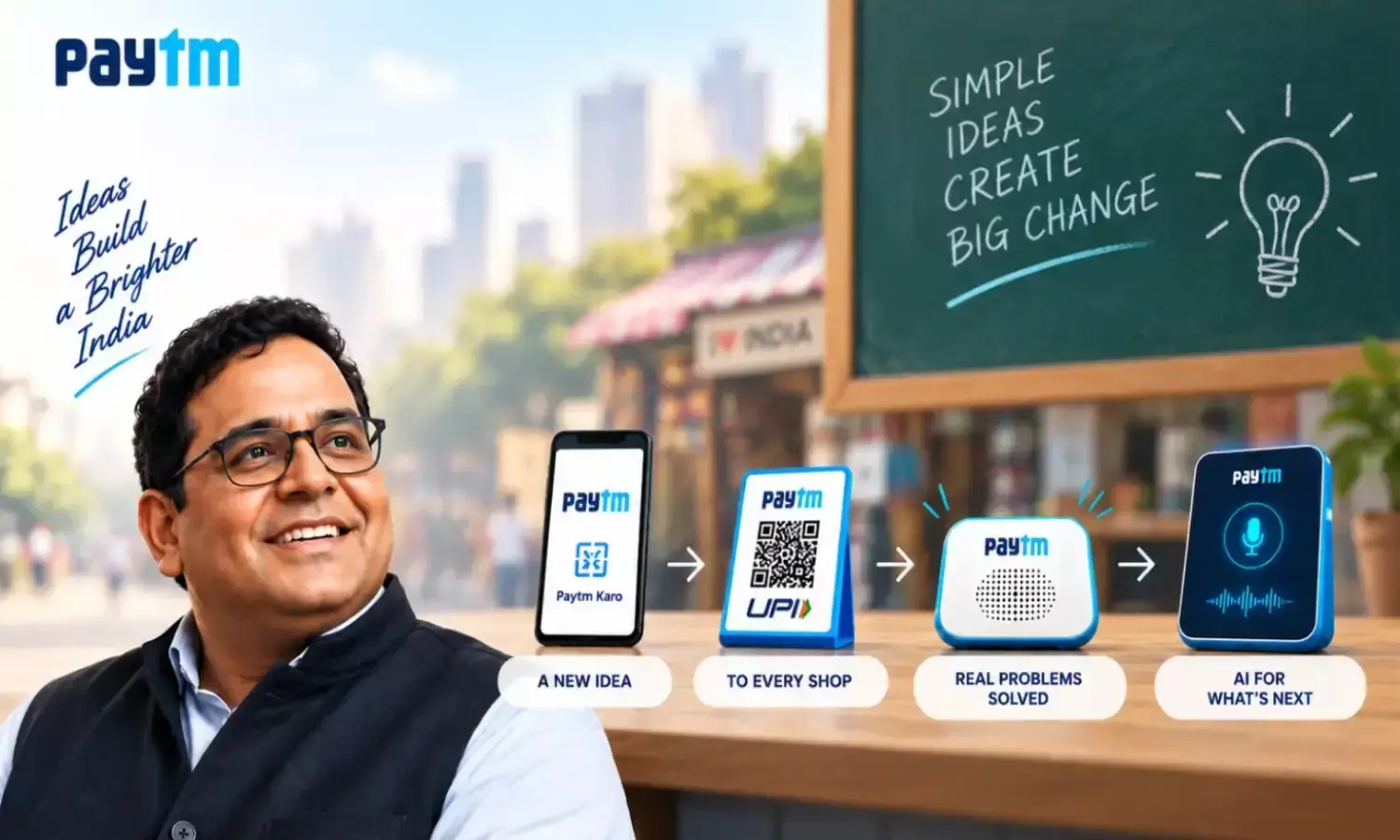
Vijay Shekhar Sharma was among the early entrepreneurs who pushed that behavioural shift at scale. Through Paytm, mobile payments moved from an unfamiliar idea to an everyday habit across shops, taxis, pharmacies, petrol pumps and neighbourhood stores. “Paytm karo” became one of the earliest phrases associated with paying digitally.
The larger digital payments revolution was subsequently accelerated by the Government of India’s push towards digitisation and the creation of UPI, which gave the country a powerful, interoperable public payments infrastructure. Paytm built on that ecosystem by taking QR-based payments deeper into merchant counters across India.
Its innovation was often focused on solving simple, real-world problems.
When merchants found it difficult to repeatedly check their phones after every payment, Paytm introduced the Soundbox, which confirmed transactions through voice. The familiar payment announcement soon became part of everyday Indian retail. Paytm later extended audio confirmations to its card machines as well.
The company is now trying to take that idea further with artificial intelligence. Its AI-led merchant devices are being designed to move beyond payment confirmation and help businesses access transaction and business information through voice, including in Indian languages.
Paytm is also using AI across merchant onboarding, fraud prevention, collections, retention and engineering.
On Teachers’ Day, the Paytm journey offers a broader technology lesson: adoption happens when complex technology is made simple enough to become a habit.
Sharma helped start that learning curve with mobile payments. India’s public digital infrastructure helped scale it nationally.
The next chapter may be about doing the same with AI.


