






SignalHire: Construction Searches Held Up Better Than Architecture in 2026, With a 54-Point Gap
In Short
SignalHire data shows construction searches outperforming architecture in 2026 by 54 points, highlighting stronger search interest in the construction sector.

Share :
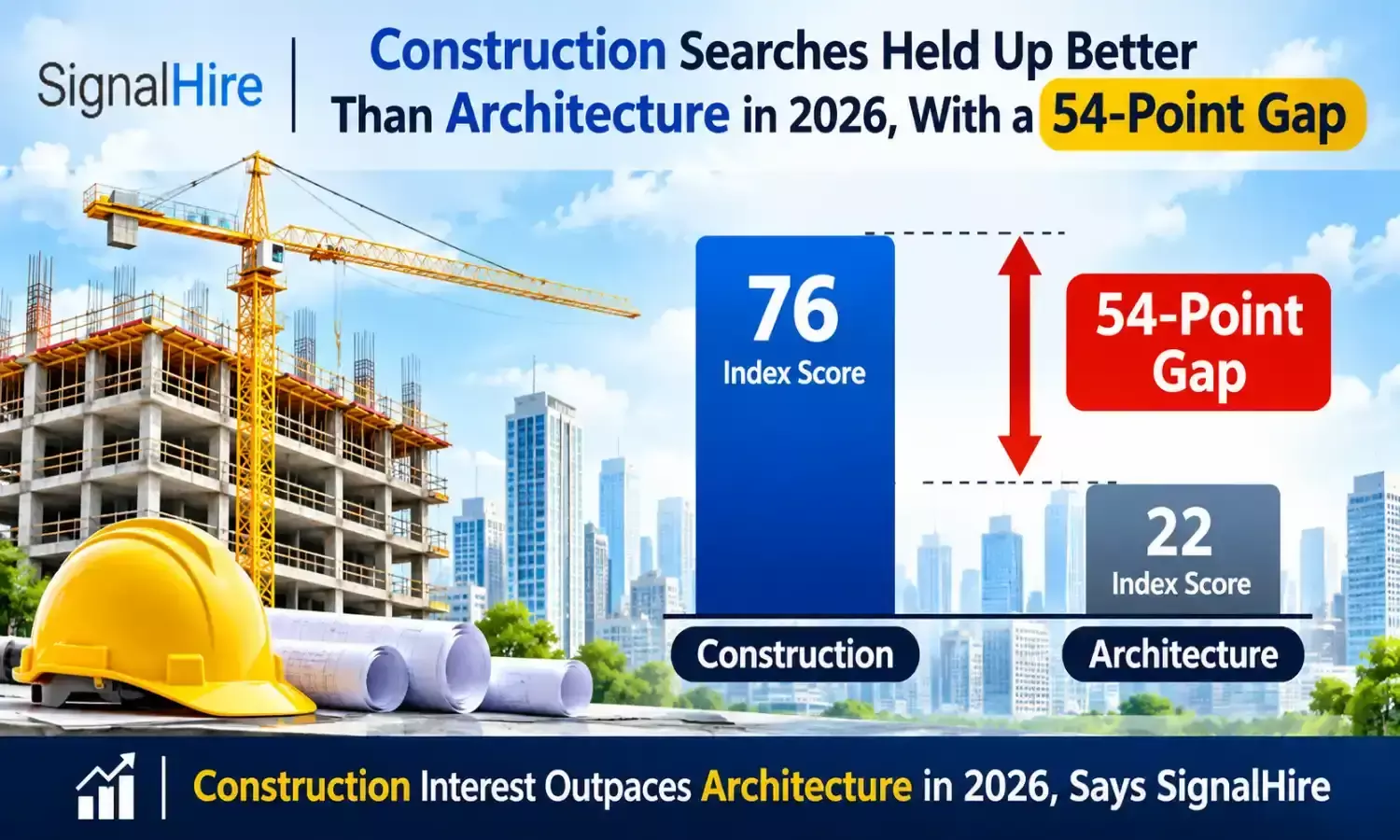
SignalHire: Construction Searches Held Up Better Than Architecture in 2026, With a 54-Point Gap
SignalHire shows the relationship between two connected categories. However, you shouldn’t take them at face value and assume they reflect what’s happening in the industry.
Readers can find the full table in the SignalHire report on architecture and construction hiring. Construction searches on SignalHire fell 19.94 percent in H1 2026. Architecture searches fell 74.45 percent. The 54.51 point gap is the widest in the built environment group.
How large is the gap between the two categories?
There was a decrease in searches for construction of roughly 1/5 and a decrease in searches for architecture of almost 3/4.
This is the largest decrease across our 5 built environment categories.
When looking at such large differences, we would always be cautious around our language. It’s important to remember this is just the difference in searches for these categories on this platform. It does NOT mean there are fewer buildings being built, fewer drawings being sent out or fewer architects being hired. Anybody using this information should make note of this.
Which explanations deserve testing?
As we have not identified why this has happened, everything is still a hypothesis. Design is often undertaken before construction. Funding can cause 1 of the phases to be delayed but the other unaffected. There could be projects currently under construction meaning the team on site are very busy but the design team have nothing new to work on.
There can also be factors related to the platform itself. If there is a change in the type of people searching, areas searched or filters used during the time frame, this will impact the results.
It can be helpful to see if your hypothesis can be applied to the other categories. If funding issues caused a delay in architecture searches, we would expect to see similar decreases in categories that are related to architecture such as Real Estate and Facilities and Maintenance. We have seen a decrease but not as much (34.88% decrease) and (50.41% decrease). There was a 13.58% increase in Environmental Services, therefore we wouldn’t expect this to be the case for all categories.
Employers who want to act on the data can start with SignalHire verified email and phone data for architecture and construction teams.
What does the comparison show side by side?
By placing the two categories next to each other we can see that both have decreased. However, the decrease in construction was not as great as the overall platform. Whereas the decrease in architecture was significant.
We cannot tell if output has remained consistent. This would need to be looked into using output data.
The table also helps to avoid a common error. As construction didn’t decrease as much as architecture some people may think there has been an increase in recruitment for construction. However, there was still a decrease of 19.94%. Being mindful of how the numbers are moving will help to avoid any small misunderstandings causing a recruitment decision.
Measure | Change in searches, H1 2026 vs H1 2025 |
Construction | Down 19.94 percent |
All platform categories | Down 36.62 percent |
Architecture | Down 74.45 percent |
Gap between Architecture and Construction | 54.51 percentage points |
What should employers check first?
A construction business can look into their site schedules and what subcontractors they have in place. An architecture practice can look into what briefs they have signed off and approved by clients.
If you have a design and build business in a region you can look into both perspectives. If you’re finding that you don’t have much design hours but lots of site hours you may decide to recruit for site delivery now and plan to recruit designers in the next quarter. This would not be identifiable from just looking at the platform data.
Recruiters working in both areas can carry out the same process. Ask both clients what stage they need people for in the next quarter and ensure you are matching your search efforts to this. This ensures you are sourcing based on demand that the client can confirm.


