Veera Chandrahasa Movie Review: Ravi Basrur’s Daring Yakshagana-Infused Epic Redefines Kannada Cinema

Ravi Basrur’s Veera Chandrahasa isn’t just a film—it’s a cultural statement, an audacious leap into the heart of traditional theatre, reimagined through the lens of modern cinema.
Bengaluru: Ravi Basrur’s Veera Chandrahasa isn’t just a film—it’s a cultural statement, an audacious leap into the heart of traditional theatre, reimagined through the lens of modern cinema. With this project, Basrur dares to do what few mainstream filmmakers have even attempted: bring the complete form of Yakshagana to the big screen without diluting its theatrical essence.
A Visual and Auditory Spectacle
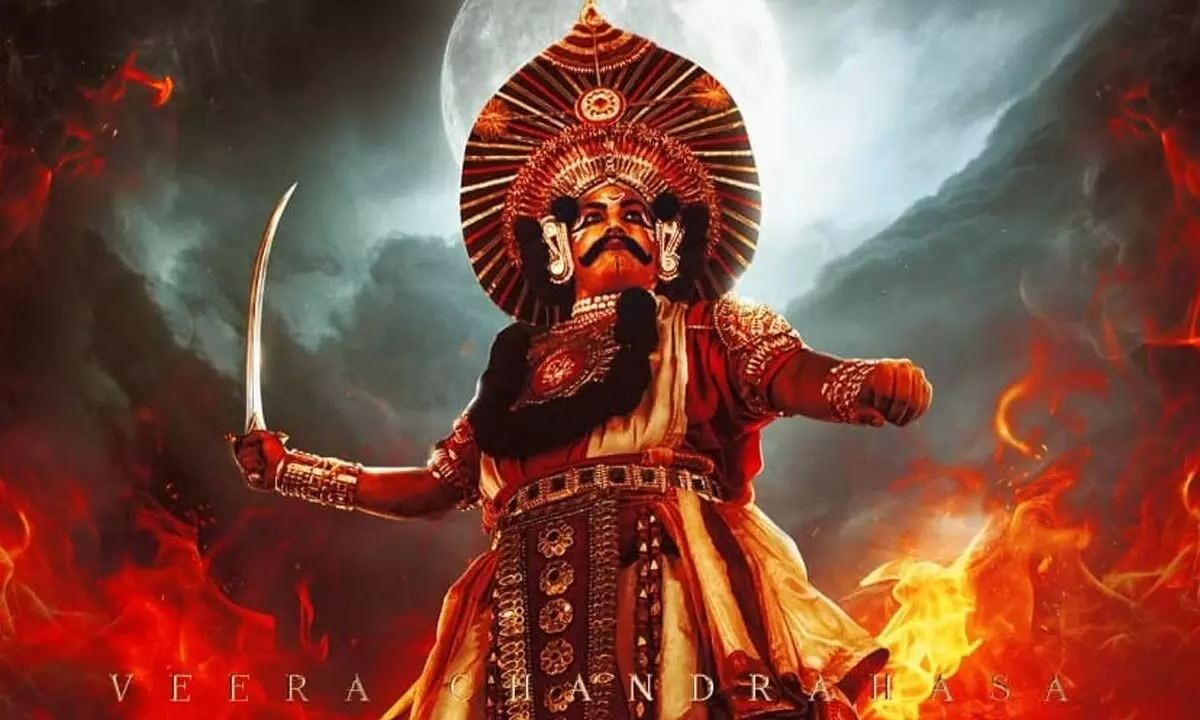
From the opening frame, Veera Chandrahasa pulls viewers into a sensory overload. The elaborate costumes, dramatic makeup, and richly symbolic expressions characteristic of Yakshagana dominate every scene. The camera doesn’t shy away from the artifice—instead, it celebrates it. Each close-up, each wide-angle shot seems choreographed to highlight the grandeur of this traditional performance art.
The story itself is rooted in folklore—the tale of Chandrahasa, the orphaned prince of Kuntala, whose destiny is written in prophecy. It’s a familiar narrative in Kannada culture, but what sets this rendition apart is the storytelling approach. Basrur doesn’t just borrow from Yakshagana; he integrates its rhythm, diction, and dramatic pauses into the very structure of the film.
Performances That Command Attention
Prasanna Shettigar delivers a standout performance as Dushtabuddi, the villainous minister. His presence is theatrical in the best sense—commanding, vocally powerful, and physically expressive. Rather than toning down for the camera, Shettigar leans into the stylization of Yakshagana, and it pays off spectacularly.
The supporting cast follows suit, each performance echoing the precision and flamboyance of stagecraft, creating a cinematic experience that feels more like a live performance frozen in time.
Music: The Film’s Pulsing Heart
One of the film’s greatest strengths lies in its sound design and score. Basrur, known for his musical sensibilities, uses Yakshagana’s traditional rhythms and vocal intonations not just as background but as an emotional and narrative tool. The music carries the story, sets the mood, and amplifies drama with operatic intensity.
Where the Film Stumbles
Despite its many triumphs, Veera Chandrahasa isn’t without flaws. The occasional use of modern-day humour and colloquialisms breaks the immersion. These moments feel jarringly out of place and slightly undermine the otherwise cohesive traditional atmosphere Basrur so painstakingly constructs.
Additionally, while the film’s commitment to form is admirable, its appeal might remain niche. For audiences unfamiliar with Yakshagana, the exaggerated acting and stylized narrative structure might feel overwhelming or alienating.
A Cultural Bridge Worth Crossing
Yet, that is perhaps the film’s greatest strength—it doesn’t try to be universally palatable. Instead, Veera Chandrahasa boldly plants its feet in tradition and dares the viewer to meet it there. It's a cinematic love letter to an art form often relegated to rural stages and temple festivals.
Basrur has not only paid homage to Yakshagana but has also given it a renewed identity in a cinematic era increasingly driven by realism and minimalism. Veera Chandrahasa is a reminder that there’s room—and indeed, a need—for visual extravagance, cultural heritage, and experimental storytelling in mainstream cinema.
A visually rich, sonically mesmerizing, and culturally bold film that challenges the boundaries of Kannada cinema. Veera Chandrahasa may not be for everyone—but for those open to experiencing something wildly different and deeply rooted, it’s a must-watch.
Film: Veera Chandrahasa
Director: Ravi Basrur
Starring: Shithil Shetty Airbail, Prasanna Shettigar, Nagashree GS, Uday Kadabal
Ratings: 3.75/5 Stars