






Cops should do away with torturous moral policing
In Short
If the video is genuine (so far no one has questioned its veracity), the officer seems guilty of a gross violation.

Share :
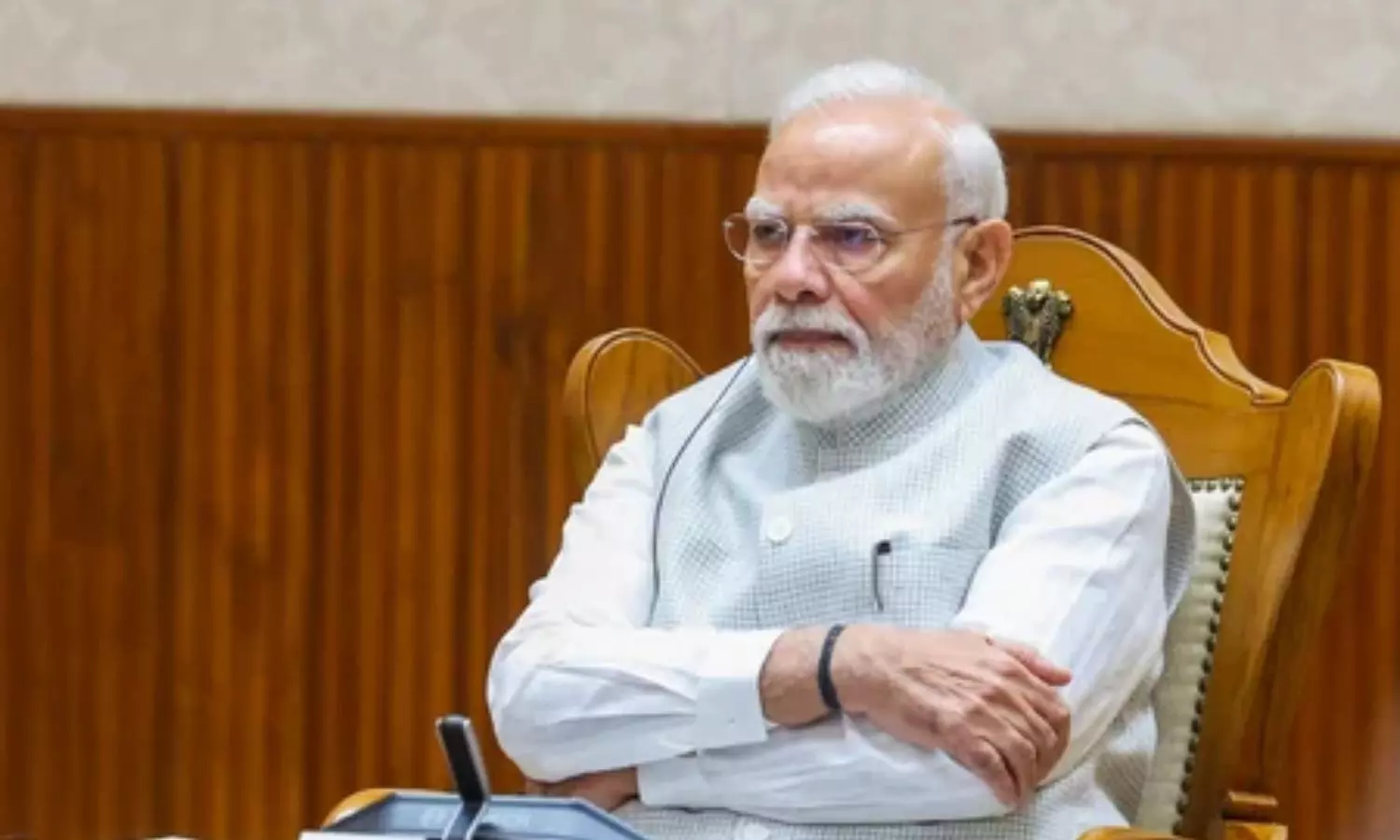
Prime Minister Narendra Modi
Prime Minister Narendra Modi and his supporters talk enthusiastically about ‘Viksit Bharat’ towards which he has set 2047 as the deadline. This is encouraging, as it underlines seriousness on the part of the government towards realising that goal. It will, however, be unrealistic to view that journey only in terms of economic growth, infrastructure building, and material improvement; all this must be accompanied by progress in social and cultural mores, individual freedom, and civil liberties. On these counts, there is scarcely any development. For instance, the old habits and practices of moral policing and extortion continue. A viral video on social media highlights this rot. Senior police officers in Madhya Pradesh’s Seoni district are seen threatening an unmarried couple in a hotel; worse, they are seen threatening to charge the man with a marijuana case after they refused to call their parents. The CCTV footage, reportedly recorded on November 13, shows Additional Superintendent of Police Deepak Mishra and junior officers. The couple refused to cooperate with the cops, with the woman declining to unlock her phone and contact her family. Mishra is heard asking the hotel staff to bring marijuana and put it in the man’s bag. “Plant some ganja on the boy,” Mishra is heard saying in the CCTV footage.
If the video is genuine (so far no one has questioned its veracity), the officer seems guilty of a gross violation. It is shocking how casually he orders the planting of a drug on a citizen, especially as drug-related crimes attract severe punishment. Besides, there is the issue of individual freedoms. Sex between consenting adults is not a crime in India. On April 30, 2010, the Supreme Court ruled that consensual heterosexual relations between adults, including pre-marital sex, is no offence except in cases where the partners are liable to be charged with “adultery.” It said the courts attach a lot of importance to personal autonomy and a person indulging in an immoral act need not necessarily be a culprit in the eyes of the law. “Morality and criminality are non-coextensive,” said a Bench, comprising Chief Justice K G Balakrishnan and Justices Deepak Verma and B S Chauhan. In 2018, the apex court decriminalised adultery and homosexuality.
Seoni cops, however, have no regard for the Supreme Court’s order. Worse, they are not an exception; police often raid smaller hotels in many parts of the country. The purpose of the raid is often less than honourable. Instead of improving their policing skills, they want to unnecessarily diversify into moral policing. This is untenable. The police are entrusted with the responsibility of enforcing the law and not imposing their personal notions of morality on citizens. Their job is to prevent crime, not manufacture it; to protect individual rights, not trample upon them. When policemen use the threat of criminal prosecution to intimidate consenting adults, they turn the coercive power of the State into an instrument of personal prejudice and extortion. Such conduct also undermines public confidence in the police, which is indispensable for effective law enforcement. Citizens cannot be expected to approach the police for protection if they fear becoming victims of the very people meant to protect them. The Madhya Pradesh government must act firmly, institute an impartial inquiry, and ensure exemplary punishment if the allegations are established.


