




Gyanesh Kumar finds himself in a tight corner amid protests
In Short
This must be galling to the government and BJP leaders who are always keen to be in the spotlight

Share :
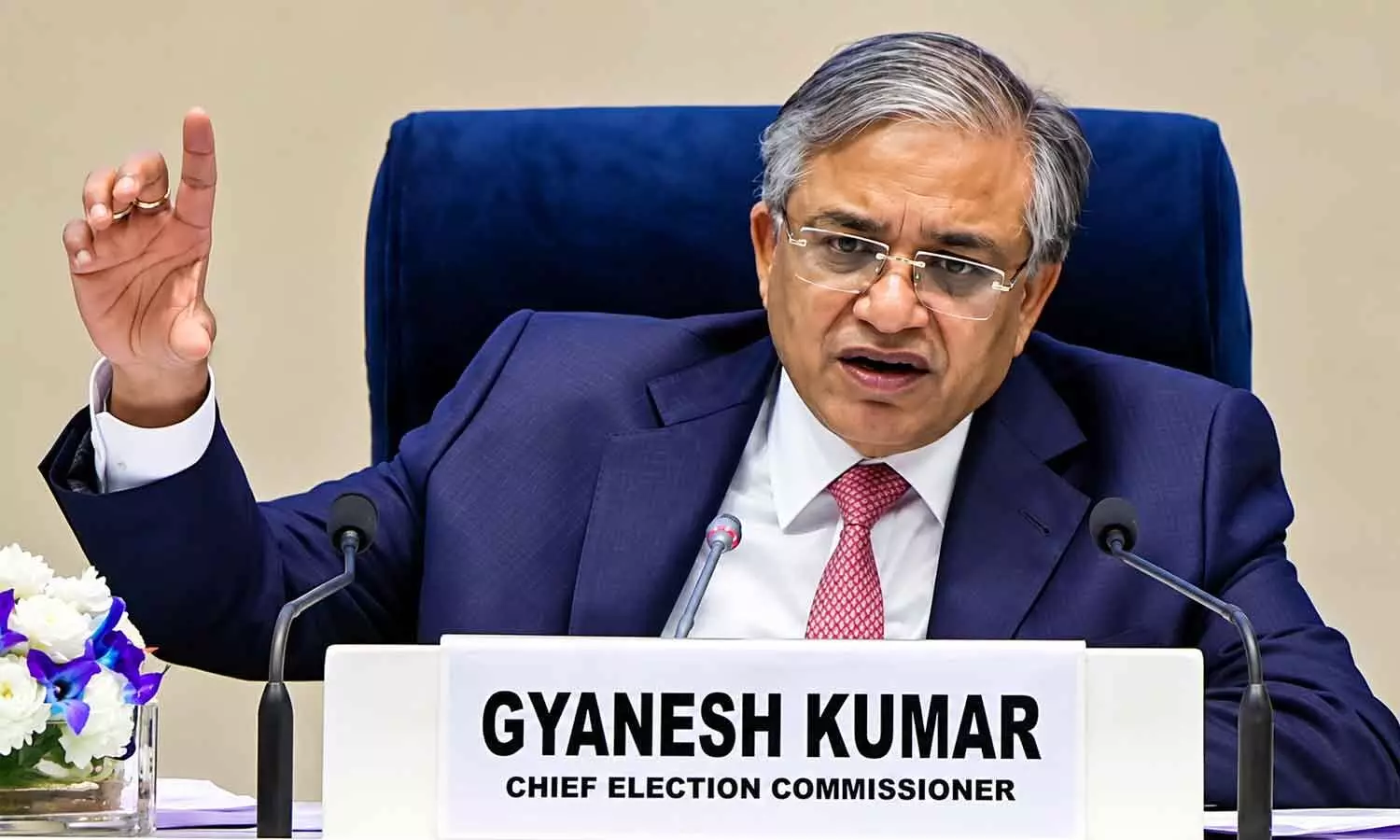
Gyanesh Kumar
WithLeader of the Opposition in the Lok Sabha Rahul Gandhi innovating protest methods and other activists threatening to intensify their campaign against Chief Election Commissioner (CEC) Gyanesh Kumar, both the Narendra Modi government and the CEC find themselves in a tight corner. Kumar’s position is increasingly untenable; whether the charges that he is favouring the Bharatiya Janata Party and running the constitutional body unilaterally matters no more given that he is widely seen as doing so. Media reports showing the two Election Commissioners, S S Sandhu and Vivek Joshi, officially objecting to Kumar’s style of functioning have not just made Kumar vulnerable to allegations of favouritism, but also brought the poll panel under a cloud of suspicion. This is bad for the constitutional body and our democracy. Meanwhile, Rahul seems to be enjoying himself. Ensconced under a banyan tree at the iconic Akashvani Bhavan campus on Monday, he made the premises of the historic building the new site for political protests—perhaps for the first time in the history of All India Radio. The original plan was reportedly to march from the Parliament House to Nirvachan Sadan, the Election Commission headquarters, but the police didn’t allow that. Unbothered, leaders of the grand old party invented a new protest site, grabbing a lot of media space, with news channels showing him for hours continuously and newspapers the next day.
This must be galling to the government and BJP leaders who are always keen to be in the spotlight. The man they have lampooned and lambasted for years is now stealing their thunder from right under their nose. But the saffron establishment itself is responsible for the momentum that the Leader of the Opposition is gaining in the political arena. For years, the BJP and its leaders have treated Rahul Gandhi as an object of ridicule rather than as a serious political adversary. He has been caricatured, mocked, and routinely dismissed as being politically immature. Yet politics, like nature, abhors a vacuum. When the ruling establishment concentrates too much on belittling an opponent, it can inadvertently confer upon him precisely the visibility and political relevance that it seeks to deny him. The more the BJP attacks Rahul, the more the Opposition leader is able to present himself as a persecuted challenger taking on an all-powerful establishment.
The same mistake appears to have been repeated in the Election Commission controversy. Instead of allowing the issue to be settled through institutional transparency and credible explanations, the government and the BJP have often responded to criticism by attacking its political provenance. That may satisfy the party faithful, but it does little to address the underlying public perception. In a democracy, institutions do not derive their legitimacy merely from their constitutional status; they derive it from the confidence of citizens that they are impartial. If that confidence is eroded, dismissing the critics as politically motivated does not restore it. The government should not prolong its own misery; it must ensure that Kumar resigns (he cannot be dismissed by the government without impeachment). From the government’s perspective, he is damaged goods. His removal will be a victory for the Opposition, but it will also take away a talking point from anti-government leaders and activists. This will help the government politically.


