




- Ankurarpanam on Dec 5 to mark start of Tiruchanoor Brahmotsavams
- Call 1064 to report bribe demands by govt officials: Judge Geetha
- 1,932 APSPDCL personnel to handle cyclone Arnab power outages
- 89 candidates in fray for 24 ZPTC seats in Chittoor
- Election observer oversees micro-observer deployment in Nellore
- Cyclone Arnab: 160 APSRTC services cancelled
- Visakhapatnam: Door-to-door poll campaign comes to a screeching halt
- PNB organises MSME outreach programme
Rights suffer major setbacks in Brazil, Serbia
In Short
Explore how recent election upsets in Brazil and Serbia highlight shifting global political dynamics, rising voter pragmatism, and mounting economic challenges facing incumbent leaders.

Share :
Rights suffer major setbacks in Brazil, Serbia
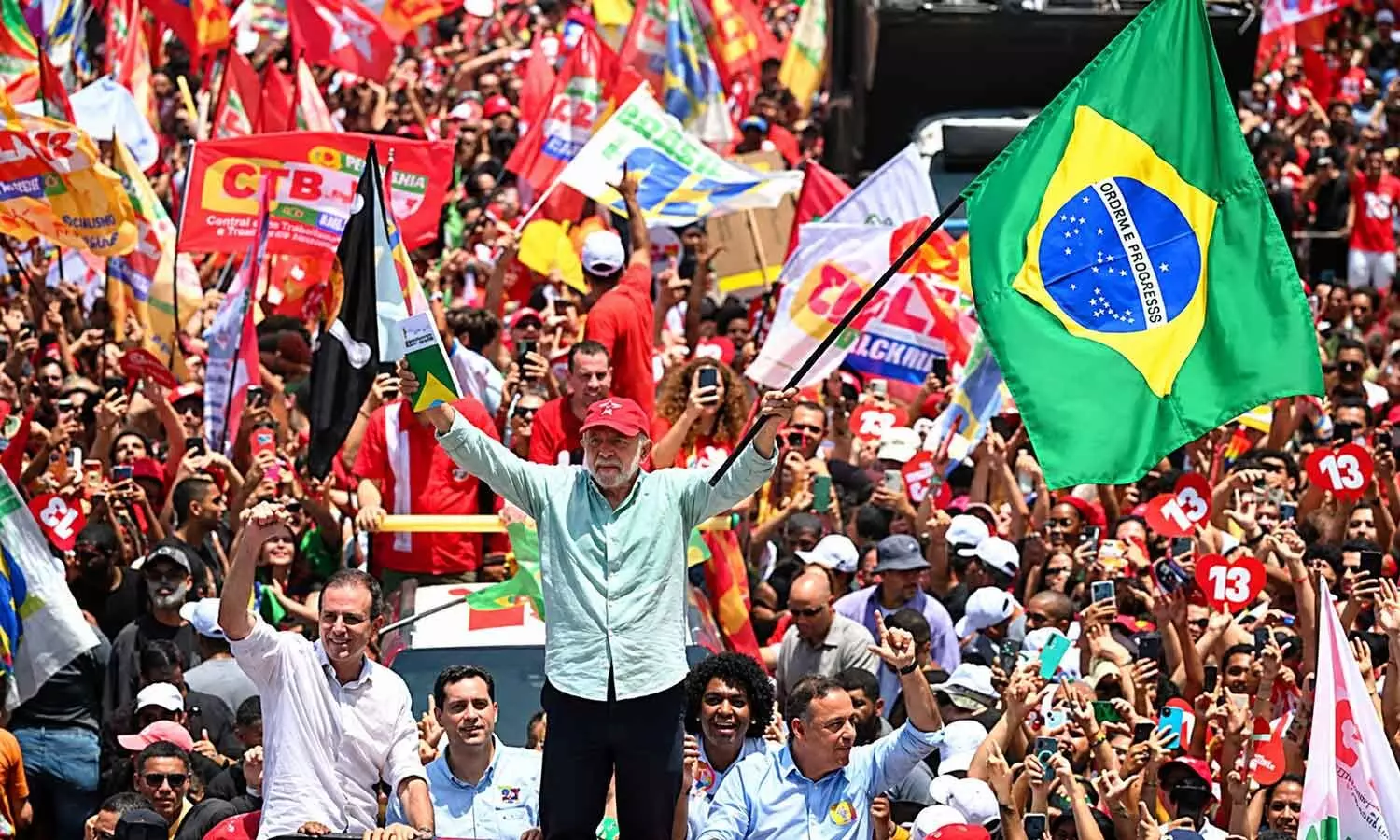
Two countries on two continents, separated by thousands of miles, have come up with election results that sound similar, defeat of rightwing candidates. Luiz Inázio Lula da Silva, Brazil’s incumbent Left-leaning President, has unexpectedly bounced back. He trailed his Rightwing rival, Flávio Bolsonaro, in the first round of voting; with the country not doing very well under him, Lula looked like he was losing the poll, but he didn’t. The victory is unprecedented because no presidential candidate has emerged victorious after losing the first round. Flávio, his bitter rival’s son, former president Jair Bolsonaro, has refused to recognise the result and called for it to be annulled.
His Liberal Party, though, has accepted the poll outcome. But charges of malpractice are unlikely to disappear anytime soon, especially with US President Donald Trump saying that Lula’s victory “looked like another rigged election.” Also, there was a questionable decision by Supreme Court Justice Cristiano Zanin to extend voting nationwide by two hours. Bolsonaro supporters have underlined the fact that Zanin was once Lula’s lawyer.
In Europe, the Rights were dealt a major setback with the ouster of Serbian President Aleksandar Vucic. He accepted defeat after the Student List won the parliamentary election. The movement, whose ideological antecedents are not clear yet, has propped up a smorgasbord of professionals. While the students’ collective didn’t contest elections, it supported a cross-section of civil society members, its lead candidate being Ilija Srdanovic, a 56-year-old cardiologist and university professor.
It will, however, not be very sensible to see the two results as the decline of Rights globally. Yes, Lula is Left leaning, but he has not done any wonders with the economy, nor is he very popular with the people. This is the reason that the world of business was aghast when his victory was announced. In his fourth term, which begins in January, he will have to face the problems associated with fiscal profligacy, high interest and inflation rates, rising revenue expenditure, overstressed smaller businesses, and weak investor sentiment. Much of his and Brazil’s problems are the result of dangerous populism.
The situation is much the same in the smaller Serbia, though not as bad, as Vucic was not fiscally irresponsible, but the new government there will also have to address the issues the protesters have highlighted till recently. Other Rightwing leaders, who would face electoral challenges in the near future, are
Trump, whose Republican Party faces midterm polls, and his Israeli ally, Prime Minister Benjamin Netanyahu. A few months later, French President Emmanuel Macron will also face an increasingly popular Rightist leader, Marine Le Pen, who looks like gaining traction as the issue of uncontrolled migration, especially from Muslim countries, has come to haunt many natives. The fate of the Rights, in global terms, is therefore yet to be determined. Voters are often guided less by ideological loyalties than by immediate concerns such as inflation, employment, immigration, public safety, and the performance of incumbent governments.
Their fortunes will depend on how effectively its leaders address these concerns without alienating their support base. Equally, victories by Left-leaning or centrist forces do not automatically translate into durable public support, particularly when economic difficulties persist. Political fortunes fluctuate, and the ability to deliver results, rather than ideological labels alone, will shape elections.


