




- PM: Uri surgical strikes set bold example of counter-terror policy
- Bangladesh police seize bomb-making materials in Dhaka, arrest one
- Women's football team to make historic Kolkata debut with two friendlies against Russia
- Omar Abdullah welcomes tourists as Gulmarg gears up to hold national-level golf tournament
- India delivers medical supplies in Afghanistan, reaffirms humanitarian support
- Sanjay Gupta questions smoking posters of leading men in Bollywood: What about anti-smoking ads
- Nitin Nabin listens to ‘Mann Ki Baat’ with party workers at Biswa Bangla Convention Centre in Bengal
- Don’t just raise allegations, present facts: Bihar CM slams Opposition over SIR
The mess around the poll panel is govt’s own making
In Short
Examine the unfolding institutional crisis within the Election Commission of India over the Special Intensive Revision (SIR) and the debate surrounding autonomy and governance.

Share :
The mess around the poll panel is govt’s own making
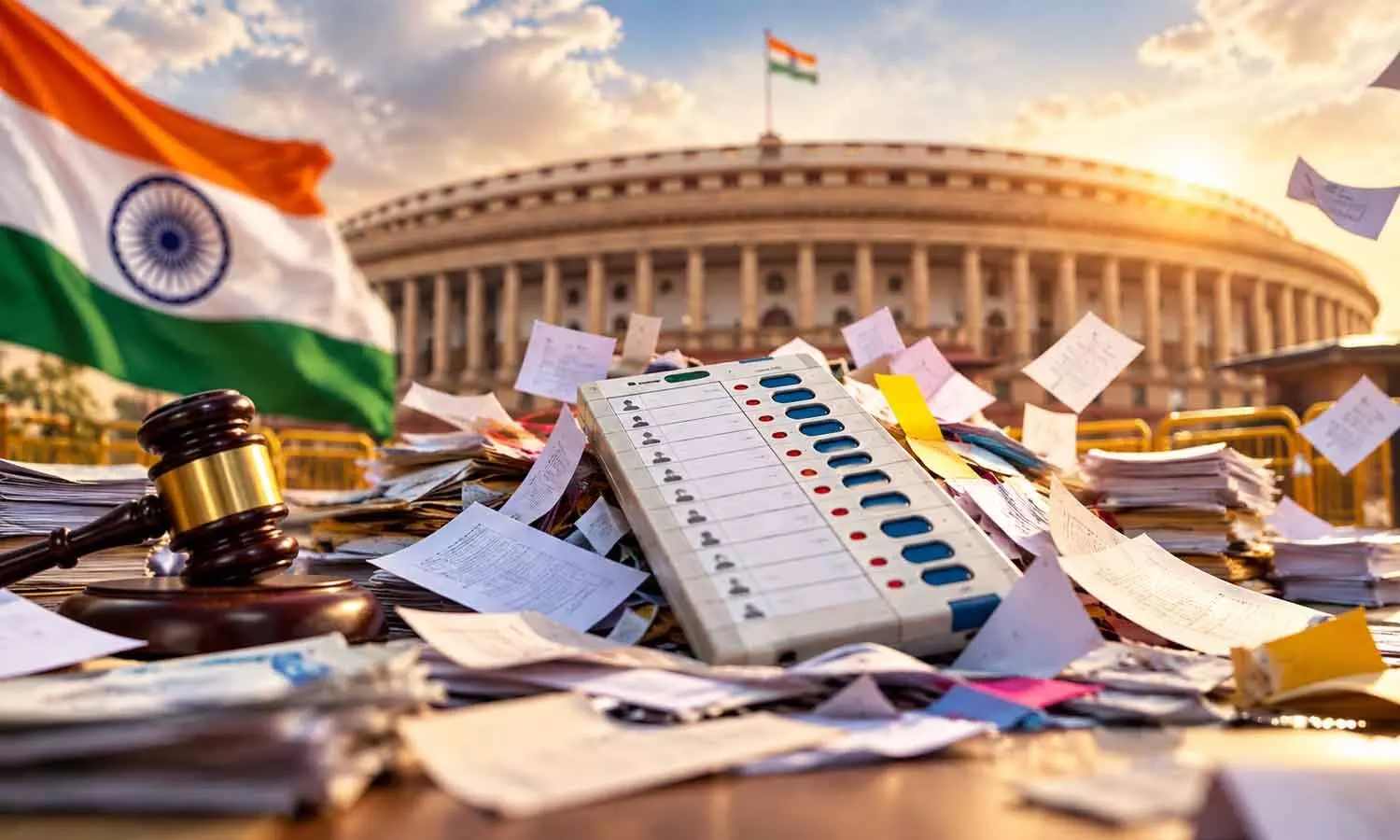
Something is very odd about the world’s largest democracy if a meeting of the entire poll panel makes front-page news, but that is exactly what happened on Saturday. In fact, that was the whole idea; the Election Commission of India (ECI) reportedly wanted to convey the message to the country that it is not a divided house, that all three ECI members are on the same page. The panel’s Special Intensive Revision (SIR) not only kicked off a major political row but also sparked considerable disagreements within the panel.
Election Commissioners Sukhbir Singh Sandhu and Vivek Joshi formally questioned the propriety of many decisions, as reported in a section of the media. The impression that one gets reading is that Chief Election Commissioner Gyanesh Kumar was running the constitutional body quite unilaterally. This gave credence to the accusations that the Opposition has been making against Kumar for some time; Congress and other leaders have been saying that he has been doing what suits the government.
Apologists for the government pointed out that the two Commissioners didn’t file any dissent note, but none of the arguments shielded any ice. It is unfortunate that the heat of partisan bickering between the government and the Opposition has not just reached but also scalded the ECI. For this, the government is solely responsible. It ensured that Parliament enacted the Chief Election Commissioner and Other Election Commissioners (Appointment, Conditions of Service and Term of Office) Act, 2023.
This law replaced the Chief Justice of India on the selection committee for poll panel members with a Union Cabinet minister; the third member was the Leader of the Opposition. The move to exclude the judiciary from the selection process of a key constitutional body was, to put it mildly, brazen. With two out of three representatives to pick ECI members, the government could have simply dispensed with the charade of a selection committee; a government order would have sufficed.
What further weakens the government’s position is the fact that the two Commissioners who questioned Kumar’s functioning were appointed as per the controversial 2023 legislation. So, the government can’t accuse them of being sympathetic to the Opposition’s cause. The mess that the Narendra Modi government finds itself in is completely of its own making. By altering the architecture and functioning of the Election Commission, it weakened the very institutional safeguards that could have insulated the poll panel from the charge of executive influence.
A government that commands a majority in Parliament may have the constitutional authority to enact such a law, but constitutional authority may be at variance with institutional soundness; this soundness cannot exist in an ethical vacuum. The ECI is not an ordinary government department whose credibility can survive unquestioningly on the strength of the government’s political mandate. Its authority ultimately rests on public confidence that it is impartial, autonomous and capable of resisting pressure from the party in power as well as from the Opposition.
That is why the present controversy is larger than the disagreements among three Election Commissioners. Once the ECI is perceived as an extension, willing or otherwise, of the executive, every decision it takes becomes vulnerable to partisan suspicion. The government may dismiss such criticism as politically motivated, but it cannot ignore the institutional consequences.
Noise, Questions and the Missing Answers
Govt is taking steps to address land issues: Minister Ponguleti Srinivasa Reddy
Rains subside in Chinturu Agency, flood relief underway
Karur Stampede Anniversary: CM Vijay Remembers 41 Victims, Says Pain Has Not Faded
Godavari breaches 40-feet mark at Bhadrachalam
Students From LPU Vandalise Campus After Unverified Gang-Rape, Suicide Rumours; Police Deny Claims


