




Will human composting replace existing burial methods?
In Short
Terramation speeds up natural decomposition under controlled conditions

Share :
Will human composting replace existing burial methods?
Rising population all over the world, coupled with shrinking space for public utilities have once again brought up the need to think about adopting newer techniques to dispose of dead human bodies. In the western world, where burials are the most popular methods of sending away the departed souls, a rethink on this topic is already floating in public domain. Understandably, concerns about environmental impact, limited cemetery space and the desire for more sustainable alternatives have encouraged interest in other approaches. This brings to the fore the experiments being considered for human composting instead of the time-tested practices. According to a recent global report, New South Wales has become the first Australian state to pass legislation allowing another option: “human composting”, technically known as natural organic reduction, and legally termed “terramation”. The process uses microorganisms to transform human remains into a compost-like material. The idea of turning a human body into compost might sound unusual, or even unsettling but one wonders how it works and whether this is a better alternative to existing methods?
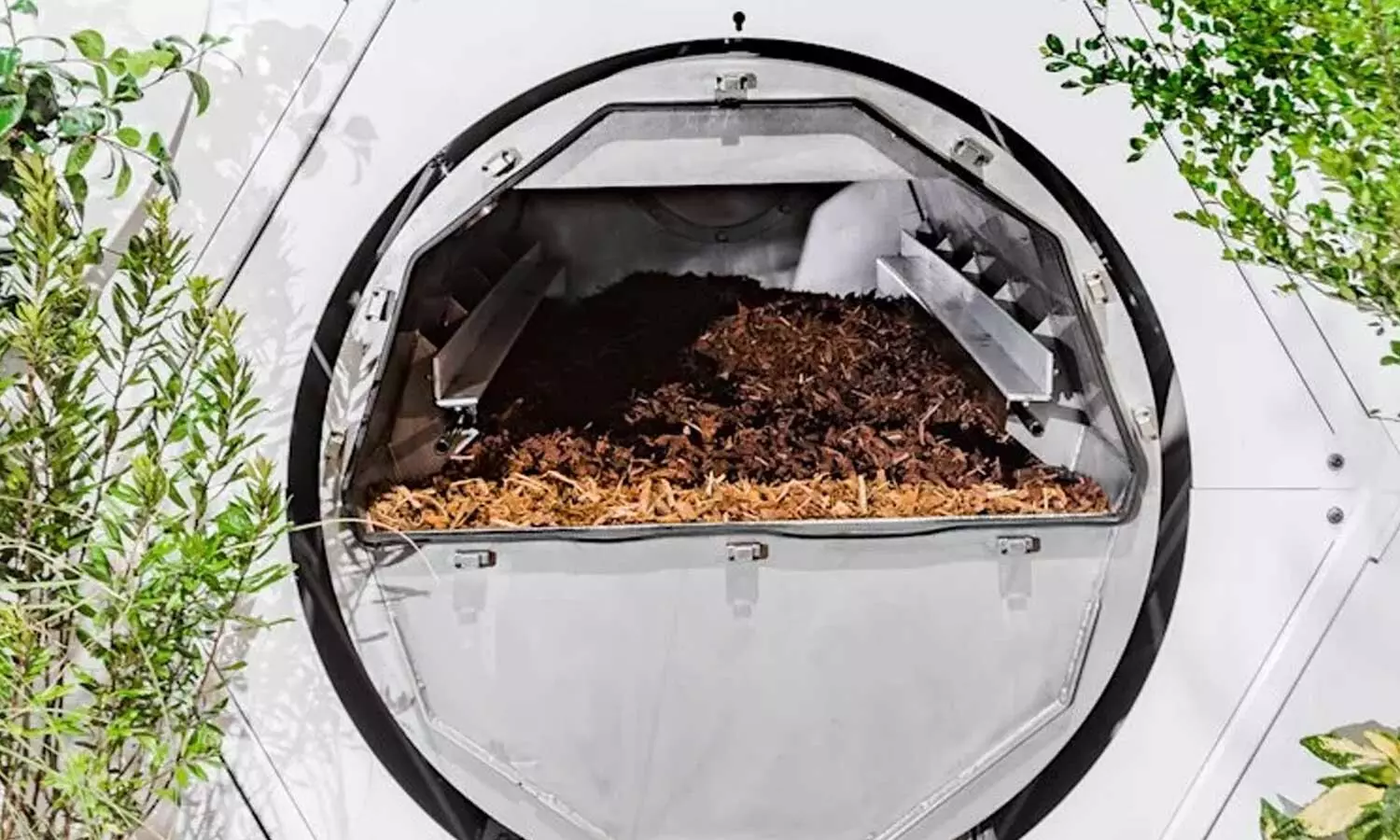
Terramation speeds up natural decomposition under controlled conditions. The body, wrapped in a natural shroud, is placed in a specially designed vessel with organic materials such as wood chips, straw and alfalfa. These help maintain the moisture and airflow needed for microorganisms to break down tissues. Temperatures of around 55-70 degrees Celsius, combined with controlled moisture and oxygen, speed up decomposition and help destroy pathogens. Depending on the design of the vessel, it’s also periodically turned 360 degrees or gently rocked side to side to speed up the process. Within two to three months, terramation produces approximately one cubic metre of nutrient-rich, compost-like material that can support plant growth. Not everything in the body breaks down completely. Bones and teeth may need further breaking down. Someone will also have to remove artificial materials, such as dental implants, surgical screws, joint replacements and silicone implants (the same is true for cremated remains). Terramation was pioneered in the United States by Katrina Spade, who not only launched the Urban Death Project in 2014 but also subsequently founded the green funeral home Recompose.
Human composting is now permitted in 14 US states. With a multiplicity of religions and strict adherence to traditions in India, it would require a herculean effort to pioneer such a move which would invite phenomenal pushback from the prophets of doom. What happens to our bodies after death is a deeply personal choice. Discussing our wishes while we are alive, making informed decisions and preparing ahead can help ensure our wishes are respected, giving those we love a greater sense of closure when the time comes. With death as a topic still discussed in hush hush mode or allowed a philosophical drift close to delusion in our modern lives, any innovation with a larger sustainable intention will still take only the slow lane to progress.


