






Exploring planetary humanism
In Short
The study weaves through eleven interlocking essays traversing Anand’s evolution from lyric compression to cosmic drama.

Share :
Exploring planetary humanism
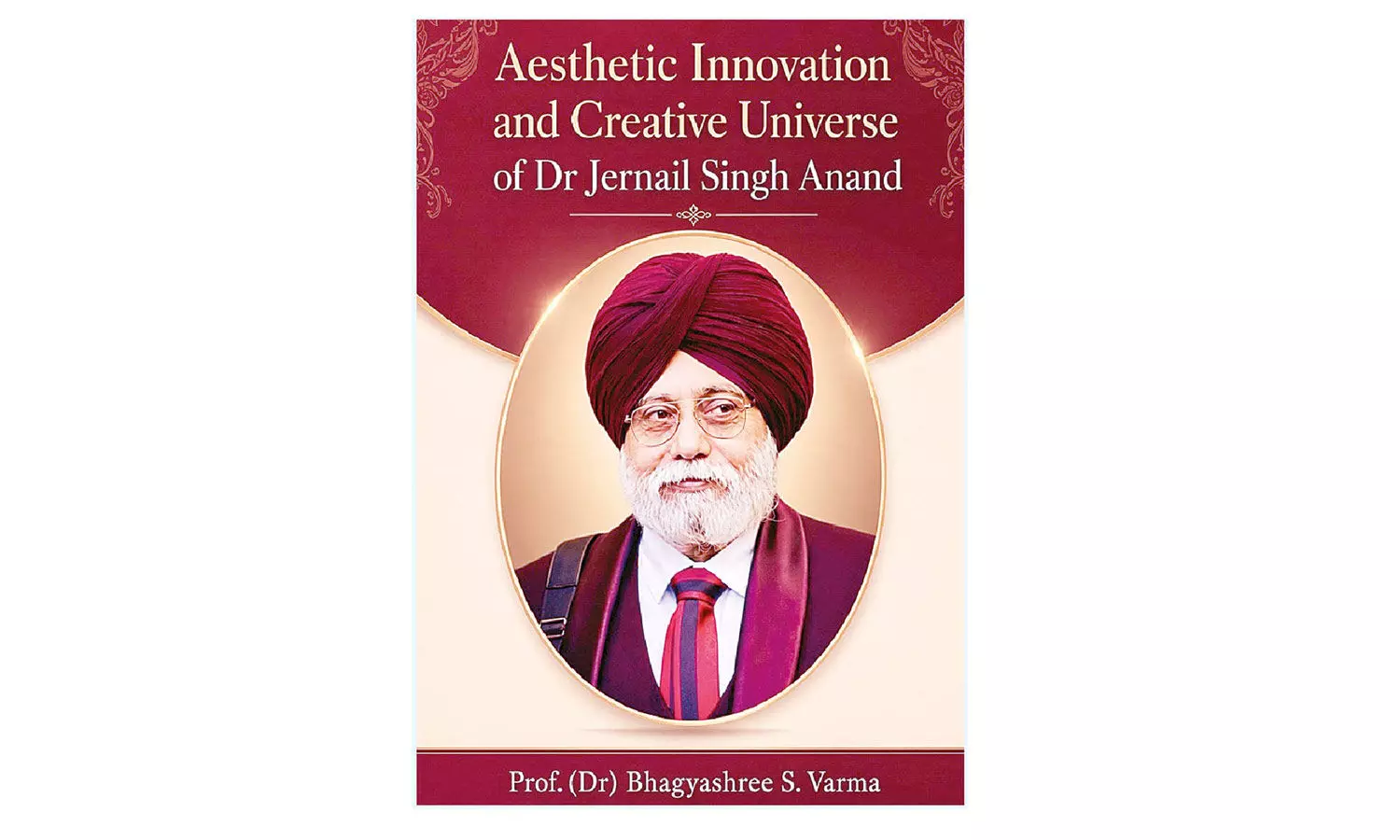
In an age when literature often fractures into specialized niches and irony becomes the default posture of the intelligent, Aesthetic Innovation and the Creative Universe of Dr Jernail Singh Anand arrives as a work of unusual coherence and courage. Dr Bhagyashree S. Varma while cataloguing the astonishing output of a poet who has produced more than two hundred books and twenty epics, constructs a sustained argument for a new category of literary mind—one that fuses the prophetic scope of Milton, the theatrical vitality of Shakespeare, the civilizational synthesis of Tagore, and the seer-like vocation of the Vedic rishi.
The study weaves through eleven interlocking essays traversing Anand’s evolution from lyric compression to cosmic drama. The opening chapter establishes the foundational aesthetic triad—brevity, wit and theatricality—showing how collections such as A Million Destinies function as laboratories in which epic strategies are first tested at lyric scale. Subsequent chapters place Anand in deliberate conversation with the global canon: Geet as sequel and critique of Paradise Lost, The Satanic Empire as a horizontal, networked re-mapping of Dante’s Commedia, and Mahabharata: The War of Words as a Draupadi-centred interrogation of Vyasa. These intertextual readings demonstrate how Anand turns inherited myth into a parliament of voices capable of addressing planetary crisis.
While analyzing “Corporate Gothic” in Lustus: The Prince of Darkness, Varma, drawing on a chorus of international critics, shows how Anand replaces Milton’s tragic rebel with a CEO of evil whose weapons are curriculum reform, media saturation, and the monetization of desire. The same brilliance illuminates later works: the dialogic East-West synthesis of From Siege to Salvation, the lyrical minimalism of “A Handful of Ashes” and The Master’s Voice, the theatricalization of suffering in Sufferings Favourite and The Sinned Against, and the Sufi-Romantic affinities that have secured Anand’s reception in Iran alongside Rumi and Gibran. The culminating chapters on Biotext theory and The Alternate Universe carry the argument into the digital present. Anand’s aesthetics of the “Overlap” and the “plastic universe” constitute a necessary response to algorithmic power and the erosion of lived ‘rasa’.
What unifies these diverse analyses is Varma’s insistence that Anand’s genre-smashing is not postmodern collage but a contemporary form of ‘yajna’—an offering of every available form into the fire of ethical consciousness. Criticism itself becomes ‘darshan’. The book quietly proves one of its central claims: that ethical literature need not sacrifice beauty, and that Indian thought can lead global discourse without self-orientalizing or mimicry.
Aesthetic Innovation and the Creative Universe will not settle comfortably into existing syllabus categories like ‘modernism’ or ‘postmodernism’. That is its virtue. It demands a new chapter—Planetary Epic Humanism—in which Anand stands as both participant and architect. For readers who still believe that poetry can be a form of moral engineering, that the alternate universe of art can rehearse better ways of being human, and that the epic form remains capable of addressing the crises of capital, technology, and spiritual exhaustion, this volume is indispensable. It is a welcome invitation to enter a creative universe that continues to expand, reminding humanity that the unknown is the inexhaustible source of philosophical wonder.


