






The conscience within
In Short
Saha’s poetic temperament lies at the intersection of protest and contemplation.

Share :
The conscience within
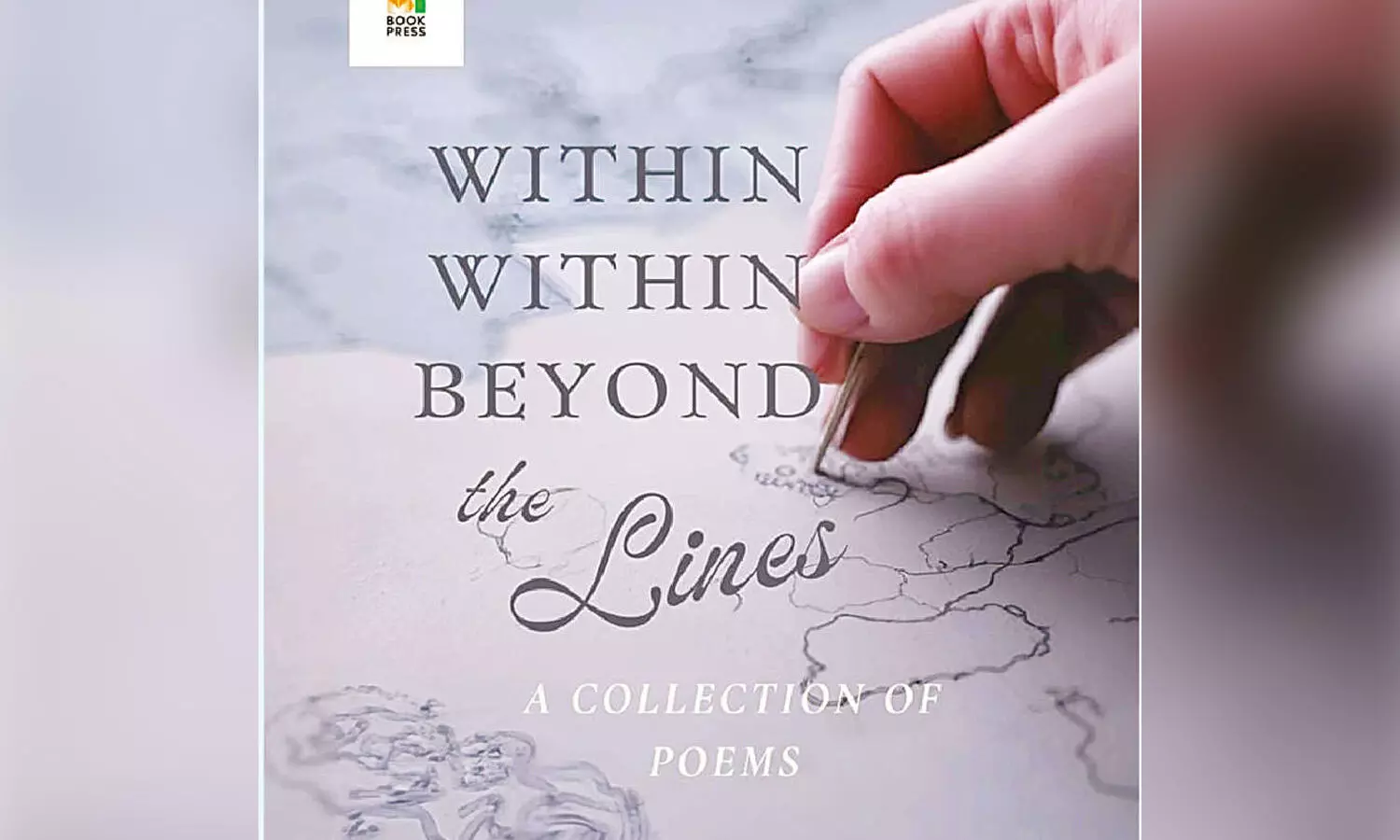
A child’s labour, a woman’s bruises, a war-torn landscape and the fading recollections of an ageing mind may seem worlds apart. Yet, in Satabdi Saha’s “Within and Beyond the Lines”, converge upon one question: what remains of our humanity when suffering becomes ordinary? Published by Bharat International Book Press, this collection confronts contemporary moral contradictions. Saha moves from domestic spaces to the scars of Beslan, Syria and Abu Gharib, making distant suffering everybody’s concern. Her poems examine child labour, violence against women, ecological destruction and fading memory, while retaining sensitivity towards monsoon rain, tenderness and ordinary endurance. The personal and political emerge not as competing territories but as interconnected expressions of the human condition, giving the collection both emotional breadth and moral urgency and a distinctly personal voice.
Saha’s poetic temperament lies at the intersection of protest and contemplation. Her engagement with social suffering recalls Faiz Ahmed Faiz, whose poetry transformed political anguish into collective hope. An affinity with William Blake is evident in her questioning of moral and spiritual assumptions. In “Do You Care?” and “Divine Whiplashes”, she confronts the apparent silence of the divine before human cruelty, a question troubling poets and philosophers. Yet her sensibility extends beyond indignation. Like Rabindranath Tagore, she discovers transcendence in nature, separation and everyday experience. Her treatment of ageing and memory in “Dementia” and “Superannuation” invites comparison with Emily Dickinson, who found vast territories within intimate experiences. Where Dickinson famously wrote, “I dwell in Possibility”, Saha explores possibility in the world and private consciousness. This balance makes her poetry socially responsive without sacrificing its lyrical character.
The philosophical dimension of “Within and Beyond the Lines” deepens its appeal. Saha examines knowledge, illusion, mortality and consciousness, reaching beyond conventional poetic expression. “Not Knowing” resonates with Socrates’ insight that wisdom begins with recognising ignorance. It also recalls the Upanishadic search for understanding beyond surface appearances. Her reflections on time, grief and uncertainty bring to mind Rainer Maria Rilke’s counsel to “live the questions now”. Saha treats uncertainty not as an intellectual limitation but as essential to spiritual growth. In “Krishna, the Conundrum”, she explores the complexities of faith and divinity, while “Soul” turns towards inward stillness. These concerns also invite comparison with Khalil Gibran, whose work explores love, suffering and existence. Saha’s achievement lies in bringing expansive philosophical questions into the emotional vocabulary of contemporary life, making abstract ideas accessible through human experience.
Ultimately, “Within and Beyond the Lines” draws strength from its expansive vision and sincerity. Saha demonstrates that poetry can address social injustice while exploring the mysteries of individual existence; both can enrich the same literary space. Her work bears witness to marginalised lives, acknowledges the vulnerability of ageing, questions inherited certainties and celebrates human tenderness. The title itself carries symbolic weight: its lines suggest not only the boundaries of a written page but also the divisions and conventions that people continually seek to transcend. Saha invites readers to look beyond those boundaries and recognise shared humanity beneath differing experiences. When contemporary expression competes for attention through immediacy, this volume makes a persuasive case for reflection, empathy and intellectual engagement. It is a thoughtful contribution to contemporary Indian English poetry, offering not merely verses to appreciate but questions that linger after the book is closed.


