




- 10 incredible beaches in California
- SIR hit voters of weaker sections hard: PCC chief
- Mukka Sravani to cross swords with Varudhu Kalyani for Mayoral post
- Ex cop ABV to contest for Vijayawada Mayor with Left support
- NDA seat-sharing sparks rebellion as TDP, JSP clash over poll tickets
- TDP names Guntur and Ongole candidates in 3rd list
- Local Body Polls: TDP, Jana Sena announce candidates as contest gathers pace
- MP CM attends Vijayawada Utsav, offers prayers at Kanaka Durga temple
When no one is watching, karma is still at work
In Short
There are moments in life when we believe we are completely alone, when our actions go unnoticed, our words remain unheard, and our choices escape the judgement of the world. In those moments, it becomes easy to believe that we can do whatever we wish without consequences.

Share :
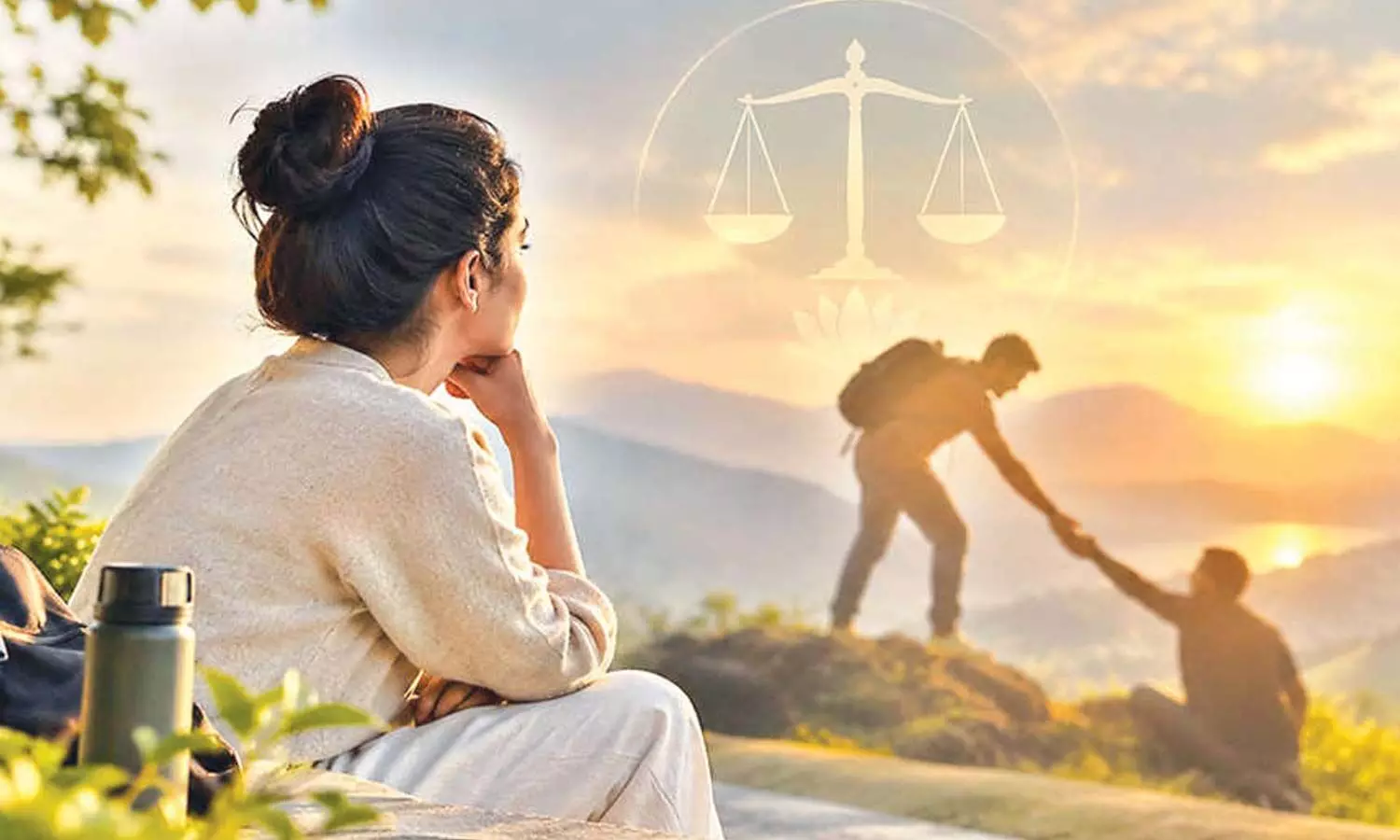
When no one is watching, karma is still at work
There are moments in life when we believe we are completely alone, when our actions go unnoticed, our words remain unheard, and our choices escape the judgement of the world. In those moments, it becomes easy to believe that we can do whatever we wish without consequences. Yet, the deeper philosophy of life reminds us that the true measure of a person is not how they behave when they are being observed, but how they act when nobody is watching. This is where the principle of karma becomes profoundly meaningful. It invites us to look beyond appearances, reputation and recognition, and reflect on the invisible relationship between our actions, our intentions and the people we ultimately become.
Karma is often misunderstood as a force that rewards good people and punishes those who do wrong. In reality, its philosophical meaning is much deeper. Rooted in Indian spiritual traditions, karma emphasises the significance of action and intention, reminding us that our choices shape our experiences, habits and character. Every decision, however small, contributes to the direction in which our lives move. A dishonest act may offer an immediate advantage, just as an act of kindness may go unnoticed, but neither is insignificant. Actions influence relationships, decisions, trust and self-perception, creating consequences that may unfold gradually rather than immediately. Karma, therefore, is not simply about waiting for life to deliver justice; it is also about understanding that our everyday choices are continuously shaping our future.
The most revealing moments of human character are often those that take place away from public attention. Returning something that does not belong to us, speaking honestly when a lie would be easier, treating a person with dignity when they cannot offer us anything in return, or refusing to exploit someone’s trust are choices that rarely attract applause. Yet, these moments reveal the foundation of our integrity. It is easy to appear honest when honesty is rewarded and kindness when kindness brings recognition. The real test begins when doing the right thing requires a personal sacrifice, when there is no audience to impress and no immediate benefit to gain. In such circumstances, our actions reveal whether our values are merely part of our public image or genuinely embedded in our character.
Human beings have an extraordinary ability to manage appearances. We can carefully construct reputations, present different versions of ourselves to different people and conceal truths that might challenge the image we wish to maintain. However, a reputation is what others believe about us, while character is what we repeatedly practise. The two may appear identical for years, but they are not always the same. A person may receive admiration for their achievements while quietly compromising their principles, or remain unrecognised despite consistently acting with honesty and compassion. Over time, the difference between appearance and reality can influence the quality of our relationships, the trust people place in us and the peace we experience within ourselves. The world may not always discover every hidden truth, but our choices still shape the person we become.
One of the most important lessons of karma is that intentions matter. Two people may perform the same action, yet their motivations can be entirely different. One may help someone out of genuine compassion, while another may do so only to gain influence, appreciation or social recognition. Outwardly, their actions may appear identical, but the inner experience is different. This does not mean that human intentions are always simple or that every action can be classified as entirely good or bad. People are complex, and our motivations often contain a mixture of emotions. Nevertheless, examining why we do what we do encourages greater self-awareness. Are we acting from honesty or convenience? From compassion or self-interest? From a sense of responsibility or a desire to be praised? These questions help us understand ourselves beyond the explanations we offer to others.
The idea that karma is still at work when no one is watching also reminds us of the power of conscience. Even when external accountability is absent, our actions can leave an impression on our inner lives. A lie may remain undiscovered, but maintaining it can require further lies. A betrayal may never become public, but it can alter the way we approach trust and intimacy. An unfair advantage may bring temporary success, but it can encourage habits that gradually weaken our moral judgement. Similarly, choosing honesty in a difficult situation can strengthen our confidence in our own principles. These consequences do not always arrive as dramatic turning points. Often, they develop quietly through repeated behaviour, influencing our thinking, our relationships and our ability to live comfortably with our decisions.
Yet, karma should not be reduced to the belief that every misfortune is punishment or that every successful person has necessarily earned their circumstances. Life is shaped by many forces, including chance, social conditions, other people’s decisions and circumstances beyond our control. Good people experience hardship, and people who behave dishonestly may sometimes prosper for long periods. Recognising this reality does not diminish the value of karma; instead, it encourages a more thoughtful understanding of it. The principle can guide how we choose to live without becoming a simplistic explanation for everything that happens. Its greatest value may lie not in predicting what the future will deliver, but in reminding us to take responsibility for what lies within our control: our conduct, our intentions and the consequences our actions create for others.
There is also an important distinction between karma and revenge. Revenge seeks to make another person suffer for the wrong they have caused, while a deeper understanding of karma encourages accountability, reflection and transformation. When someone acts unfairly towards us, it is natural to desire justice. However, allowing resentment to determine our own behaviour can lead us to repeat the very patterns that hurt us. We cannot always control whether another person acknowledges their mistakes or faces immediate consequences, but we can decide whether their actions will determine our own values. Choosing not to retaliate does not mean accepting injustice or abandoning appropriate boundaries. It means recognising that our responsibility for our own conduct remains, regardless of how others choose to behave.
In a world increasingly influenced by visibility, public approval and the pursuit of recognition, this lesson is especially relevant. Social media allows people to display generosity, success, compassion and achievement, but a public display cannot tell the whole story of a person’s character. Meaningful integrity often exists beyond the camera, the headline and the applause. It is reflected in how we treat employees when they make mistakes, how we speak about people who are absent, how we fulfil promises when circumstances become inconvenient and how we exercise power when we know we are unlikely to be challenged. These everyday decisions may never become part of our public identity, yet they influence the trust, respect and emotional security we build around ourselves.
Perhaps the most powerful way to understand karma is to imagine it not merely as a final judgement waiting at the end of our lives, but as a process unfolding through every choice we make. We are not defined by a single decision, and a mistake does not have to become our permanent identity. The ability to acknowledge wrongdoing, apologise sincerely, repair harm and choose differently is also part of taking responsibility. Genuine change begins when we stop asking only whether we can get away with something and start asking whether it is right, what it may cost others, and what it will make of us. Such reflection transforms karma from an abstract spiritual concept into a practical guide for living with greater awareness.
Ultimately, the question is not whether someone is watching us. It is whether we are willing to remain honest with ourselves when external judgement disappears. The world may overlook certain actions, misunderstand our intentions or fail to recognise our goodness. Immediate justice may not always arrive, and consequences may not unfold in the way we expect. But every choice offers an opportunity to strengthen or weaken the principles by which we live. We can use moments of privacy to justify our weaknesses, or we can use them to practise the values we claim to believe in.
When no one is watching, choose honesty. When no reward is promised, choose kindness. When dishonesty offers an easier path, choose integrity. Not because every good deed guarantees a reward, or every wrong action brings immediate punishment, but because the quality of our actions contributes to the quality of our character and the world we create around us. Karma, in its deepest sense, is a reminder that life is not merely about what we manage to show others. It is also about what we repeatedly choose when there is nothing to gain, no one to impress and no applause to receive. The world may not witness every action, but every action becomes part of the story we are writingthrough our lives.
Naidu sets higher vote-share target
Negligence During Municipal Polls: SEC warns officials of suspension, transfers
Tensions rise amid TDP-YSRCP showdown in AP local polls
CM Revanth Reddy greets Telangana women on ‘Saddula Bathukamma’
K’taka sugarcane protest: Shivakumar meets farmers, to convene meeting with stakeholders
Uttarakhand declares public holiday on Maha Navami; CM Dhami extends greetings


