




- Indrakeeladri decked up for Dasara festivities
- Green Card crackdown major setback for Indian IT giants
- ED seeks day-to-day trial of Jagan in quid pro quo case
- Donald Trump continues to harp on Nobel
- “Haven’t you taken pesticide yet”, tehsildar mocks farmer
- 'Urgent relief': Maha CM Fadnavis directs immediate foodgrain supply to 265 drought-hit talukas
- BJP won bypolls, rejects Opposition's claim that govt is afraid: Assam CM Sarma
- Sting operation row: Union Min Kumaraswamy questions CM Shivakumar, demands probe
Will AI become your best friend?
In Short
As AI companions become increasingly accessible and responsive, the line between digital convenience and genuine human connection is beginning to blur. While AI can offer comfort and support, the real challenge is preserving the empathy, patience and imperfections that make human friendships meaningful

Share :
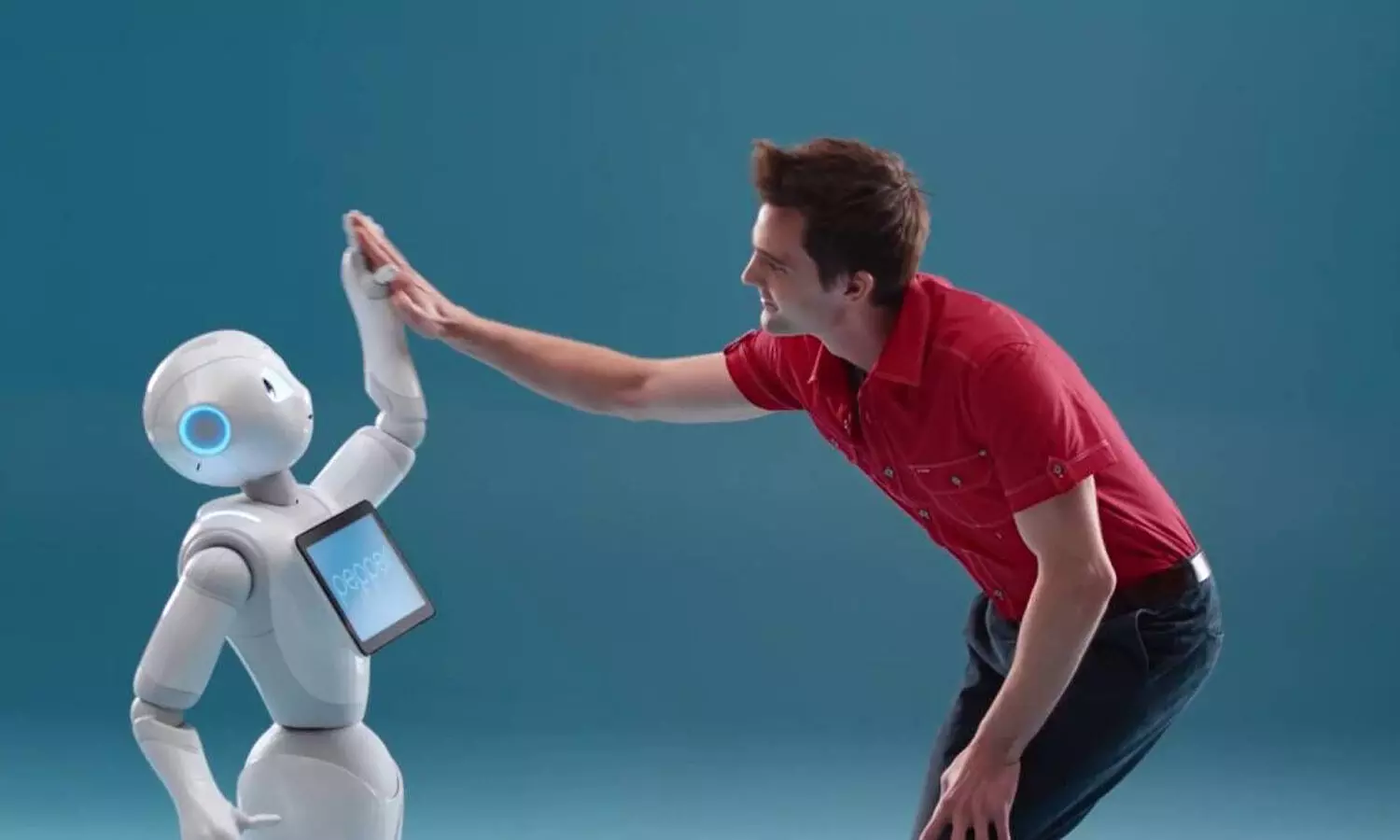
Will AI become your best friend?
For most of human history, friendship has been beautifully inconvenient. Friends misunderstand us. They get busy. They disagree, forget birthdays, interrupt at the wrong moment and sometimes tell us things we do not want to hear. Yet, somewhere within these imperfections, relationships acquire meaning. Now imagine an alternative. A companion who is available at two in the morning, never gets impatient, remembers what matters toyou, listens without interrupting and responds without judgment. Increasingly, that companion could be artificial intelligence. The question is no longer whether machines can talk to us. It is whether we may eventually prefer talking to them.
This possibility is becoming more real as AI moves from being a tool we use to something that increasingly resembles a presence in our lives. People already turn to conversational AI to brainstorm ideas, seek advice, practise difficult conversations or simply express thoughts they may hesitate to share with another person. And AI has one enormous advantage over human relationships: convenience. Human beings come with moods, expectations, disagreements and demands on our time. AI does not need reciprocity. It can be endlessly patient. That makes it remarkably easy to talk to — and perhaps dangerously easy to depend upon.
The paradox is that technology could make us feel less lonely while quietly making us more alone. Real friendship requires negotiation. We learn to apologise, forgive, wait, compromise and sometimes sit through conversations that are not about us. These small inconveniences are not defects in human relationships; they are how empathy is built. If companionship becomes personalised entirely around our preferences, we may gradually lose our tolerance for the friction that comes with other people. Why struggle through an uncomfortable conversation when an algorithm will understand? Why risk rejection when a digital companion will always respond? The danger may not be that AI becomes too human. It may be that humans begin expecting one another to behave like AI. None of this means artificial companionship is inherently harmful. For someone isolated, elderly, anxious or simply in need of a conversation at an odd hour, AI could provide meaningful support. Itmay help people articulate emotions, rehearse difficult conversations and even encourage them to reconnect with others. But perhaps there is a boundary worth protecting. AI can simulate attention, but friendship is more than attention. It is shared history, sacrifice, vulnerability, disagreement and the knowledge that another human being has chosen to be there. As machines become better at understanding us, the real human superpower may be our willingness to continue understanding one another. So perhaps the question is not whether AI will become our best friend. It is whether, surrounded by perfect digital listeners, we will still have the patience to remain good friends to each other.
(The write is a finance and AI practitioner, author and columnist exploring the intersection of artificial intelligence and human potential.)


