






- Telangana Government launches logo and tagline contest for Godavari Pushkaralu
- Graduate voter enrolment crosses 12.69 lakh in Telangana
- Supreme Court dismisses Telangana rice millers’ pleas
- GHMC warns traders of 100% penalty for no trade licence
- HYDRAA launches restoration works of Amber Cheruvu
- Harish Rao rattled by Revanth’s Siddipet meeting, say Congress leaders
- Revanth a one-time wonder, BRS will return to power: KTR
- Telangana Government issues six-phase SOP for land resurvey
Beyond medication: The role of yoga and lifestyle changes in managing COPD
In Short
Yoga can support respiratory health by improving mobility, posture and breathing awareness through gentle movements and mindful breathing. With regular practice, it may help improve physical comfort, relaxation and overall well-being

Share :
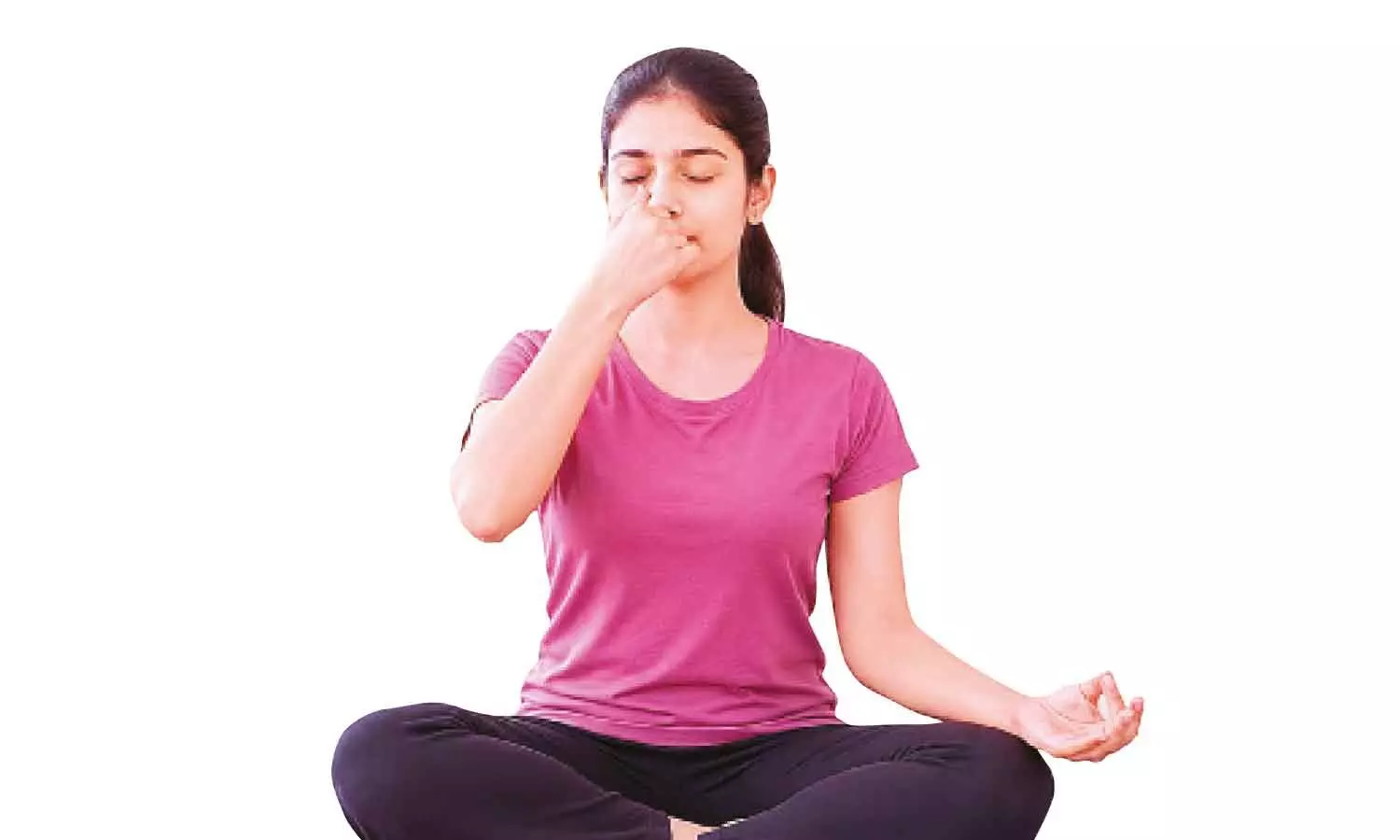
Beyond medication: The role of yoga and lifestyle changes in managing COPD
Breathing is an involuntary function which most people take for granted until it becomes difficult. For people with COPD, even the simplest of activities such as walking, climbing stairs or completing daily tasks around the home can become physically challenging. COPD is a progressive lung condition, characterized by persistent airflow limitation and difficulty in breathing.
Medical treatment such as prescribed inhalers and pulmonary rehabilitation is central to COPD management but lifestyle modifications and appropriate physical activity can play an important complementary role. Breathing techniques and gentle movements can improve breathing and quality of life.
Understanding the science of breathing
For individuals with COPD, narrowing of airways and lung damage can make it difficult for them to completely exhale. This can result in air trapping in the lungs, making breathing difficult and exhausting the respiratory muscles over time, reducing the individual’s exercise capacity.
Learning to breathe more effectively can help to manage the symptom of breathlessness. Breathing training can help people to regulate their breathing, to breathe out for longer and to use less energy in breathing.
Pranayama: Developing breath awareness
Certain yogic breathing techniques can support respiratory rehabilitation in individuals with COPD when adapted to their capacity.
Diaphragmatic breathing is the use of the diaphragm as the main muscle of respiration as opposed to the excessive use of the accessory muscles of respiration. Abdominal breathing, performed gently, can help to bring awareness to the breathing mechanism.
Bhramari Pranayama: The practice of making a humming sound on exhalation can help to promote controlled, prolonged exhalation. It can also help to reduce stress. However, as with all yogic practices, individuals with COPD should only practice this if comfortable and under the guidance of a professional.
Pursed-lip breathing, a recognised technique for respiratory rehabilitation, involves breathing in gently through the nose and breathing out slowly through pursed lips. This helps to maintain pressure within the airways during expiration, and can help to reduce breathlessness.
Gentle yoga movements and respiratory muscles
Yoga can be used to improve mobility, to improve posture and to provide physical conditioning. The movements can include shoulder rolls, gentle spinal movements and chest opening in supported positions.
The diaphragm, the intercostal muscles and the accessory muscles of respiration are all used in the act of breathing. Maintaining mobility in these muscles and conditioning them through exercise, under the guidance of a professional, can help to maintain functional movement and improve exercise tolerance.
Lifestyle changes that make a difference
COPD management includes more than breathing exercises. Go to smoke-free places, avoid air pollution, eat a balanced diet, keep active and take prescribed medication.
Pulmonary rehabilitation is an important aspect of COPD management and comprises supervised physical training, education and behavioral modification. Sufficient sleep, vaccination and early detection of signs of sudden breathing difficulty are also important.
A complete guide for respiratory health
The practice of Yoga begins with our breath. By approaching each breath with awareness and care, we begin to bring our body, breath and mind into harmony through gentle movement, mindful breathing and deep relaxation. Yoga can be practiced by anyone of any age, ability or level of fitness as each posture and breathing exercise can be modified to suit individual needs and abilities. With regular practice Yoga can develop physical confidence, help the practitioners connect with their breath in a deeper way and bring about a calm and steady mind to help them feel more comfortable in their daily life.
(The writer id an author, columnist, founder: Akshar Yoga Kendraa, Yoga and spiritual leader)


