




- Delhi Seemapuri Building Collapse: Several Feared Trapped As Rescue Operation Underway
- Claude Users Can Work Across Google Docs, Sheets and Slides In-App
- Rapido Ride Turns Into Nightmare After Captain Flees With Injured Passenger
- 7 Must-Watch OTT Releases For Your Dussehra Holidays
- ‘His Lips Turned Blue’: Dentist Recalls 45-Minute Effort To Save Flydubai Pilot Smit Machchhar
- Airtel Postpaid Plans Bring Free International Roaming From Rs 499
- 'Politics means nation building to him': Rajnath Singh on PM Modi's 25 years in public service
- 'Rising Together': India sets out vision for 2036 Olympic and Paralympic Games ambition
CSIR-NGRI Advances Groundwater Exploration and Skill Development for a Water-Secure Viksit Bharat
In Short
CSIR-NGRI Hyderabad is strengthening groundwater exploration, skill development, and sustainable water management through advanced geophysical technologies and the BhuNEER 2026 training programme, supporting India's Viksit Bharat vision.

Share :
CSIR-NGRI Advances Groundwater Exploration and Skill Development for a Water-Secure Viksit Bharat
Hyderabad: Under the leadership of Dr. Prakash Kumar, Director, CSIR-National Geophysical Research Institute (CSIR-NGRI), the institute is strengthening its efforts in groundwater exploration, skill development and sustainable water management, in alignment with the Government of India’s vision of a developed and self-reliant India — Viksit Bharat.
Recognising groundwater as a critical component of India’s water security, CSIR-NGRI is harnessing advanced geophysical technologies and developing skilled human resources to address the country’s growing water challenges.
The institute is particularly focusing on the application of modern geophysical techniques for identifying, assessing and characterising groundwater resources, especially in water-stressed regions.
Dr. Prakash Kumar has placed particular emphasis on translating advanced geophysical research into field-oriented solutions for pressing societal needs. The initiative aims to strengthen groundwater exploration capabilities across different parts of the country and support the sustainable availability of groundwater for drinking water and agricultural requirements.
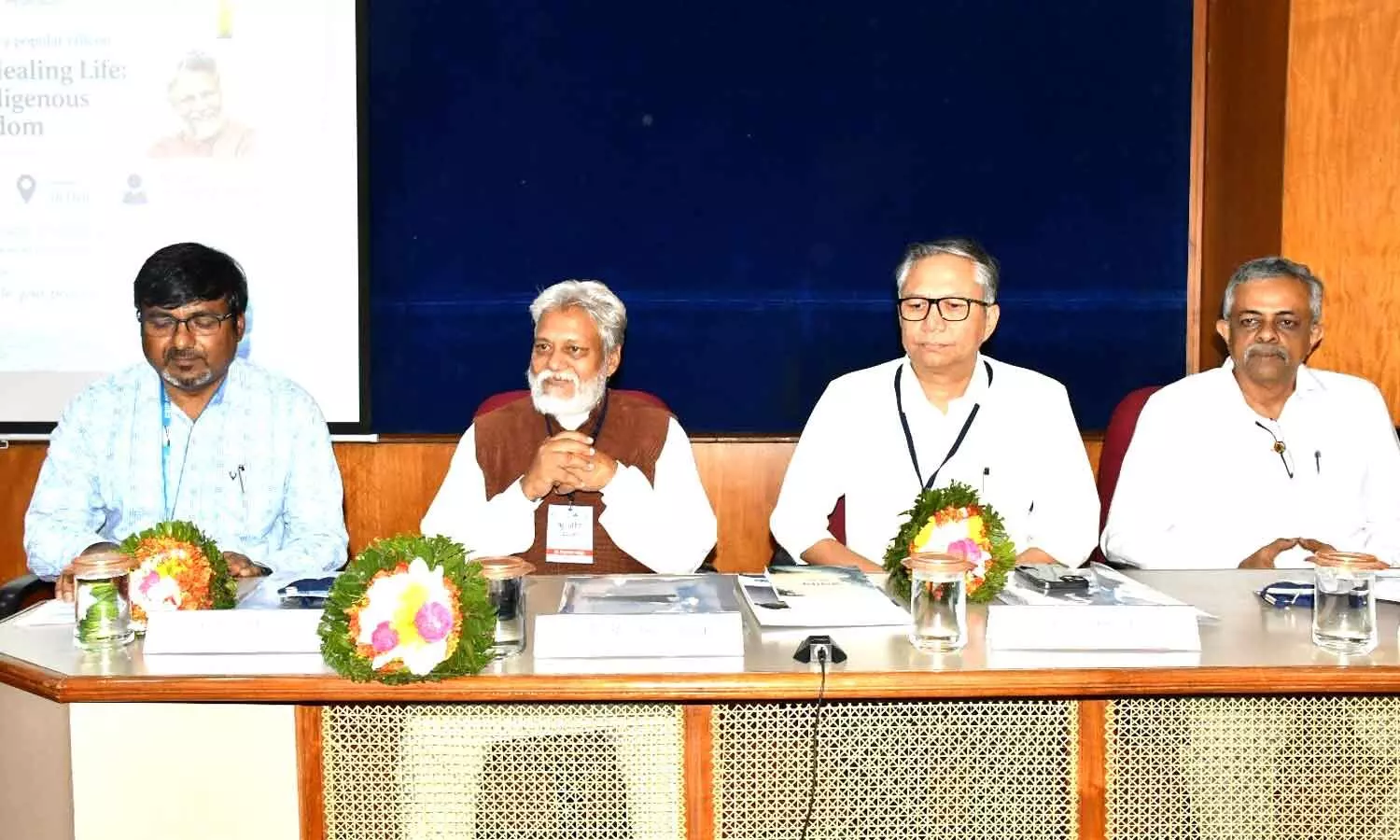
The importance of this initiative was highlighted during the visit of Dr. Rajendra Singh, popularly known as the “Water Man of India,” to CSIR-NGRI in connection with the BhuNEER 2026 groundwater training programme. Dr. Singh was welcomed by Dr. Prakash Kumar and senior scientists of the institute and was briefed on CSIR-NGRI’s research and technological capabilities in Earth sciences, geophysics and groundwater exploration.
Dr. E.V.S.S.K. Babu, Senior-most Scientist and Head, Human Resource Division, CSIR-NGRI, highlighted the institute’s human-resource capabilities and the importance of specialised training programmes such as BhuNEER in developing skilled manpower for groundwater exploration and management.
Organised under the broader Skill India initiative of the Government of India, the 10-day BhuNEER 2026 programme is designed to provide students, researchers and professionals with practical, field-oriented skills in groundwater exploration. CSIR-NGRI conducts such specialised training programmes at regular intervals to strengthen capacity in advanced geophysical technologies and their applications.
Drawing on his decades of experience with Tarun Bharat Sangh, Dr. Rajendra Singh shared valuable insights into community-based watershed management and the revival of traditional johads (check dams). His efforts have contributed to the rejuvenation of several rivers and approximately 2.5 lakh wells through nearly 15,800 locally constructed check dams.
Dr. Singh emphasised the need for “underground water banking” through scientific groundwater management and systematic aquifer recharge. He stressed that water conservation cannot be addressed through engineering interventions alone and that active community participation, particularly by farmers, is essential for ensuring sustainable water management and preventing water-related conflicts. He further highlighted the importance of creating awareness about groundwater movement and resource mapping so that communities can adopt faster and more effective conservation measures. Aligning cropping patterns with local rainfall patterns, he noted, can also significantly reduce irrigation costs.
According to Dr. Subash Chandra, Programme Coordinator, BhuNEER 2026 provides hands-on exposure to both conventional and advanced technologies used in groundwater exploration. The training covers Electrical Resistivity Tomography (ERT), EVRI, Ground TEM and Towed TEM, along with field data acquisition, processing, interpretation and integration.
The programme also introduces participants to emerging applications of Artificial Intelligence and Machine Learning (AI/ML) in geophysical data analysis and subsurface characterisation. By combining theoretical knowledge with extensive field exposure, the programme seeks to equip participants with practical skills for groundwater assessment and scientific resource management.
The initiative reflects CSIR-NGRI’s broader mandate of translating scientific knowledge and advanced technologies into solutions for national priorities. With sustained emphasis on groundwater exploration, capacity building and technology-led water management, the institute is strengthening the interface between geophysical science, groundwater exploration, skill development and sustainable water management.


