




Pedestrian Bridge Project Gives Students Practical Design Experience
In Short
Students of Anant National University will develop design proposals for a pedestrian bridge proposed by the National Highways Authority of India (NHAI) at Narol Crossroad in Ahmedabad.

Share :
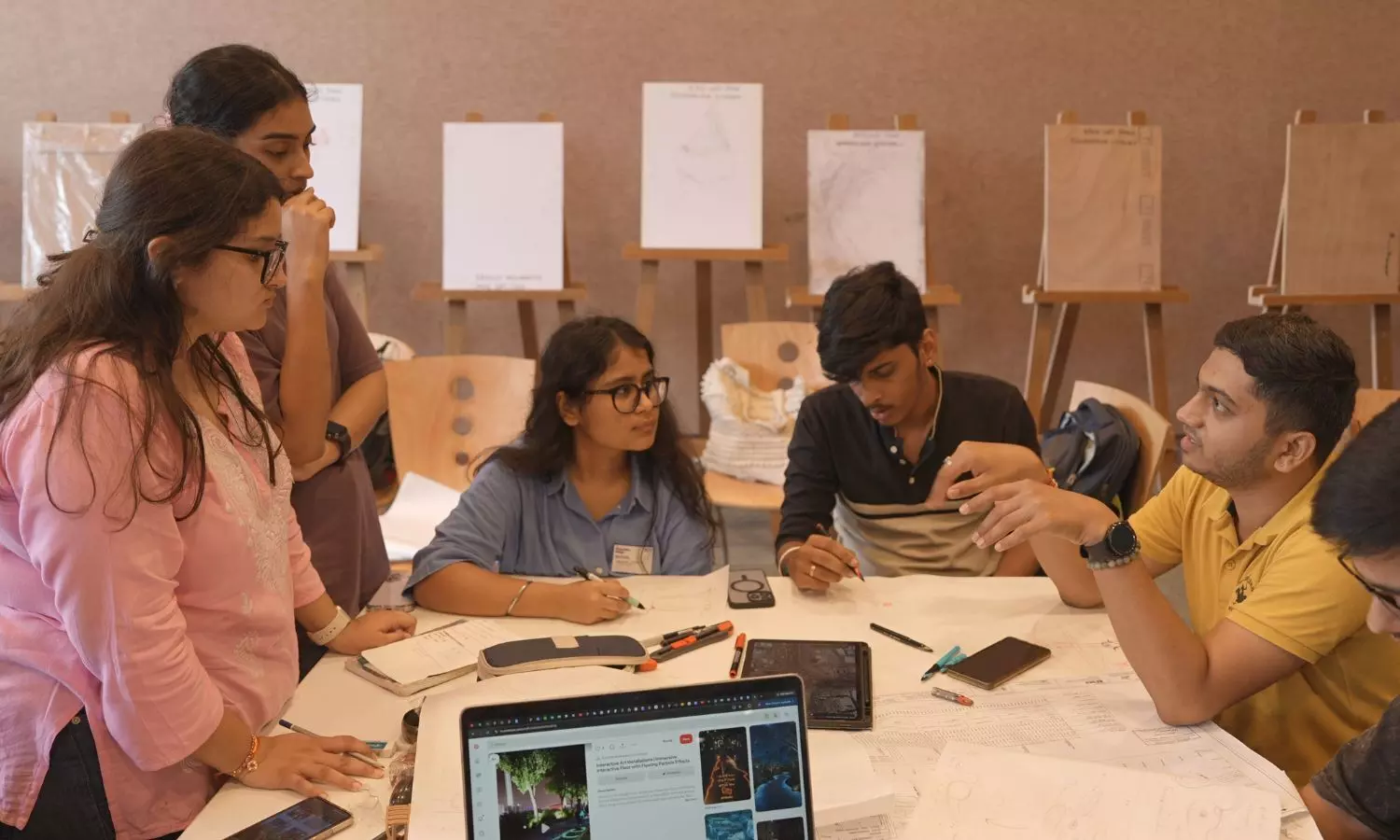
Students of Anant National University
Students of Anant National University will develop design proposals for a pedestrian bridge proposed by the National Highways Authority of India (NHAI) at Narol Crossroad in Ahmedabad. The initiative will give students an opportunity to apply classroom learning to a public infrastructure project and understand the practical considerations involved in design development.
Open to students across disciplines, the initiative will follow a three-stage design competition. Participants will be expected to develop practical proposals that consider usability, safety, visual design and the needs of people using public infrastructure. The selected proposal will be recognised and taken forward in collaboration with NHAI.
The initiative is being coordinated at the university by Dr Sanjeev Vidyarthi, Provost, and Ar Jabeen Zacharias, Professor of Practice. Shri Pradeep Atri, CGM (Tech) and Regional Officer at NHAI, and architect Habeeb Khan are also involved in the project.
According to Dr Vidyarthi, working on a real public site will help students understand how design decisions are shaped by people, place, safety and the wider urban context. The project is intended to expose participants to practical constraints, stakeholder coordination and the process of developing an idea towards implementation.
Zacharias said the initiative encourages students to consider how design responds to the needs of people and their surroundings. A pedestrian bridge provides a practical setting for examining how everyday infrastructure can be planned around accessibility, functionality and user experience.
Unlike projects developed solely as classroom exercises, the competition will introduce students to the stages involved in preparing proposals for a real-world brief. Participants will have to consider technical requirements, revise their designs and understand the coordination required to develop a workable solution.
The cross-disciplinary format will allow students to approach the challenge from different perspectives. It will also provide exposure to collaboration among designers, technical professionals and public agencies, helping students understand how design education connects with infrastructure planning and implementation.


