




A memoir’s challenge to a former CJI’s legacy
In Short
It is tempting to turn this into a story of heroes and villains: a brave judge speaking out and a Chief Justice who bent. Justice Chandrachud may have believed he was being practical, keeping the system running and getting vacancies filled. Justice Kaul believed he was guarding a principle. Both can be sincere. It is not about who wins this argument, but what the institution learns from it.

Share :
A memoir’s challenge to a former CJI’s legacy
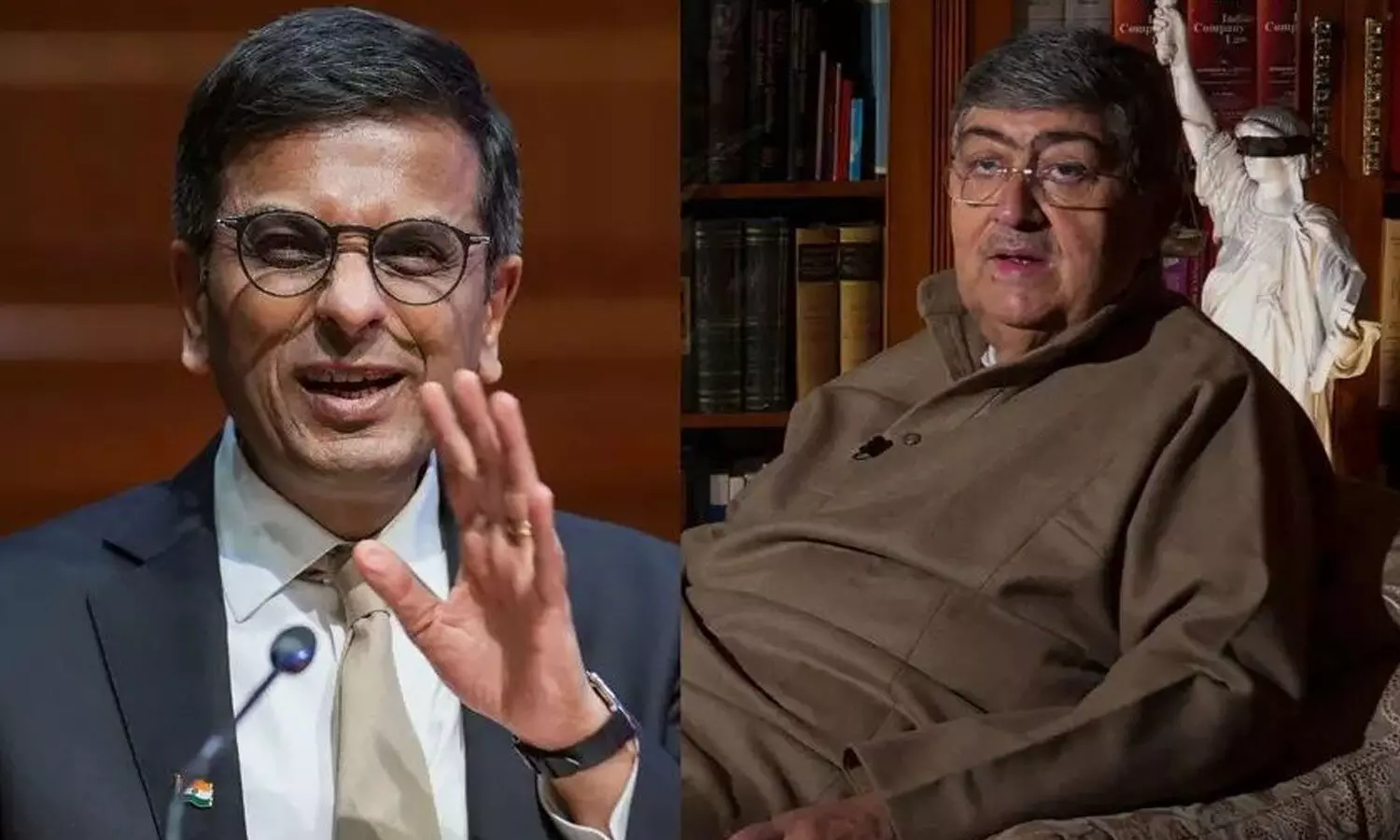
A judge’s legacy is never settled on the day he retires. It is tested again, sometimes years later, by the people who worked alongside him. That is what is happening now to former Chief Justice of India D Y Chandrachud. His former colleague, Justice Sanjay Kishan Kaul, has questioned his approach to judicial appointments in an upcoming memoir, Without Fear or Favour. The question deserves calm hearing, not a shouting match.
What has been said actually:
Justice Kaul, who retired in December 2023 and sat with Justice Chandrachud on the Collegium from June 2022, makes a specific claim. He describes a meeting to fill six Supreme Court vacancies, where five names had already been agreed. According to him, a sixth name appeared at the last minute, and the Chief Justice wondered aloud whether he should call the government to check its view.
The wording matters. Justice Kaul, speaking to a news agency and Karan Thapar, said it was not a question of “pleasing the government”. He called Justice Chandrachud “too deferential” on appointment matters. His deeper worry is about practice: “a difference between consultation and what I came to regard as pre-approval.” He also says such pre-discussions happened before and after Justice Chandrachud’s tenure. He also objected to the transfer of a PMLA-related case from his bench to another. The Congress has seized on these remarks, citing the memoir to raise concerns about judicial independence under the Narendra Modi government. This is a political party using a judge’s words in a political fight. That does not make Justice Kaul’s words false, but the readers should separate the memoir from the politics around it.
Why the concern deserves attention:
The Collegium system rests on one idea: judges choose judges, so that the executive cannot fill the courts with people who are comfortable with it. If names are cleared with the government before the Collegium formally meets, that idea is weakened, even if no one intends it. Justice Kaul’s argument is sensible. A Chief Justice with a long tenure and high personal credibility can afford to push back. A successor with a few months in office may not. Once the government gets used to being consulted first, it may expect it. A habit then becomes a rule that nobody wrote down. Critics will also point to the wider record of Justice Chandrachud’s years as CJI, from November 2022 to November 2024. Some commentators have felt that certain high-profile outcomes and the handling of sensitive matters leaned towards the government. Others have noted the allocation of important cases to some specific benches. These are impressions, and reasonable people disagree. But the Kaul memoir adds a new voice, from inside the room, to that conversation.
The other side of the story
Fairness requires saying plainly what this does not prove.
First, these are one judge’s recollections: A memoir is a personal account. Justice Kaul himself said he did not think Justice Chandrachud was trying to please the government. He also said, “maybe he had already taken some kind of approval”, which is a possibility, not a finding. The book has not even been released yet, and much of what we know comes from interviews and reports about it.
Second, the other Collegium members reportedly would not have accepted the sixth name: By Justice Kaul’s own account, the proposal did not go through. That suggests the Collegium’s internal checks worked, which is exactly what the system is designed to do.
Third, consulting the executive is not illegal or unusual: Under the existing process, the government has a formal role: it is sent names, can raise objections, and can seek reconsideration. Reasonable people can ask where consultation ends and pre-approval begins, as Justice Kaul does. That is a debate about procedure, not necessarily about wrongdoing.
Fourth, the Chief Justice has a right to reply: Justice Chandrachud has served the country for decades, and his judgments also include rulings that went against the government. The electoral bonds scheme was struck down under his bench’s leadership, a decision that was uncomfortable for the ruling party. Any fair assessment must weigh both sides of the ledger.
There have been precedents: The tension between the executive and the judiciary over appointments is old and has existed under governments of different parties. Justice Kaul himself said the practice was there before and after.
Separating institutions from individuals:
It is tempting to turn this into a story of heroes and villains: a brave judge speaking out and a Chief Justice who bent. Real life is rarely so tidy. Two honest judges can disagree about how much cooperation with the executive is wise and how much is too much. Justice Chandrachud may have believed he was being practical, keeping the system running and getting vacancies filled. Justice Kaul believed he was guarding a principle. Both can be sincere. It is not about who wins this argument, but what the institution learns from it. The Supreme Court has long faced criticism over delays in filling vacancies and the opacity of the Collegium. If a government is slow to clear names, a Chief Justice may feel pressure to compromise just to get judges appointed. That is a structural problem, and blaming one person for it is too easy.
A way forward:
Instead of trading accusations, India could use this moment for some modest, practical reforms:
Publish the process: The Collegium could state clearly when and how the government may be consulted and ensure that it happens only after formal deliberation.
Record reasons: Written reasons for selecting and rejecting names would build public trust.
Set time limits: If the government must respond within a fixed period, there is less need for informal back-channel talks.
Let the institution answer: The Supreme Court, or the former Chief Justice, if he so chooses, can offer its own account so that the public hears both sides.
Conclusion:
Justice Kaul’s memoir raises an honest question about how the highest court in the land picks its own members. It does not show that any ruling was bent in the government’s favour, and it should not be read that way. It does remind us that independence is not only about big verdicts but also about small habits, such as who is called, when, and why. A mature democracy can hold two thoughts at once: that a former Chief Justice deserves respect and fair hearing, and that the system he led must be open to scrutiny. Respecting the court does not mean never questioning it. It means questioning it with facts, patience, and good faith.
(The writer is with the Cholleti BlackRobe Chambers, Hyderabad, and writes on the economy, politics and law)


