






- Telangana targets 5 GW data centre capacity by 2029
- Women power crucial to achieving drug-free India: Kishan Reddy
- BRS seeks compensation for rain-hit, withered crops
- Hyderabad public transport hobbled by last-mile connectivity hitch
- 60.49% polling recorded in Krishna panchayat elections
- Online fertiliser enforcement module launched
- AP municipal polls record 62.5% turnout
- Elaborate security, traffic arrangements in place for President Murmu’s 3-day Mizoram visit
A simple and transparent regime promotes efficiency, accountability, and public trust
In Short
It is in recognition of that fact that the government of India has, in recent times, taken several important steps.
Share :
Representational image
Public administration is an area in which the virtues of simplicity and humility are as rare as they are important. For example, a complicated administrative system can be confusing and lead to delays, apart from opening possibilities for corruption and litigation. A simple and transparent regime, on the other hand, is conducive to promoting efficiency, accountability and public trust.
It is in recognition of that fact that the government of India has, in recent times, taken several important steps. A good example is that of the JAM Trinity, a technological and financial framework that links three core components to drive financial inclusion and power, with J standing for the ‘Jan Dhan’ bank account of the beneficiary under the ‘Pradhan Mantri Jan Dhan Yojana’, an initiative that provides universal, affordable access to banking services and basic savings accounts. A is for the Aadhaar or the 12-digit unique biometric identification number issued by the Unique Identification Authority of India which establishes verifiable, paperless identity across the country; and M is the mobile telephone number, allowing real-time notifications, banking services, and integration with digital payment platforms like the Unified Payments Interface.
The integration has helped simplify the delivery of welfare benefits and reduce welfare and subsidy leakages by enabling Direct Benefit Transfers straight to beneficiaries verified digital identities and bank accounts It also cuts out middlemen and prevents money from being lost. It has, in addition. helped accelerate the transition to a cashless economy by replacing physical cash with real-time, low-cost digital payments; apart from addressing the issue of the urban-rural divide through giving people in remote villages access to the same instant, interoperable financial infrastructure as urban users and bringing unbanked and underbanked populations into the formal financial and credit ecosystem thus promoting their financial inclusion
Simplification of the procedures for granting licences, registrations, tax administration and easing the regulatory environment are some other measures aimed at encouraging entrepreneurship and investment. It is necessary to appreciate that, all such initiatives notwithstanding, continuous improvements are necessary to ensure that the approach is sustained.
Also important is the recognition of the fact that merely simplifying economic policies without adequate analysis may produce unintended consequences. For instance, digital simplification may exclude people without internet access or digital literacy.
As an example from recent times, the Covid-19 pandemic not only required sophisticated scientific research, logistical arrangements and international cooperation, but also called for arrangements for the messages to the public to be communicated in simple language so that every citizen could understand them.
International relations, and particularly the art of diplomacy, are other aspects of public administration that constitute the very foundation, as they are active, strategic strengths that replace arrogance and coercion with active listening, trust, and mutual respect.
The inability to appreciate the value of the qualities of humidity and complicity open results in disaster consequences. As it has been said, pride comes before a fall, an idiom which warns that excessive arrogance, overconfidence, or self-importance often leads to a sudden failure or humiliation. It is a shortened adaptation of the proverb in the Bible which goes, “Pride goeth before destruction, and a haughty spirit before a fall.” and highlights that when individuals become overly sure of their own invulnerability, status, or abilities, they lose touch with reality, make critical mistakes, and set themselves up for ruin. It is also a central moral theme of the Mahabharata.
Humility and simplicity are also qualities that vastly enhance the efficacy of communications through letters. Expressing a message clearly and respectfully without arrogance, jargon, or overly flowery language makes it warm, approachable, and easy to understand while showing genuine regard for the reader.
In the olden days, communications in administration used to end with the expression, “I beg to remain your most humble servant”, not as a display of servility, but by way of showing respect to the addressee.
Humility and simplicity have been the most striking features of the autobiographies of many great persons as they help build deep trust with readers by focusing on truth and shared human experiences rather than self-praise. When an author writes with restraint, the reader becomes an active participant, discovering the writer’s strength through the realistic depiction of actual actions rather than exaggerated accounts of imagined successes, Readers doubt writers who brag and admire those who readily admit their flaws, doubts, and mistakes, makes their successes feel earned and believable. Also simple, everyday details help readers see themselves in the narrative story. A quiet moment of failure is often more relatable than a grand public triumph.
As an example, in his autobiography, ‘The Story of My Experiments with Truth’, Mahatma Gandhi portrays humility and simplicity not merely as personal virtues, but as essential tools for self-purification and public service. Rather than writing to boast of his achievements, Gandhi frames his life as a continuous series of moral trials, openly confessing his flaws to show that spiritual and political strength comes from reducing oneself to zero. I must, in this context, confess to having made my own humble attempt to chronicle the events of my life, both as an individual and as a civil servant. M B S Prasad, the well-known Telugu writer, kindly offered to convert the pieces I dictated tand engaging narrative. To test the viability of our arrangement, I sent him a few relatives by wave examples. Prasad promptly stumped me with the question as to what interest prospective readers would have in reading about, for instance, why I admired a Bollywood singer or a great cricketer or, for that matter, Mahatma Gandhi. It was then that I realised the need to relate my narratives with absolute frankness, neither hiding failures and, at the same time, nor exaggerating successes. And, as luck would have it, the book did reasonably well in the market.
At the end of the day, the burden of the song of this piece, and the one preceding it on the same subject. has been that the maxim that simplicity is the ultimate sophistication is to be perceived not merely as a personal, professional, institutional, societal, or procedural virtue, but also an environmental necessity.
The faith in simplicity that guided the approach of many great people is eloquent testimony of that perception.
Einstein, for instance, not only firmly believed that the laws of nature should be simple, symmetric, and logical consistent and showed through his work that that belief would, in fact, lead to spectacular results.
Everyone needs to understand that life would become much more joyful and happy, if only they would learn the art of reducing worries and protecting their daily schedules by declining non- essential obligations, lowering financial overheads and, importantly, practicing the attribute of being down – to – earth with no airs and graces.
By way of ending this piece also with a lighthearted snippet, here is a story I heard.
A friend of President Lincoln, upon walking into the White House to meet the President to keep an appointment, found Lincoln polishing his shoes. Rather taken aback, he asked, “Sir, do you polish your own shoes”?
With a mischievous smile, Lincoln, in reply, asked the friend, “May I ask whose shoes you polish”?
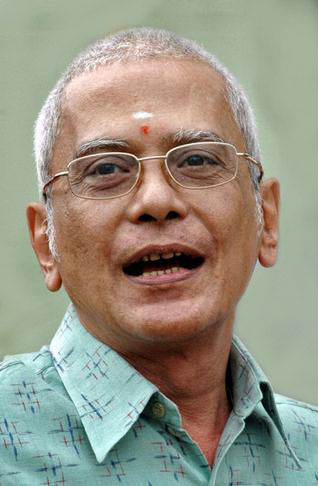
(The writer was formerly Chief Secretary, Government of Andhra Pradesh)
Revanth Reddy broaches internal party issues with Congress TG in-incharge
Govt will issue notifications for 25k jobs soon: CM Revanth Reddy
KTR raises pitch for ‘Cong-Mukt TG’
Telangana charts 10-year climate resilience roadmap
State Election Commissioner hails peaceful GP polling
NDA-backed candidates sweep GP 1.0 elections


