




- NTR district ready for peaceful polls
- Prakasam ready for ZPTC, MPTC polls
- Power lines, houses damaged in Prakasam
- CPM seeks immediate relief to cyclone-hit farmers
- Leopard movement sparks concerns in Tirupati
- Centre’s nod for five Telangana projects worth Rs 3,892 crore
- Nilekani meets Naidu, discusses exam reforms
- TTD’s food lab a role model to the nation: Addl EO
Ageing-it’s all in the mind
In Short
Ageing is a natural and irreversible part of human life which everyone experiences in different stages; from infancy, through childhood, adolescence, adulthood, to old age.
Share :
Ageing-it’s all in the mind
The world is ageing rapidly.
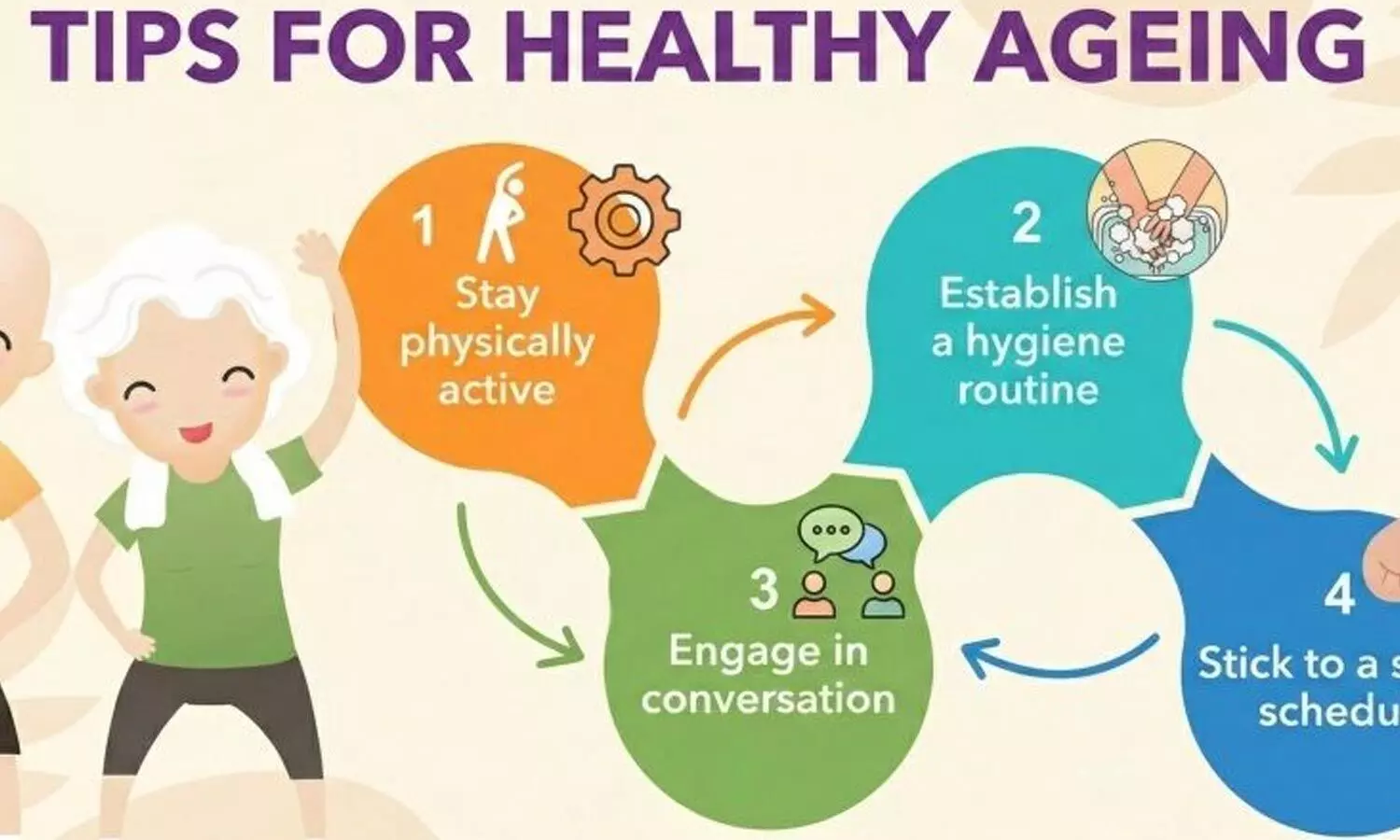
Ageing is a natural and irreversible part of human life which everyone experiences in different stages; from infancy, through childhood, adolescence, adulthood, to old age. While childhood is a period of learning, youth is full of energy and ambition and adulthood brings responsibilities, old age offers opportunities for reflection and sharing experiences. Ageing does not mean merely getting older but stands for the experience of living, learning, adapting, and growing wiser through the years.
Each stage has its unique appeal and brings its own challenges, responsibilities, opportunities, and lessons, so long as one remains willing to learn, love, contribute, and appreciate the moment. Old age is a phase that can be filled with dignity, happiness, and purpose, when one learns not to view it as a period of decline. People can achieve goals at any stage of life. The trick lies in forgetting their age while keeping their dreams alive. Age imposes no limits on one’s capabilities. Self-set boundaries are the only true restrictions, and one is never too old to evolve, shine, or achieve greatness. Growing older should, thus, never mean losing one’s dignity or social value.
I know several successful people who died very young, and many others living long and pointless lives. The lesson to be learnt is that it is not the length of life that matters, but its quality. In the ultimate analysis age is, in truth, just a number. Older adults can stay active, healthy, and engaged in hobbies or sports, like running or travelling, just as well as younger people. As Mark Twain put it, “Age is an issue of mind over matter. If you don’t mind, it doesn’t matter.”
One meets so many people who, apparently, never seem to age at all. They continue to look young and remain fit and show little impact of the passage of time on their mental or physical faculties. Much like the description of Cleopatra in Shakespeare’s Antony and Cleopatra, “…age cannot wither her, nor custom stale…”
I have known some like that and found that they are not what they are entirely on account of an obsession with good habits. The important thing they told me is to remain happy and contented. Not denying oneself the good things of life but enjoying them in moderation.
During the period 1974 to 2024, the number of people aged 65, worldwide, almost doubled. It will double again by 2074, by which time, the number of people above 80 will have tripled, according to a study commissioned by the United Nations.
This phenomenon is attributable to improvement in life expectancy and a fall in fertility rates, with many countrieshaving a total fertility rate below the ‘replacement level’, or the average rate needed to replace a population over time. Developing countries are often ill-prepared for the new reality.
Countries such as Japan, Italy, and Germany, with substantial elderly populations, face challenges such as pension expenditure, healthcare costs, labour shortages, and the availability of caregivers. In India, in particular, the transition is happening rapidly and affecting almost every aspect of human development.
While it certainly is a challenge, ageing is also an opportunity, as people can continue contributing to society through mentoring, entrepreneurship, and community service.
Retired teachers, for instance, can guide students. Experienced employees, and senior citizens can participate in environmental protection activities. The growing demand for elderly care can also create a demand for the services of nurses, physiotherapists, and geriatric specialists.
For those who were employed earlier, retirement can create new opportunities to pursue neglected interests. For example, people can enjoy gardening, reading, travelling, spiritual activities and spending time with grandchildren.
The elderly can also serve as guides and mentors for younger generations, as their experiences can help young people understand the consequences of their decisions and prepare for life’s challenges. Within families, for instance, grandparents often play an important role in passing on traditions, cultural values, family histories, and moral principles.
Families play a vital role in helping older members remain healthy, secure, and emotionally connected. However, changing economic conditions and lifestyles have led to migration of children to faraway places, for employment and education, leaving their parents behind. Technology can help such families remain connected through phone calls, video conversations, and digital services. Technology cannot, however, completely replace personal interaction, affection, and companionship. And with a view to dealing with the challenge of the needs of the elderly so left behind, in terms of boarding, lodging, medical care, entertainment, and companionship, old age homes have come into being.
Going forward, the challenge for India lies not in simply increasing life expectancy but in ensuring that the additional years are healthy, secure, meaningful, and dignified. The elderly, after all, are individuals with rights, aspirations, experience, and the capacity to contribute to society.
To that end, age-friendly public spaces, accessible transport, affordable healthcare, and effective social security systems need to be created by the central and state governments, with the association of the corporate sector, NGOs and community-based organisations.
At the global level, countries need to cooperate to develop sustainable systems of care and social protection for the elderly.
Soon after my superannuation from the civil service and in keeping with the spirit that the time after retirement is when one ought to fulfil long cherished and hitherto unfulfilled desires, I did several things in succession. Firstly, I contacted a friend of mine in the Union Ministry of Defence, who arranged for me to watch the launching of a satellite at Sriharikota, an experience I had long been looking forward to. I then travelled to Pune to meet my childhood hero and eminent astrophysicist Jayant Vishnu Narlikar, with whom I spent half-an-hour stimulating conversation. I also re-discovered my interest, as well as skills which I thought I had lost, in billiards, much to my pleasant surprise. Writing books and giving lectures, especially to civil service aspirants, on various subjects such as ethics, agriculture, disaster management and governance also helped me keep going and keep ennui at bay.
While on ageing, I recall an inspiring anecdote. It is said that, on his 90th birthday, George Bernard Shaw was approached by a young photographer. After taking a snap, the young man apparently expressed the hope that he would be able to do it again when Shaw would be celebrating his 100th birthday. With an indulgent smile, Shaw is said to have told the photographer, “Why, young man. you look reasonably fit!”
(The writer was formerly Chief Secretary, Government of Andhra Pradesh)


