




- Gujarat CM to meet citizens in Gandhinagar, Ahmedabad on first day of 'Vikram Samvat 2083'
- PM Modi has proved what 'pro-incumbency' looks like: BJP chief Nitin Nabin
- Pledge to protect environment, use green firecrackers in moderation on Diwali: Delhi Speaker
- During Gujarat visit, HM Amit Shah holds meet with MHA divisions on state-related issues
- Rajnath Singh meets IAF personnel at Bengal's Bagdogra, says they serve as robust shield for security of eastern sector
- Heavy rain forecast for Tamil Nadu for next two days; eight districts on alert for Diwali
- Google Faces Lawsuit Over AI on School Laptops
- Petrol and diesel prices today in Hyderabad, Delhi, Chennai and Mumbai on 07 November 2026
An eight-year-old’s desperate escape
In Short
Four decades after a mob attacked his family in Bhusawal, Sukhwant Singh still breaks down recalling how he hid in a drain as his father desperately searched for him

Share :
An eight-year-old’s desperate escape
The assassination of Prime Minister Indira Gandhi on October 31, 1984, was followed by one of the darkest episodes in independent India’s history. Anti-Sikh violence swept across several parts of the country, with mobs targeting Sikh families, homes and businesses. Thousands lost their lives in the attacks that followed.
According to official figures submitted by the Union Government to Parliament, 3,325 people were killed across the country, including 2,733 in Delhi alone. The violence, however, was not confined to the national capital. Sikh families in several other towns and cities also faced attacks, arson and looting. Bhusawal in Maharashtra was among the places where the violence reached Sikh households.
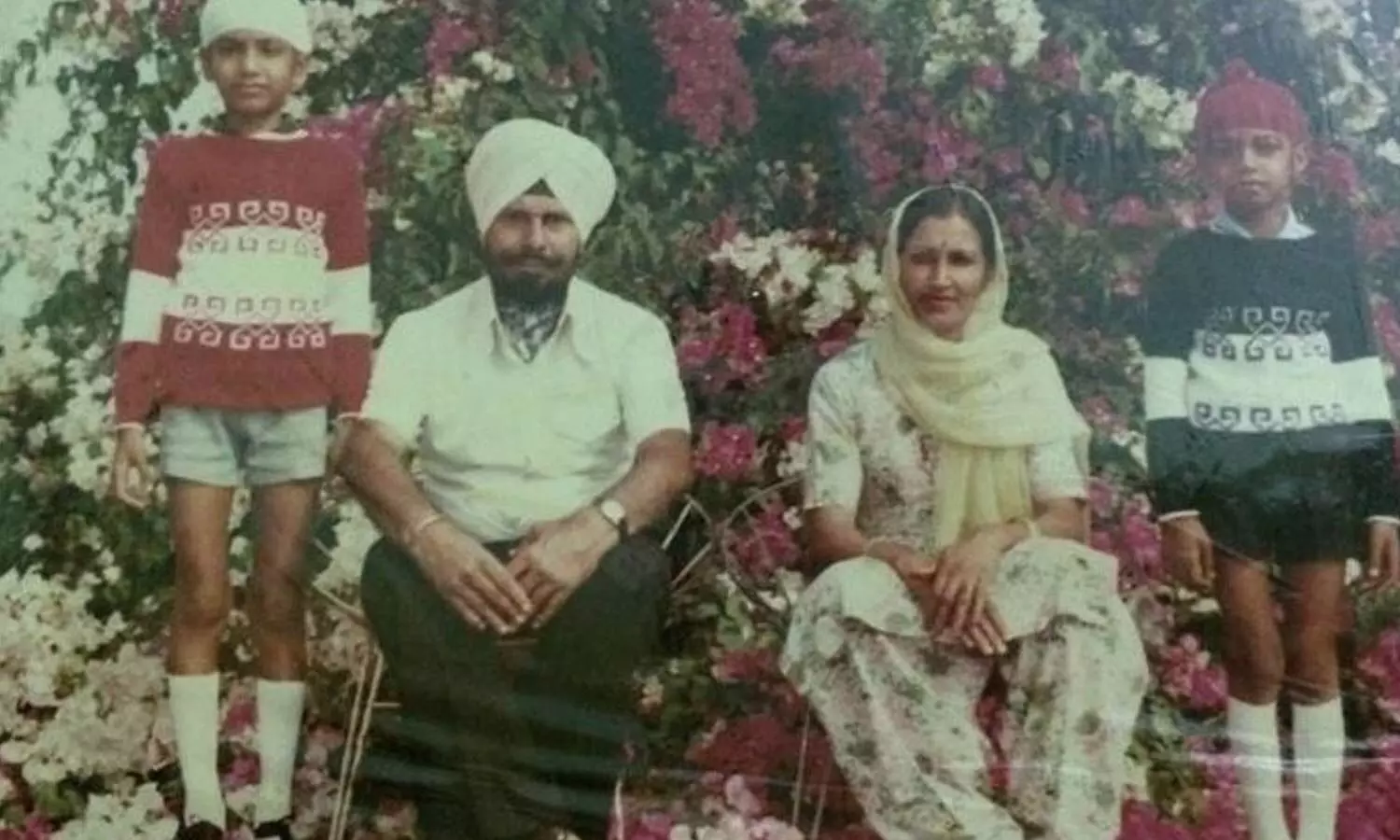
For Sukhwant Singh, then an eight-year-old boy, November 1, 1984, remains a day of terror. A mob descended on his home in Bhusawal, where his father, Beant Singh, was employed with the Railways. As the family scrambled to escape, the child fell into a drain and lay there, covered in filth, for more than half an hour while his family desperately searched for him.
“When my dad found me and picked me up, I started shouting, ‘Daddy! Daddy! Daddy!’ He pulled me out and took me away just as I was, in a terribly filthy condition,” recalls Sukhwant, lovingly called Kake.
Now living in London, he continues to carry the memories of that traumatic childhood experience. Even after more than four decades, recounting the incident brings him to tears. His father had returned from work that evening. The children were playing while the adults sat discussing Indira Gandhi’s assassination and the violence that had followed.
“My dad and mum hid us inside the house. Some people were running around with sticks, some with knives, some carrying iron rods, and others with swords, intent on killing people,” Sukhwant says.
“The attackers smashed the windows and damaged the gates,” Beant Singh recalls. The family rushed towards the home of a neighbour living behind their quarters. In the confusion, Sukhwant fell into a drain and disappeared from sight.
A father’s desperate search
Beant Singh had managed to get the other children to safety when he realised that his younger son was missing. He returned to look for him even as the mob advanced. “They knew that the Sardars lived in the middle. So they attacked our house,” Beant recalls, describing how an estimated 400 to 500 people moved towards the railway colony after setting fire to houses elsewhere in Bhusawal on November 1. Standing outside with a sword, Beant realised he could not fight off the mob alone. His wife and children were in danger. He had sent his family towards the neighbours’ house, but his younger son was nowhere to be found.
For Sukhwant, it was a terrifying wait in the drain, unsure of what was happening around him. For his father, it was a desperate search through the violence for a child whose whereabouts were unknown.
Disguised as girls
Even after the family reunited, the danger had not passed. The neighbour gave the children water, let down their hair and made them lie beside his daughters to disguise them as girls.
“They told us that if anyone came, we should say that we were girls sleeping in their house,” Sukhwant recalls. While the family sought shelter, their home was looted. Gold, household possessions and the children’s school bags were taken.
“They took everything,” Beant says.But one sight continues to haunt Sukhwant more than the loss of their belongings. A picture of Sri Guru Nanak Dev Ji in their home had been desecrated.
“There was a picture of Sri Guru Nanak Dev Ji in our house, and they had thrown slippers and shoes at it. The whole scene was horrific. I have never been able to forget it. Even today, I cry when I remember it,” he says.
A journey away from home
Police protection arrived late. After moving between shelters, the family eventually found refuge in Bhusawal’s Officers’ Colony. Two or three days later, when they finally ventured outside, the children had to get their hair cut to avoid being identified as Sikhs.
The family eventually decided to leave for Punjab. Accustomed to travelling first class because of his father’s railway employment, Sukhwant remembers the humiliation and hardship of the journey without tickets.
“Imagine, we were people who would otherwise have travelled first class, but during that time, we had to travel to Punjab sleeping beside the toilet, near the door,” he recalls. The family stayed in Punjab for a year or two before moving on with life. But the memories of Bhusawal never went away.
For Beant, the November 1984 nightmare remains that of a father who had to leave his family to search for his missing child amid an advancing mob. For Sukhwant, it is the memory of being eight years old, hiding in a drain, covered in filth and waiting for his father to find him.
The family escaped the violence, but the fear, humiliation and loss of security stayed with them. More than four decades later, a father’s desperate search and a child’s cries of “Daddy” remain inseparable from their memories of that day.


