






- When Deepika Padukone took Rs 10,000 from her mother: I’d make you proud
- Union Minister Jual Oram inaugurates National Tribal Literary Festival
- TN govt announces interest relief for 6496 Housing Board allottees
- 84 lakh missing voters in K’taka: BJP on SIR exercise
- Kerala CM Satheesan unveils startup scale-up mission
- Piyush Goyal to inaugurate 45th India International Trade Fair
- Akhilesh Yadav’s Ram Mandir visit ahead of 2027 UP Assembly polls is opportunistic: BJP
- AP SEC releases notification for 23 pending urban local bodies elections
Can growth and welfare be financed?
In Short
But a harder question remains: not whether Telangana can borrow or spend more, but whether that spending will create enough growth, revenue and productive assets to meet the obligations it is building.

Share :
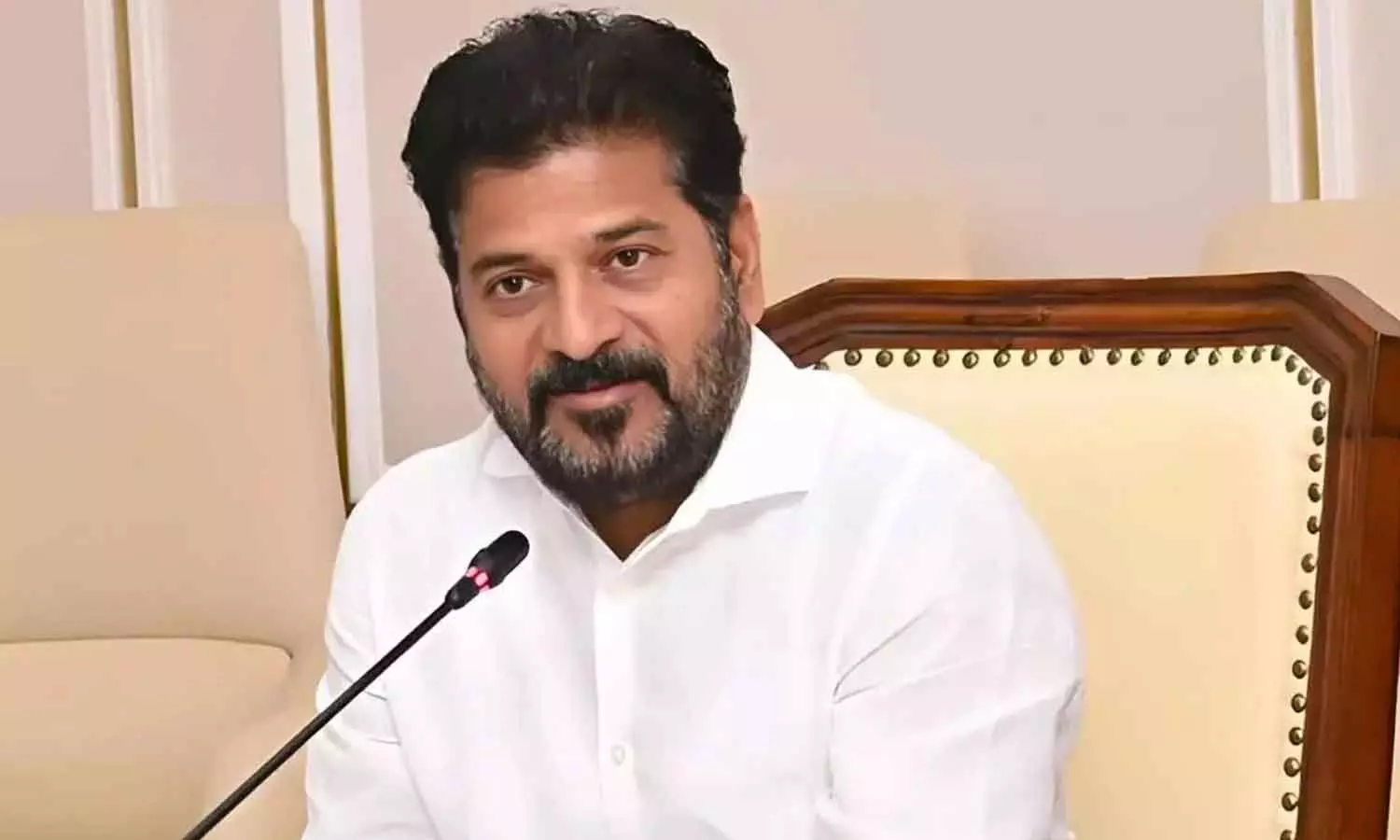
TG Chief Minister A Revanth Reddy
Since its formation in 2014, Telangana has become one of India’s more dynamic state economies. Hyderabad’s IT, pharmaceutical, biotechnology, real estate and manufacturing sectors have lifted incomes and given the state a stronger own-tax base than the other states. But a harder question remains: not whether Telangana can borrow or spend more, but whether that spending will create enough growth, revenue and productive assets to meet the obligations it is building.
Debt: not a crisis, but not yet safe
Debt liabilities were 12.4 per cent of gross state domestic product (GSDP) in 2016-17, peaked at 28.8 per cent in 2020-21 during the pandemic, and stood at 27.0 per cent in 2023-24, just below the all-state average of 28.1 per cent. The 2025-26 estimate is 27.5 per cent, while the state’s narrower FRBM measure gives about 29 per cent. The burden has plateaued but not returned to pre-pandemic levels.
Growth offers protection. If nominal GSDP outpaces the effective interest rate, the debt ratio can stabilise, provided the primary deficit is contained. That is the concern. The primary deficit, borrowing even after excluding interest, is estimated at 1.9 per cent of GSDP. Projected falls in interest payments may reflect accounting changes rather than relief.
Guarantees add risk. At about 14 per cent of GSDP, these contingent liabilities could land on the budget if guaranteed public entities cannot repay. India Ratings puts 2025-26 liabilities at 28.3 per cent of GSDP, but 41.8 per cent including guarantees. The numbers show no immediate debt crisis, but no proof of long-term sustainability either.
Taxes: Strong potential, shaky forecasts
Tax buoyancy measures how fast own-tax revenue grows relative to nominal GSDP; above one means taxes outpace the economy. Telangana’s formalising urban economy, property market and growing consumption give it room to achieve this. State GST should be the main engine, through compliance, invoice matching and analytics rather than higher rates.
Stamps and registration can grow with better valuation, though reliance on real estate makes revenue volatile; excise should not become a long-term pillar, and land sales are one-time receipts that should never fund permanent commitments.
The 2026-27 Budget estimates own-tax revenue at ₹1,48,186 crore, 11 per cent above the 2025-26 revised estimate, lifting it to 7.6 per cent of GSDP from 6.8 per cent in 2024-25. These are projections. In 2024-25, actual revenue receipts fell 24 per cent short of budget. Potential is not performance.
Capital spending: Allocations versus execution
The Budget raises capital expenditure by roughly 30 per cent over the 2025-26 revised estimate, but larger allocations do not guarantee larger spending. The CAG’s 2023-24 report shows water supply and sanitation outlay falling from ₹1,751.79 crore to ₹1,350.78 crore, and roads and bridges from ₹2,451.90 crore to ₹2,123.78 crore.
The state surrendered ₹878.75 crore and ₹538.22 crore of those allocations, respectively. Roads linking industrial clusters can cut logistics costs, while delayed or underused projects with high maintenance costs do the opposite. Every major project needs cost-benefit analysis, independent appraisal and post-completion evaluation.
Where growth comes from
Growth is services-led, centred on Hyderabad: IT, pharmaceuticals and biotechnology, finance, real estate and healthcare, alongside industry in electronics, aerospace, food processing and cement. Agriculture, with paddy, cotton, maize and dairy, still supports a large rural population but depends on water and crop diversification. Services generate high-value jobs and exports, but the weakness is concentration; construction and real estate are cyclical. The remedy is regional diversification through industrial corridors and service hubs in Warangal, Karimnagar, Khammam and Nizamabad.
Musi and Future City: Big bets, unproven returns
The Musi Riverfront Development Project covers river cleaning, sewage treatment, flood control, roads, parks and tourism. Its first phase, including Gandhi Sarovar at Bapu Ghat, was estimated at ₹6,500-7,000 crore in March 2026. Benefits could include construction jobs, tourism, higher property values and municipal revenue. It needs a transparent project report covering land acquisition and resettlement, restraint on borrowing and land-sale dependence, priority for sewage treatment over beautification, and protection for affected households.
Bharat Future City, south of Hyderabad, spans about 30,000 acres within a proposed 765 square kilometre greenfield development, and is still under development. Its value lies in building a genuine ecosystem of manufacturing, AI, life sciences and services, not just a property market. Announced investment should not be read as added GDP: imported materials and land transactions are not new domestic value added, and no GSDP boost should be claimed without proper cost-benefit analysis.
Welfare: The recurring commitment
Welfare is the hardest question, since these are recurring costs while land sales and borrowing may be temporary. The six guarantees are allocated ₹50,713 crore in 2026-27, about 21 per cent of revenue receipts, down from about 24 per cent in 2025-26. Around 85 per cent goes to four programmes: Rythu Bharosa, Cheyutha pensions, Indiramma housing and Mahalaxmi. Subsidies and transfers rose from 3 per cent of GSDP in 2017-18 to 5.2 per cent in 2024-25, with power subsidies growing sharply.
The risks are limited fiscal space, revenue uncertainty, rising debt, crowding out of capital investment and an ageing population. Yet welfare is not wasteful merely because it is revenue expenditure; pensions, farmer support, housing and health aid can build human capital. Sustaining it means better tax buoyancy, periodic review of eligibility and duplication, lower power-subsidy costs, stable job creation, protected capital spending and five-year costing.
The El Niño risk
A fresh climatic risk now sits on top of these pressures. The India Meteorological Department forecast a 10 per cent monsoon shortfall, and NOAA expects a “very strong” El Niño peaking between November 2026 and January 2027. The monsoon has been tracking as India’s driest in 17 years. For Telangana, weaker rains threaten farm incomes, groundwater and rural demand, softening the GST, excise and registration collections behind the Budget’s 11 per cent own-tax growth, while pressure rises on Rythu Bharosa, power subsidies and relief spending. A repeat of 2024-25’s 24 per cent revenue shortfall could widen the 1.9 per cent primary deficit and push the state toward borrowing. That strengthens the case for stress tests, contingency reserves and water-management plans, since effects will stretch over the next 12 months.
Five priorities
• Link borrowing to productive investment, with guarantees and off-budget borrowing in risk assessments.
• Strengthen tax buoyancy with realistic revenue estimates.
• Make capital spending productive, tracking completion as closely as allocations.
• Integrate welfare with development, judged by measurable outcomes.
• Adopt a rolling five-year fiscal framework with stress tests for slower growth, weaker collections and higher interest rates.
Conclusion
Telangana has a strong services sector, a dynamic capital and high own-tax capacity. It also carries a 1.9 per cent primary deficit, guarantees at 14 per cent of GSDP, large welfare commitments and a habit of missing revenue targets. What matters is the line between spending that merely lifts current demand and investment that raises productive capacity. Welfare cannot be sustained without growth, and growth cannot be sustained without investment in infrastructure, education and health.
(The writer is Economist and Visiting Professor at CESS, Hyderabad)
CII Summit 2026 Vizag live updates: All set for investments in AP
Bharat Summit set for takeoff in Hyderabad today
Will it be a physical or academic exercise?
Used to arrange chairs for media, says Modi
Special Parliament session to pass women's quota bill planned
PM Modi links farm growth to poverty reduction at Bharat agriculture conference


