






- Flower traders stage protest
- Godavari Pushkarams: SP calls for comprehensive action plans
- Cops question Ambati
- Four-week sanitation drive gathers pace in Hyderabad
- Mahesh clears air; denies buzz on rift with Chamala
- Bhatti terms Bharat Summit as global platform; likens it to Davos
- Union Bank marks 108th Foundation Day, unveils new banking services
- Notices slapped on 125 medical shops for drug sale violations
Debate rages over whether India’s poor have become fewer
In Short
Households whose “non-poor” status depends heavily on continued fiscal support face an immediate reversion risk if those supports are scaled back or if fiscal space narrows. Crossing a consumption line through transfers is not the same as possessing the independent earning capacity that keeps a household above the line when transfers change. The distinction matters for policy durability.

Share :
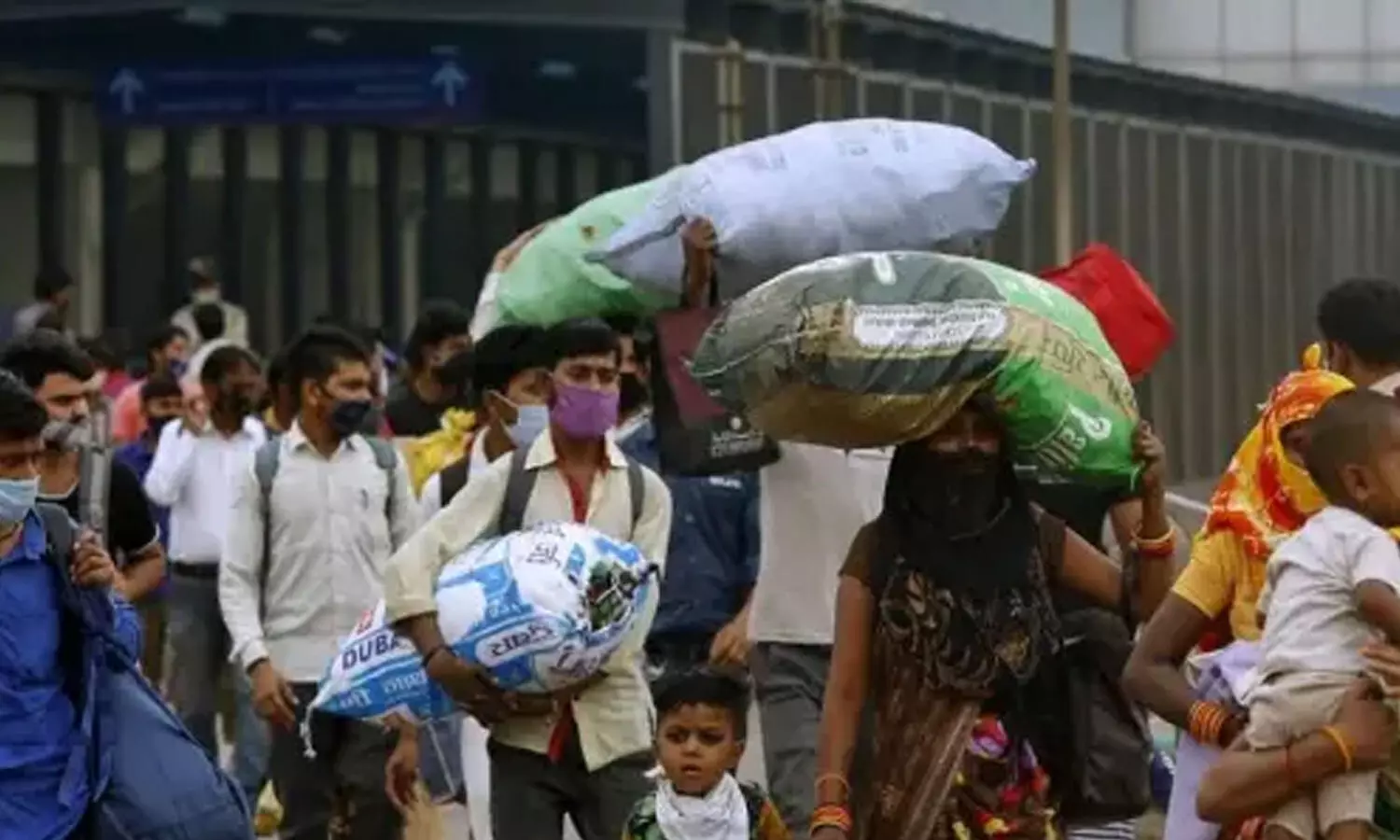
Debate rages over whether India’s poor have become fewer
Poverty is not just a lack of money; it is a lack of capability to realize one’s full potential as a human being-Amartya Sen
India’s recent poverty numbers are striking. According to the World Bank’s October 2026 Poverty and Equity Brief, the share of people living below the extreme poverty line of $3 a day (2021 purchasing power parity) fell from 27.1 per cent in 2011 to 2.6 per cent in 2023. Over the same period, the proportion below the lower-middle-income threshold of $ per cent a day declined from 57.7 per cent to 16.1 per cent, lifting an estimated 496 million people above that line. NITI Aayog’s multidimensional poverty estimates show that roughly 248 million Indians exited multidimensional poverty between 2013–14 and 2022–23, with the headcount ratio dropping from 29.17 per cent to 11.28 per cent.
These figures represent one of the fastest declines recorded globally. They are not statistical inventions. They reflect real expansions in access to food, housing, sanitation, cooking fuel, electricity, schooling, and bank accounts, supported by both faster consumption growth and large-scale public transfers. As India pursues the Viksit Bharat goal, the numbers offer a legitimate basis for satisfaction. They do not, however, settle the harder question of whether the gains are self-sustaining.
Welfare as consumption, not capability
A substantial share of the measured decline stems from the monetisation of public transfers. The Pradhan Mantri Garib Kalyan Anna Yojana supplies free food grains to approximately 79–81 crore beneficiaries under the National Food Security Act. When the value of these grains, together with other subsidies and direct benefit transfers, is added to household consumption, many families cross the monetary poverty thresholds. The World Bank itself attributes the fall to strong consumption growth, rising employment (particularly among rural women), and expanded social transfers, including food subsidies.
This method is standard and transparent. It also creates a structural vulnerability. Households whose “non-poor” status depends heavily on continued fiscal support face an immediate reversion risk if those supports are scaled back or if fiscal space narrows. Crossing a consumption line through transfers is not the same as possessing the independent earning capacity that keeps a household above the line when transfers change. The distinction matters for policy durability.
Inclusion versus resilience
The same gap appears in living-standards indicators. Near-universal bank account ownership under the Pradhan Mantri Jan Dhan Yojana is counted as progress in the multidimensional index. As of mid-2026, however, roughly 59 crore Jan Dhan accounts existed; about 5.72 crore held zero balances and approximately 15.37 crore (around 26 per cent) were classified as inoperative. Many function mainly as conduits for direct benefit transfers and wages from rural employment schemes rather than as vehicles for independent savings or credit.
Access has expanded. Depth of use and household buffers have not expanded at the same pace. High out-of-pocket health expenditure—still 43.4 per cent of total health expenditure in 2022–23 according to National Health Accounts—continues to erode whatever small surpluses form. A single medical episode can push a statistically non-poor household back into distress.
Nutrition and employment quality lag behind
If extreme monetary poverty has fallen below three per cent, persistent shortfalls in nutrition and job quality require explanation. The National Family Health Survey-6 (2023–24) shows child stunting under five declining to 29.3 per cent from 35.5 per cent in NFHS-5, a genuine improvement. Child wasting, however, remains stubbornly high at around 19 per cent. Maternal anemia continues to affect most women of reproductive age. The Global Hunger Index continues to place India in the “serious” category, driven largely by these child undernutrition indicators. Free calories prevent the worst forms of starvation; they do not automatically deliver diverse micronutrient intake or address the multiple determinants of stunting and wasting.
On the labour side, employment expanded by roughly 134 million between 2017 and 2023—nearly twice the growth in the working-age population—with rural women accounting for a large share of the increase. Yet the World Bank notes that real earnings remained broadly unchanged and that much of the growth occurred in relatively low-productivity activities. Continued high demand for low-wage work under the rural employment guarantee (and its successor frameworks) signals that large numbers of workers still lack better alternatives in manufacturing or higher-value services. Geographic concentration persists: a contiguous belt from Uttar Pradesh to West Bengal accounts for a majority of those still below the $4.20 line.
From Transfer-Dependent Reduction to Capability
Statistical poverty reduction is a necessary and measurable achievement. It is incomplete without economic resilience. Durable exits from poverty require households to generate stable incomes that do not depend primarily on the continuation of current transfer levels.
Policy attention therefore needs to shift emphasis toward
Expanding labour-intensive manufacturing and higher-productivity services that can absorb rural labour at better wages.
Strengthening primary healthcare and nutrition interventions that reduce catastrophic out-of-pocket spending and address stunting and wasting more effectively.
Improving the quality and relevance of vocational and foundational education so that young workers can enter better jobs rather than low-productivity or public-works employment.
Data correctly records the reach of state assistance and the resulting rise in measured consumption. They do not, by themselves, establish that every household now possesses the capability to maintain an independent, stable livelihood. Until that capability is widespread, the decline in poverty remains a significant but unfinished triumph—one that still rests, for many, on the continued presence of the very supports that produced the statistical improvement.
(The writer is a former OSD to the Union Civil Aviation Minister)
CII Partnership Summit set for take-off in Vizag today: AP eyes Rs 12-lakh cr investments
CM Naidu holds talks with Singapore on Amaravati
Naidu sets June deadline for restoration of 789 LI schemes
4 municipal corpns, 23 municipalities to go to polls on Nov 26
Cyclone over Bay may bring rains to Telangana
Perception of one HC being better suited to hear disputes 'misguided and erroneous': SC


