




- UP CM Yogi Adityanath accuses Cong, SP of 'opposing' education, promoting nepotism
- Pitroda wishes PM Modi good health, says completing 25 years is ‘accomplishment in its own way’ (IANS Exclusive)
- CM Adhikari credits BSF-police coordination for curbing border crimes in Bengal
- SC seeks ECI response on Rahul Gandhi’s plea against SIR, flags conduct of one petitioner
- India’s ethanol supplies reach 987 crore litres by Sep end: Report
- BJP to finalise Bengal civic poll candidates by Diwali; adopts multi-tier screening, eyes professionals
- India’s pharmaceutical market posts strongest monthly growth in three years
- Reliance Digital’s #PROHappy campaign cuts iPhone 17 Pro price to Rs 56,990
Navratri: A powerful spiritual journey
In Short
The nine-day festival turns urban centres and large open-air grounds into massive night-time social gathering. For many young people it serves as a rare annual inter-section of tradition, night life and social freedom.

Share :
Navratri: A powerful spiritual journey
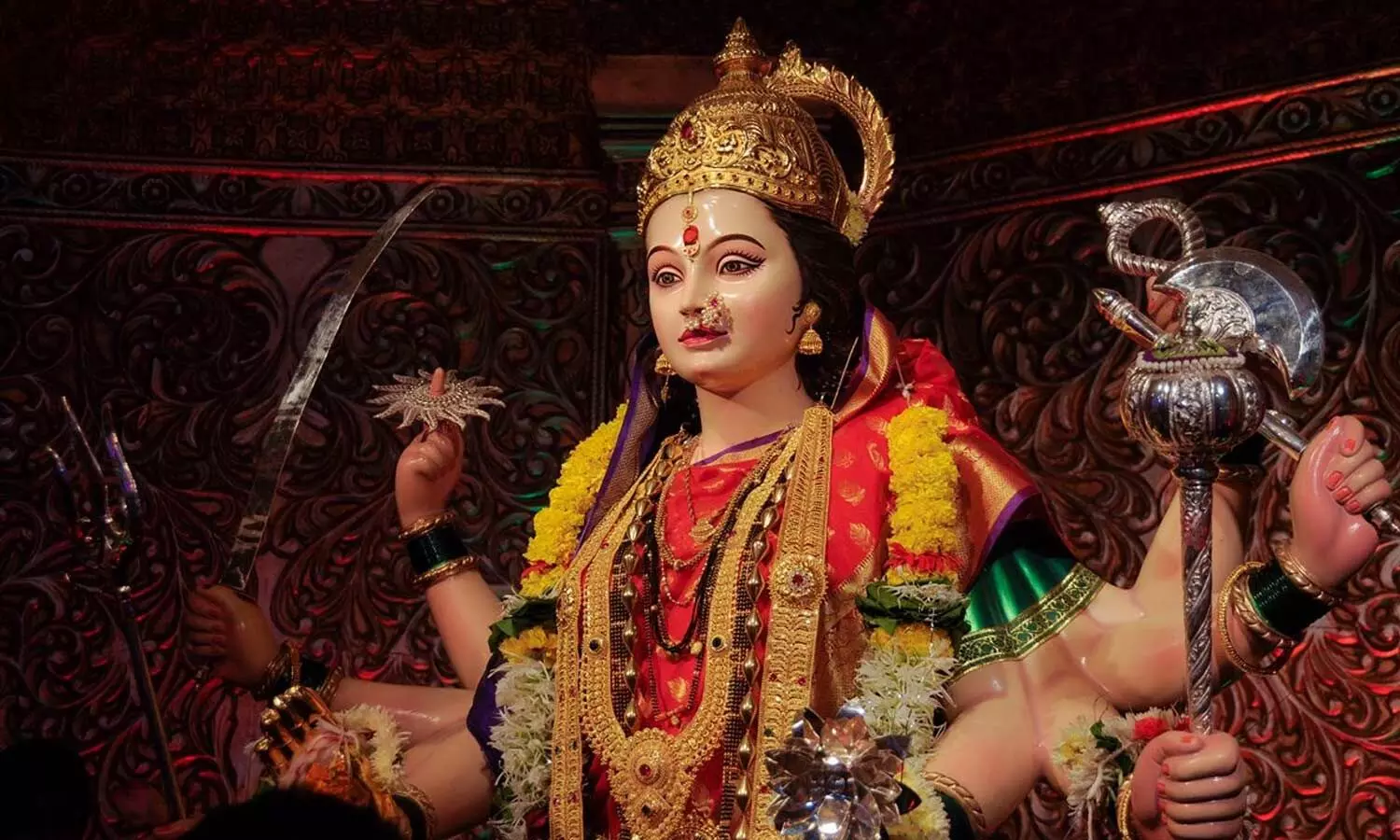
Navratri- is a nine-night Hindu festival, dedicated to the worship of the divine feminine Shakti symbolising the triumph of good over evil and the journey from the inner turmoil to spiritual awakening. It transcends mere festivities, it’s a powerful spiritual journey encouraging introspection, prayer, and renewal of faith.
Tradition divides the nine days into three-day phases governed by different qualities. Day 1 to 3- Tamas: Harvesting raw energy and fierce devotion to destroy negative tendencies-- days associated with Durga or Kali. Day 4 to 6-Rajas: cultivating inner wealth, peace, and noble virtues--days associated with Lakshmi. Day 7 to 9: Sattva- attaining supreme knowledge, clarity and spiritual enlightenment days associated with Saraswati.
The nine-day festival turns urban centres and large open-air grounds into massive night-time social gathering. For many young people it serves as a rare annual inter-section of tradition, night life and social freedom. As there was transformation in many things Navratri and Garbha(Garba) too underwent many changes suiting the times and the generation. Sometimes I wonder how different it was 2 to 3 decades ago!
They were nostalgic days with warm, simple, fond recollection of youth. Navratri celebrations were community -centric devotion. Garba, other than for Gujarat and neighbouring states, for many parts of the country was simple dance form mostly restricted to compounds of few big houses where every-one from around joined in the celebration, temple courtyards with local singers. Fasting and daily puja for nine days was more strictly observed at home. It was less commercial and more economical. Dresses were often repeated, handmade or borrowed. Music was traditional folk. Rituals were led by grandmothers and mothers, and participation was seen as a family duty.
But generations changed and so do the celebrations. You have high participation but different motivation. In cities like Hyderabad, Ahmedabad, Mumbai, Delhi- is actually higher than ever. For the youth it is a mix of devotion,culture, social identity, and the most important is celebration with friends. The celebration is curated and digitized. The fervour is very visible on Instagram, You Tube, Snapchat—outfit transitions, Garba reels, vlogs and temple visits.
The devotion is there, but it is also performed for an online community. Commercial aspect cannot be ignored--Designer lehenga rentals, paid passes for big Dandiya nights with DJs and fusion music.Two view points exist: Elders often feel that discipline, silence and inward devotion have reduced, and that noise and show have increased. Younger people often feel that they are reclaiming the festival in their own way—more open, more joyful, less out of compulsion and more out of choice. In short 30 years ago Navratri fervour was quieter, more domestic, and ritual bound. Today it is louder, more public, more stylized and more individualistic—but not necessarily less felt.
Mahatma Gandhi said,” The soul of India lives in villages,” and I add in small towns too. When you pass through small towns and villages during these festive days, which I happened to, the devotion, the ‘Aastha’ the uncompromising, pure, innocent, unforged, genuine values are clearly visible. There the Devi is not decoration, she is family.
People don’t wear clothes to show to others, they wear the best clean clothes they have to honour the Goddess. No loudspeaker competition. The dholak, the conch, the small crowd singing together. No show-off, only shraddha. The Garba there is not for camera. The circle forms on its own. An old woman, a small girl, a farmer who just came from the field—all in the same circle. No one is judging the steps.
I am not against changing times, nor against opening windows to the innovations of youth, it is good to move with times. But while move forward, we must not lose the essence. Adaptation is important, but so is awareness.
My only fear is that the true meaning of Navratri is getting lost in disco lights, loud music and newer outfits. We should pause and ask ourselves—what are we really celebrating? Garba is not just a dance. The word ‘Garba’ means womb. It symbolizes creation, rejuvenation and new life. When we move in circles around a clay pot with a lamp inside, it is not just choreography. That circle represents the cycle of life, death and rebirth. The pot is our body, and the diya, the flame inside it is our soul. The dance we do actually enacts the battle between Maa Durga and the demon Mahishasura. It is not an event. It is Shakti. It is power.
So,during Navratri before you switch on the playlist, light a diya, start your night with anAarti, not just with music. Let us know what we are celebrating and not just get carried away by lights and sound. Navratri witnesses an unmatched fervour and reverence, as devotees young and old come together. It is not just a festival. It is a profound spiritual journey and a dazzling cultural spectacle for millions in India.
Navratri is not just nine nights. It is captivating window into the very soul of India. It is Hamara BHARAT.


