




‘Protests’ by students become order of the day
In Short
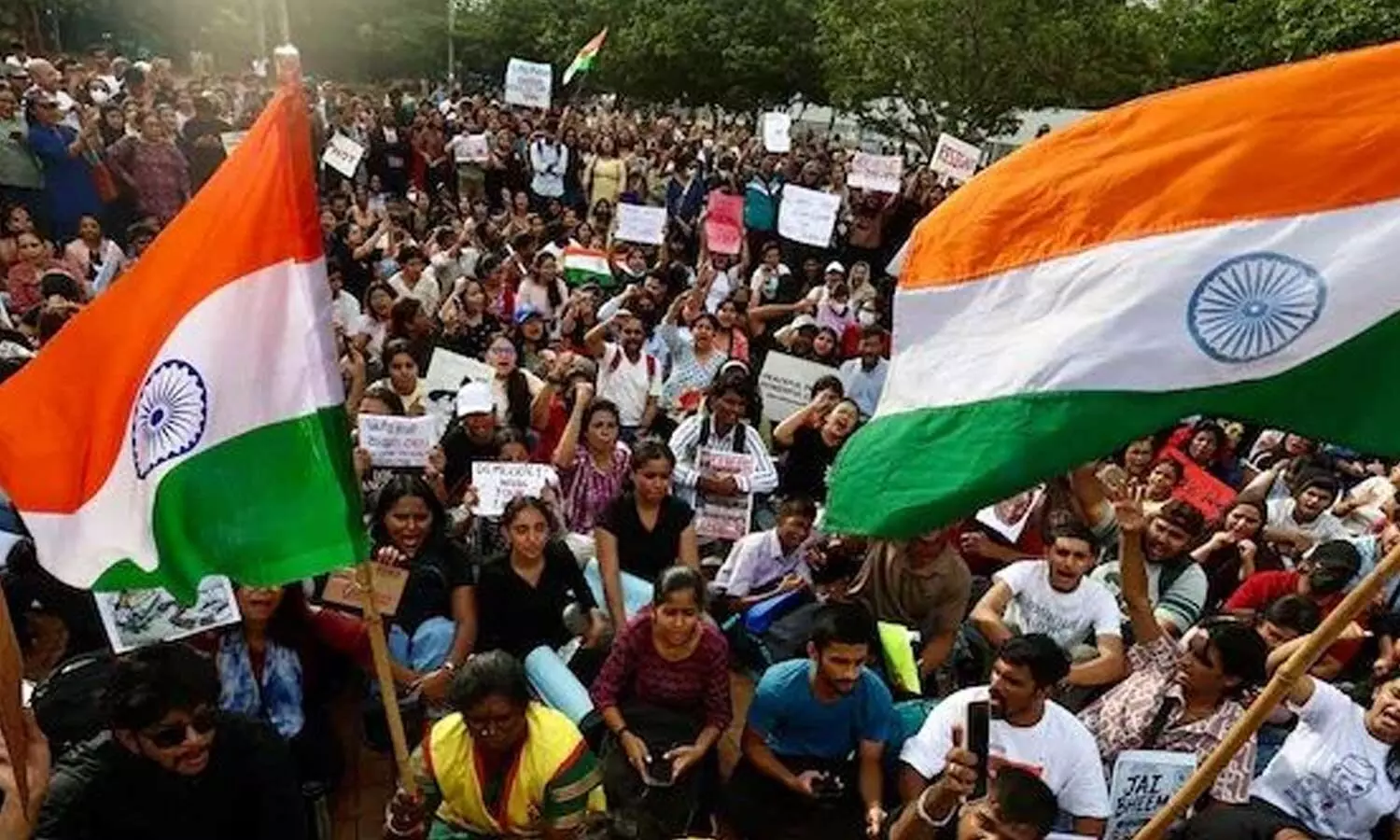
UN human rights experts, last week issued a statement, urging the Indian government to cease the use of excessive force, rescind the blanket assembly bans and refrain from misuse of digital surveillance in the wake of the government response to youth–led demonstrations in New Delhi and other parts of the country.
Share :
‘Protests’ by students become order of the day
The whole world has watched with surprise and disappointment, the recent widespread and violent protests, looting and civil unrest in France, stemming from a rapid convergence of localized student grievances and widespread national economic concerns. Demonstrations first erupted in September in a high school in the suburbs of Paris. During summer holidays, high school students took to the streets to protest the deteriorating school facilities, inadequate public education funding, acute teacher shortages, the high cost of living and ‘deterioration’ of the social welfare system. Over subsequent weeks, the students’ frustrations resonated with a wider cross section of the public, which was already feeling crushed by steep fuel costs, inflation, and shrinking public services. Subsequently, class strikes, blockades and demonstrations spread to other Paris suburbs and then nationwide. Hundreds of schools had to close because of damage or attacks on staff.
The General Confederation of Labour, which is one of the country’s largest trade unions, backed the protests, issuing a call for lower prices and higher pensions and wages.
Taking grievances to the streets is hardly unusual in the country that spawned the French Revolution of 1789. A period of political and societal change began and many of the ideas of that period are considered fundamental principles of liberal democracy.
“Let them eat cake”, which is the traditional translation of French “Qu’ils mangent de la brioche”, is associated with that period, and is said to have been spoken in the 18th century by Marie Antoinette the then Queen of France, upon being told that the peasants had no bread. The French phrase mentions brioche, a bread enriched with butter and eggs, considered a luxury food. It is taken to reflect either the Queen’s callous disregard for the starving peasants or her poor understanding of their plight.
The crisis reached a boiling point when between 550,000 and 800,000 people marched peacefully in cities across France and radical groups clashed brutally with police and vandalized luxury boutiques, supermarkets, and public infrastructure.
Another country, where students’ agitations led to major political, and economic upheavals is China, which has experienced two major nationwide student movements that united the youth for a common political and social cause; the anti-imperialist May Fourth Movement of 1919 and the pro-democracy Tiananmen Square Protests of 1989, both of which swept across multiple major cities and fundamentally altered the country’s trajectory.
The 1989 protests reflected anxiety of the people and political elite about the nation’s future including inflation, corruption, the limited preparedness of graduates for the new economy, and restrictions on political participation. They called for reforms including the rollback of the removal of iron rice bowl jobs, greater political accountability, constitutional due process, democracy, freedom of the press, and freedom of speech. Over time, it spread to around 400 cities. Authorities of the government of China responded with both conciliatory and hardline tactics. At the height of the protests on May 17, about one million people assembled in the square. The State Council declared martial law, and, on 4 June, three lakh troops were mobilized to Beijing, which were halted by the protestors and Beijing’s civilian population.
The result of the protests came in the shape of a dual outcome, namely an immediate policy victory for the public and a consequent sweeping, covert state crackdown.
The United States of America has also had similar experiences where student movements historically reshaped the country’s cultural, political, and educational landscapes. From the mid-20th century to current waves of activism, several distinct nationwide student movements have emerged around unified goals. When students mobilize across the country for a common cause, they leverage collective action, such as walkouts, sit-ins, and building occupations to force universities and the federal government to alter policies.
And, in India’s immediate neighbourhood, there is the example of Myanmar where movements, led by students, have historically served as a primary engine for political and social change.
The inevitable result of the movements was severe disruption of the state education system, massive casualties and detentions among youth, and a historic pivot toward parallel schooling and armed resistance. Instead of forcing a return to democracy, the military junta’s brutal crackdowns permanently transformed the country’s youth from peaceful demonstrators into a core pillar of the anti-junta resistance.
Two other neighbours met a similar fate. In 2025, Nepal was shaken by massive youth–led nationwide demonstrations known as the ‘GenZ Revolution’ or ‘Third People’s Movement’. The immediate cause of the uprising was a sudden ban by the national government on 26 major social media platforms. Largely driven by students and young professionals, it soon transformed into an instrument for venting out deeper and long-standing systemic frustrations and resulted in the fall of the government led by Prime Minister K P Sharma Oli and reshaping the country’s political landscape.
Likewise, in Bangladesh, nationwide protests began in 2024 over a controversial civil service job quota system and soon escalated into a situation that ended the 15-year-old rule of Prime Minister Sheikh Haseena.
According to Indian political leaders and security analysts, the violent unrest in France serves as a warning against allowing public grievances to spiral into destructive street anarchy.
Commentators and ruling party leaders feel that they highlight several lessons for India’s domestic stability and that it is a wake-up call for those who glamourize disruptive street protests. Analysts note that extreme civil unrest harms ordinary working-class citizens and destroys public property rather than solving systemic problems and that reforms must happen through legal democratic choices and elections, not through mob chaos, destruction and loss of life on the streets.
Security commentators point out, further, that such local economic and student grievances are quickly joined and escalated by radical political networks and labor groups, and warn India to stay alert to external or coordinated groups trying to exploit local protests to serve their own ends. Pro-government sources, however, have it, that maintaining firm administrative control prevents the kind of economic and infrastructure collapse seen in some European nations.
UN human rights experts, last week issued a statement, urging the Indian government to cease the use of excessive force, rescind the blanket assembly bans and refrain from misuse of digital surveillance in the wake of the government response to youth–led demonstrations in New Delhi and other parts of the country.
India said that human rights must not be used to exert political pressure or selectively target countries, while India’s diplomats asserted that India is a vibrant democracy with robust constitutional guarantees for freedom of speech and peaceful assembly. They cited youth participation, judicial processes, exam reforms and freedom of assembly to defend India’s democratic space. India also questioned what it called selective criticism of protests in the country.
The Human Rights office called for an independent investigation into Indian authorities’ heavy-handed crackdowns on recent student and opposition protests in New Delhi and other regions. India strongly rejected the criticism, dismissing it as an unwarranted interference in internal democratic affairs.
The Ministry of External Affairs also dismissed the UN assertions as unverified allegations and selective international interference, questioning the UN’s impartiality and pointing out institutional mechanisms like the independent judiciary, strong democratic processes and free media to address citizens’ concerns.
The protesters would be perfectly right in believing that their cause is just and needs to be addressed purposefully and effectively by the government. The government, the ruling party and some sections of observers would, however, appear to be harbouring the impression that the agitators, much like the lady in Shakespeare’s Hamlet, “… protests, too much…”, owing to manipulation by external forces.
(The writer was formerly
Chief Secretary, Government of Andhra Pradesh)


