




- Bhagwat’s Dasara message highlights Hindu undivided family
- VH presents prizes to winners at Bathukamma Kunta
- Bus operators look beyond Telangana to cut tax costs
- Yadadri plant’s fifth 800 MW unit synchronised with grid
- VIT invites applications for engineering entrance test
- Bathukamma draws 10,000 people in Australia
- Revanth will continue as CM, says TPCC chief
- Hyderabad: GHMC gives floral waste an eco-friendly makeover
The agony and ecstasy in the high-stakes journalism career
In Short
The flip side, however, can hardly be ignored, as the occupation also comes with low starting pay and intense deadline stress. And those are just trivial concerns. Because exposure to hazards such as possible physical danger and, on occasion, even violence, especially in conflict zones, unstable environments, or targeted crackdowns, is not uncommon. Industry instability often poses issues.
Share :

The agony and ecstasy in the high-stakes journalism career
Today’sworld offers young and qualified people many opportunities for rewarding and productive careers. From medicine or engineering, through law, accountancy, and the civil services or journalism to politics, there are innumerable choices.
Counting out politics, which has been described as the ‘last resort of scoundrels’ by Dr Samuel Johnson, journalism as a career offers an exhilarating mix of frontline storytelling and profound social impact; paired, however, with severe physical, digital, and psychological risks. Since it is all about uncovering the truth, bringing hidden stories about systemic corruption and unheard voices out into the open, and into the public eye: catalysing societal change, holding power accountable, and giving a platform to the resilient or marginalized. Journalism, thus, offers deep personal fulfilment and excitement through storytelling. The life of a journalist is heady and dynamic and is characterised by an ever-changing daily environment where no two days are identical.
Among the pleasurable things the profession offers is the joy of sharing an unspoken bond and deep solidarity with fellow reporters navigating high-pressure deadlines across the globe. The flip side, however, can hardly be ignored, as the occupation also comes with low starting pay and intense deadline stress. And those are just trivial concerns. Because exposure to hazards such as possible physical danger and, on occasion, even violence, especially in conflict zones, unstable environments, or targeted crackdowns, is not uncommon. Industry instability often poses issues. And, what with one having to navigate dwindling legacy newsroom budgets, deal with the relentless pressures of a 24x7 algorithmic news cycle, and handle rampant disinformation, especially in the form of fake news, a false, misleading, or fabricated information that is presented to look like a legitimate news report, it can be a severely trying job. Dealing with the chronic stress of tight deadlines, the vicarious trauma that invariably follows the covering of tragedies, and institutional or legal harassment can take their own severe toll on one’s psychological reserves.
Meanwhile, despite growing numbers, women journalists often encounter deep-seated patriarchal structures, unequal assignments, a lack of representation in leadership, and the added pressure of balancing demanding news cycles with family expectations. They must balance the demands of reporting with the risks of working on the ground.
A well-known woman reporter says that, when she decided to pursue journalism, leaving behind what was considered a dream job for an engineering graduate, her mother worried that the profession was not safe for a woman. Even years later, the fear had not changed. The mother still had only one question for her daughter after every assignment, “Did you get home safely”?
Studies have shown that a high percentage of female reporters face multiple forms of attacks, leading many to consider leaving the profession. For instance, when reporting from conflict zones, protests, or restrictive regions, such as under Taliban ruled Afghanistan or during volatile local protests, female reporters face heightened risks of assault, detention, and targeted violence.
Other issues they face include marginalization and undervaluation: Non-privileged or rural reporters often lack institutional backing to combat systemic harassment, while others face professional scepticism that forces them to constantly over-prove their competence
To mark this year’s International Women’s Day celebrations, a seminar themed ‘Women in the Media: Pages from the Past’, was held in Karachi.
An effective and legally valid informal tool for exposing public corruption, known popularly as a ‘sting’ operation first appeared on the scene of investigative journalism in 2001.
By conducting ‘Operation West End’, which is widely regarded as India’s first major high-profile sting, journalists from ‘Tehelka’ posed as arms dealers to expose widespread corruption in defence deals, forcing the resignation of the then-BJP president Bangaru Laxman and several military officials.
In my own experience, I had the privilege and honour of interacting with at least two eminent journalists. One was Anees Jung an Indian author, journalist and columnist, whose most known work, ‘Unveiling India’ was a chronicle of the lives of women in India, noted especially for the depiction of Muslim women behind the purdah. The other was Olga Tellis, a veteran Indian journalist and social activist best known for leading the landmark constitutional case, whose verdict remains one of the most significant judgments in Indian legal history. After authorities threatened to forcibly evict pavement and slum dwellers in Bombay, Tellis and the affected residents filed a writ petition while disposing of which the Supreme Court ruled that the Right to Livelihood is an essential part of the Right to Life guaranteed by the Constitution. I still cherish the memory of her interviewing me while I was assisting the District Collector of Guntur district in rescue, relief and rehabilitation operations in the aftermath of the cyclone and tidal wave that ravaged the East Coast of the state in 1977. While in service, I experienced the power and inference of the media on many occasions. One was when I was serving as Collector of Krishna district in Andhra Pradesh. A newspaper report spurred me into action which, while taken in good faith, created livelihoods for young unemployed people. It also, unfortunately, led to my being transferred as vested interests close to powerful political leaders were hurt by it.
It is time the high and the mighty pause, sit back and reflect upon the damage that can be caused to the fabric of good governance on account of their intolerant attitude towards the media. Like in every other profession, journalism also requires the ability to master the art of extracting information, real value incoming noise. A somewhat similar perception exists about the legal profession. There is a story about a young lawyer who began his career in the office of a senior colleague. The senior warned the new entrant that it would be tough to make both ends meet to begin with, the hours would be long, the clients and the judges sometimes uncooperative and even cantankerous and that even contemplating married life would be a thing of the distant future. Not to be put off, the youngster, with a brave smile, asked, “what next sir?”. Oh, by then you will get used to it!” was the reply!
For the usual lighthearted end to my columns, here is a story used earlier, but highly relevant in the context of the present discussion.
An Italian Bishop was travelling to the United States as part of his missionary work. On the eve of his departure, he sought an audience with the Pope for a briefing on the proposed visit. His Holiness advised the bishop to be extremely cautious while dealing with the American media personnel, who were known to be aggressively intrusive and eager to sensationalise matters.
Upon arrival at LaGuardia airport, the bishop was besieged by media persons. Out of the blue a cub reporter asked him,
“Hey, Bishop! Will you be visiting any night clubs in New York?”
Somewhat startled by the unexpected and loaded question but remembering the Pope’s counsel, his reply was quite guarded. Innocently he asked, “Are there any night clubs in New York?”
Any relief the bishop felt at avoiding potential embarrassment lasted only till the next morning when he read, with shock and alarm, the headlines that screamed at him in a local newspaper.
“Are there any night clubs in New York”? First question the Italian Bishop asks on arrival!”
Duly chastised by that experience, he started his sermon to a congregation in Boston that afternoon, first seeking to know whether any gentlemen of the press were around. A few hands went up. The bishop fervently pleaded with the reporters not to publish the contents of his address as that would make his messages stale even while he had to speak at several places across the country over the next few weeks. Confident, thereafter, that no further danger lurked ahead, he proceeded to deliver his speech.
And the headlines the next day were, “Italian Bishop tells many stories. All unprintable!”
They are really something else, the Paparazzi! Clearly there is no gaining the upper hand over them!
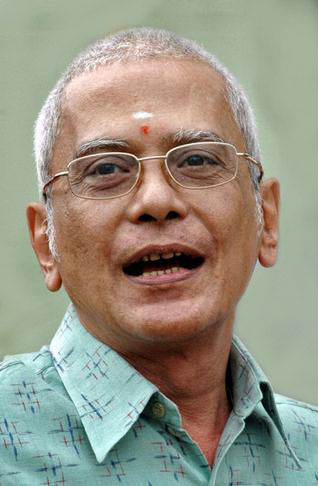
(The writer was formerly Chief Secretary, Government of Andhra Pradesh)
Over 700 Durga idols immersed in Hooghly river till 7 pm
President Murmu to visit Chhattisgarh on Oct 22
CJP Leaders Saurav Das and Ashutosh Ranka Released
CM Chandrababu urges TDP ranks to work for alliance candidates in local polls
J&K Govt issues order enhancing monthly stipend of medical interns from Rs 12,300 to Rs 25,000
Rain and Thunderstorms Forecast Across Andhra Pradesh and Telangana


