




- Parineeti Chopra shares easy makeup hack for hotel rooms
- Today is World Values Day: Building respect, understanding and social harmony
- UoH hosts conclave on Shaheed Baji Rout & youth-led nation-building
- The faculty of vision can cause strange perceptions
- Voter lists a nightmare for BLOs and electors?
- Samajwadi Party ignored teachers, offered prayers at graves of mafias: Yogi Adityanath
- Bihar: Leaders visit bereaved families after boat capsizing incident claim lives of 13 children
- Asaduddin Owaisi files anti-SIR petition in Supreme Court
The faculty of vision can cause strange perceptions
In Short
To quench its curiosity for discovering both celestial spectacles of the cosmos of the minutest world of the microcosmos, which earlier defied observation by the unaided eye, humankind invented telescopes and microscopes.
Share :
The faculty of vision can cause strange perceptions
The faculties of speech, hearing and sight, so important in one’s younger days, continue to have their value even as old age creeps in and tempers their sharpness. One begins to appreciate that, in more ways than one, many things, at that stage in life, are best unseen, unheard and not responded to! And, as the celebrated English poet John Keats wrote about melodies heard, things seen seem lovely, but those unseen even lovelier! The erosion of the ability of the faculties begins to manifest itself more as a blessing in disguise and selectively experiencing what is left becomes a boon rather than a curse. And, naturally, one begins to look for aids and appliances that can help one see better and hear better, such as spectacles or hearing aids. Which is what I did too, at least for my eyes.
As a matter of fact, I use one pair of spectacles for my normal requirements, and another for playing my daily game of billiards. Much like Albert Einstein, who, it is said, had two pairs of spectacles, one for normal use and the other to look for that pair when it was misplaced!
Seeking the support of appliances to see better began around the 1st century BCE, when Roman philosopher Seneca used a glass globe filled with water to magnify text.
It is believed that spectacles, in their earliest form, were invented in Northern Italy in the 13th century ADE. They comprised two convex glass lenses mounted in rings of wood, leather, horn, or metal, which were joined together at their handles by a central rivet. It was in the 18th century ADE that British optician Edward Scarlett invented the first rigid side arms that hooked over the ears, creating the modern spectacle shape, while Benjamin Franklin pioneered split lenses to combine near and distant vision correction into a single frame. In the 19th century ADE, styles such as the pince-nez or spring nose-clips became popular, and cylindrical lenses were introduced to correct astigmatism, which is a condition that makes vision blurry or distorted at all distances - both near and far. In the 20th century ADE, mass production made glasses affordable, while lightweight plastics replaced heavy glass lenses.
Then came, quite literally, the most spectacular development and contact lenses came to be used. They did not appear in one clean stroke though. It took centuries of optics, glasswork, chemistry, and eye care to turn a thought experiment into a device people could wear with comfort.
To quench its curiosity for discovering both celestial spectacles of the cosmos of the minutest world of the microcosmos, which earlier defied observation by the unaided eye, humankind invented telescopes and microscopes.
Other such appliances which improve the ability to see in difficult conditions include infrared or night, vision glasses, which improve the users night vision through process known as image intensification, snow glasses or snow goggles, specialised for using in polar regions to prevent snow blindness, a painful, temporary condition caused by over exposure to ultraviolet rays and monochromatic glasses that stay the same colour and remain unchanged when one moves between indoor and outdoor places. Foundry smiths and scuba divers often use protective shields for the eyes.
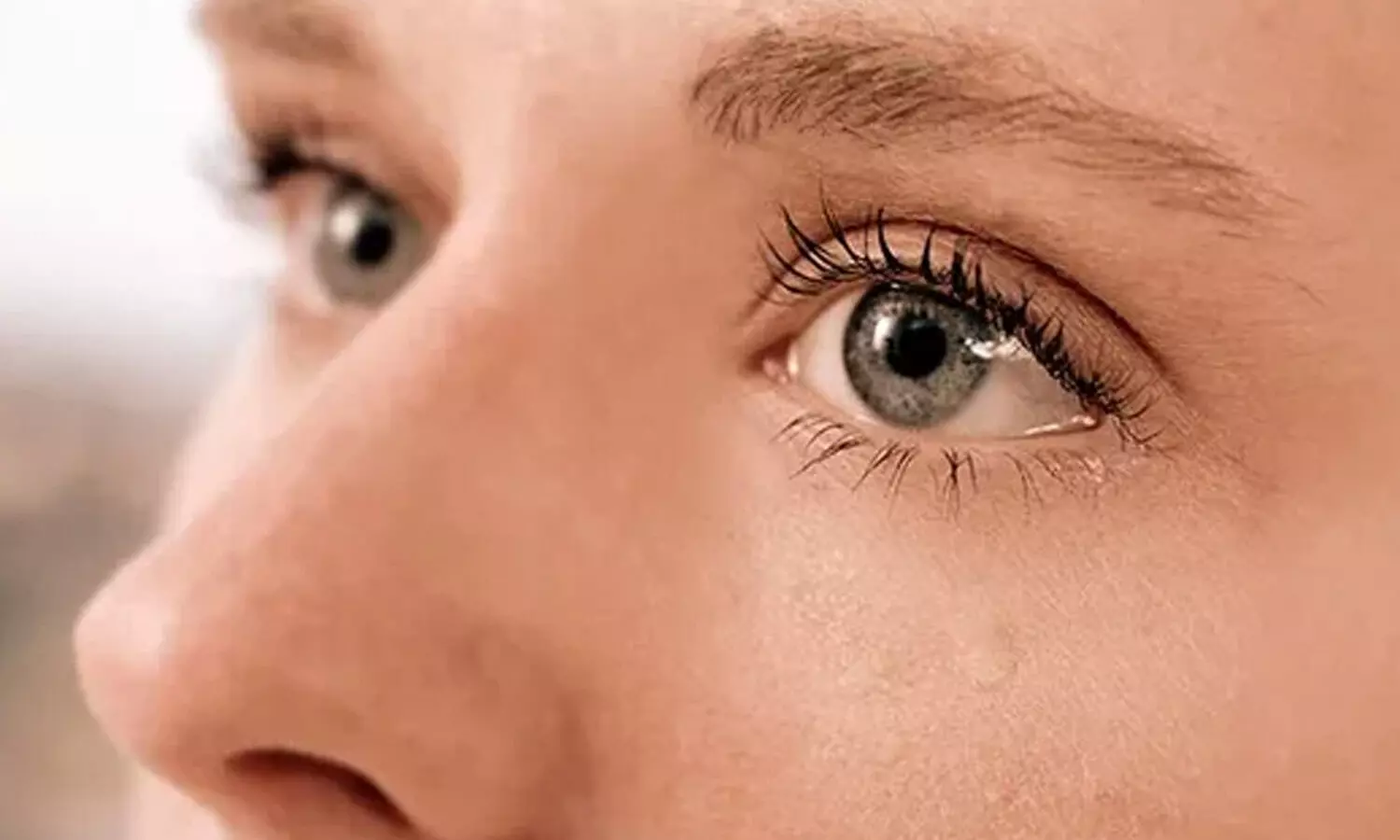
The faculty of vision can often cause strange and anomalous perceptions.
As one of the favourite poets of the Telugus, Pothana, in his Telugu translation of the Epic Maha Bhagavat, notes in a well-known poem, ‘there is but one sun, but it appears to countless living beings separately, just as the Supreme Being is experienced in innumerable different perceptions by his devotees’.
In the quantum world of subatomic particles, such as electrons and protons, the very act of looking at an object has the effect of changing it. The physical act of measuring a particle or interacting with the quantum system is no longer what it was when you began the observation. Clearly, seeing is no longer the same as believing, as understood in common sense.
Meanwhile, the word ‘see’, just like many others in the English language, lent to different interpretations and meanings in different contexts.
For instance, the expression ‘seeing things’ stands for imagining that one is saying something that is not actually there. And to ‘sight’ something is to see something after looking out for it. Similarly, a ‘look-see’ or, in British slang, a ‘dekko’ means a quick inspection, or examination of something. ‘At first sight’ means upon a first look, initial glance, or immediate impression, before taking a closer look or learning more about the situation. The expression ‘at first sight’ is also often used when something appears a certain way at the very beginning but turns out differently upon closer inspection. Not so, however, in the case of love at first sight of course! To ‘eye something’, in a related sense, means to look at someone or something closely, carefully, or with a sense of interest, suspicion, or desire.
Likewise, ‘short sighted’ thinking is to focus only on immediate gains, ignoring long – term consequences. Conversely, sightedness is the ability to see what will be necessary in the future and make plans for it. There are other expressions such as, for example, ‘lower one’s sights’ meaning to reduce expectations and ‘unsightliness’, meaning being unpleasant or ugly. Also, as further examples we have a ‘sight for sore eyes’ to describe something which gives pleasure or happiness and, conversely, an ‘eye sore’ standing for something ugly or unpleasant. Another common expression is to make ‘eye contact’, an act that serves to build trust and convey confidence, strengthening human connections. ‘To get an eyeful’ denotes seeing a surprising or unexpected sight.
The ‘eye of a needle’, is one more, a metaphor for a very narrow opening. ‘Hit the bullseye’ means being bang on target or achieving a perfect result.
Another set of meanings, that serves to demonstrate the versatility of the word ‘see’, includes ‘seeing off’, meaning accompanying someone to the railway station or an airport or harbour when they are leaving. Also forcing an unwelcome visitor or intruder to leave a place and to defeat an opponent in a game, business competition or a fight. And. ‘to have an eye for something’, means to have a natural talent or skill for noticing, judging, or appreciating a specific type of thing.
In legalese ‘an eye for an eye and a tooth for a tooth’ is a principle of proportional justice, also known as lex talionis, meaning that a punishment should fit the exact severity of the crime committed’
The ‘mind’s eye’ in a figurative sense is the human mental faculty for visualization, allowing a person to conceive, picture, or recall imaginary and past scenes within their mind or memory. It is an internal sensory experience—often described as ‘sight without light’, where people perceive shapes, colours, or objects without using your physical eyes.
Eyes, in birds, animals, or human beings, are a powerful medium for expressing emotions and communicating messages. A danseuse, for instance, can convey a range of feelings merely by the moment of her eyes. Many believe that an ‘evil eye’ can bring bad luck, injury or misfortune to its victim.
Speaking of eyes, the London Eye, originally the Millennium Wheel, is a cantilevered observation wheel on the South Bank of the River Thames in London. It is the world’s tallest. cantilevered observation wheel, and the most popular paid tourist attraction in the United Kingdom with more than three million visitors annually
And for a stormy finish to this article, we have the ‘eye of a storm’, which is a roughly circular, calm region of mostly clear weather located at the dead centre of a tropical cyclone, typhoon or hurricane.
(The writer was formerly
Chief Secretary, Government of Andhra Pradesh)


