




The steel vertebra that India’s judiciary desperately needs
In Short
Our Constitution places the Supreme Court and the High Courts as the last line of defence for the citizens against the overreach of the state. That is not a ceremonial role. It demands that judges be willing to rule against the government of the day when the constitution requires it. The institutional mechanisms for protecting judicial independence exist-security of tenure, fixed salaries, the contempt power. What cannot be legislated is the moral courage to use them. That must come from within.

Share :
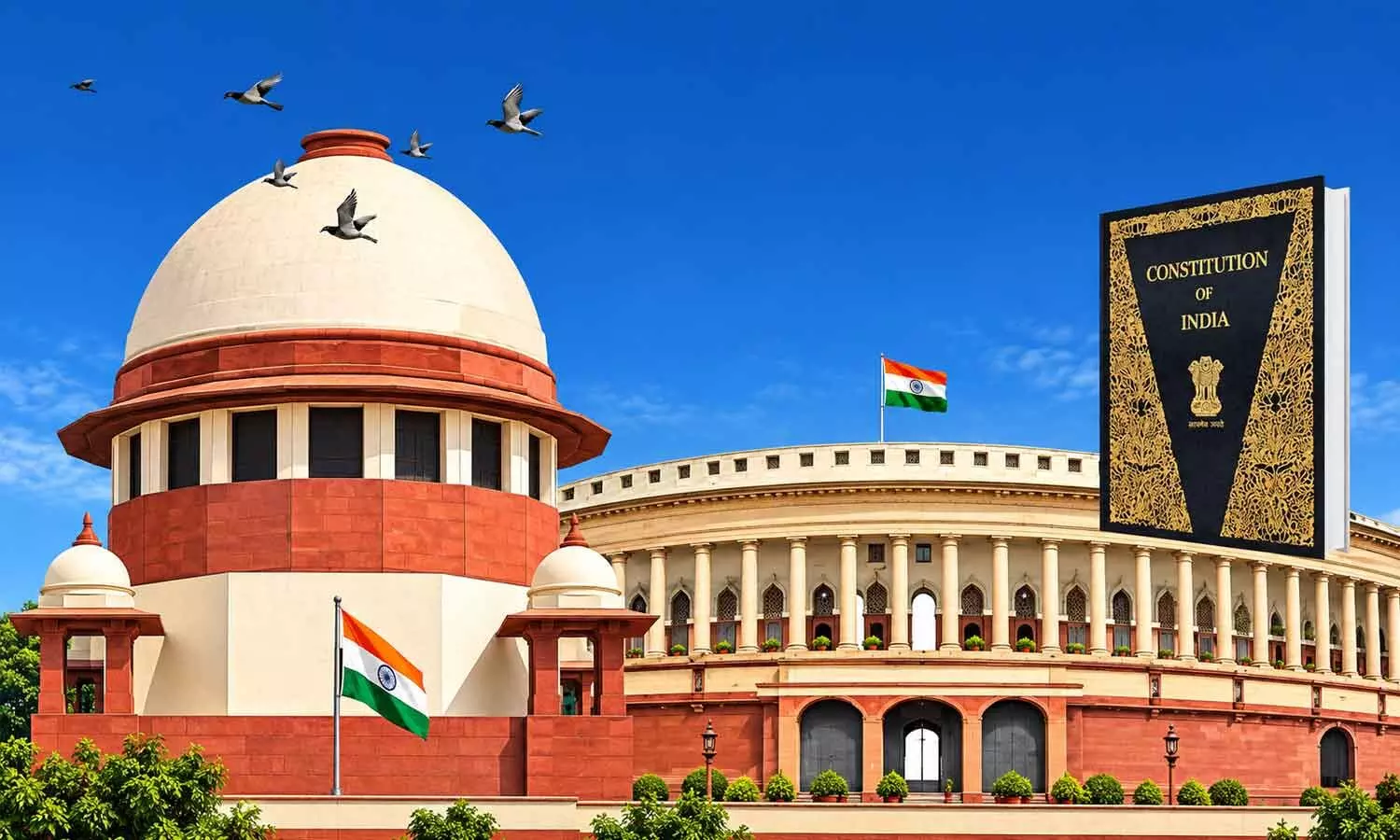
The steel vertebra that India’s judiciary desperately needs
“I would rather die than be called a coward judge.” These eleven words, written by Additional District and Sessions Judge Ravi Kumar Diwakar of Muzaffarnagar in a death penalty judgment delivered on September 7, 2026, carry more constitutional weight than a dozen speeches delivered at Law Day functions in air-conditioned auditoriums at Lutyens’ Delhi. They deserve to echo across every courtroom in India — particularly in those rarefied chambers on Tilak Marg in New Delhi where the judges of the Supreme Court of India sit, robed in the authority of the Constitution, and where, critics increasingly argue, the spine of institutional courage has been visibly softening.
Judge Diwakar’s statement was not rhetorical flourish. It came in the context of a searing allegation: that 97 serious criminal cases — involving murder and other grave offences — were recalled from his court shortly after he awarded 22 death sentences in ten cases over four months. He alleged, unambiguously and on record, that the recall was orchestrated to “save mafias, gangsters and criminals,” and that a message was relayed to him through a mafia operative warning that if he pursued the matter, his court would be changed and he would be transferred, because of “contacts at higher levels.” In the face of this intimidation, he did not blink. He wrote it all down, in a judgment, for the republic to read.
That is what judicial courage seems like. The tragedy is that we are compelled to find it in a district court in western Uttar Pradesh rather than in the apex court of the land.
The uncomfortable question civil society is asking:
For several years now, an increasingly vocal cross-section of India’s civil society — lawyers, academics, former judges, journalists, and ordinary citizens who understand enough to be alarmed — has been raising a question that polite institutional discourse tries to avoid: Is the higher judiciary, and in particular the Supreme Court, surrendering its independence to the political executive?
The concern is not abstract. It is anchored in patterns. Critics point to a series of consequential judgments in which the Supreme Court appeared to lean heavily in the direction of the ruling dispensation on matters of fundamental political and constitutional significance. The dilution of Article 370, the electoral bonds scheme, the prolonged incarceration of activists and dissenters without bail, the reluctance to strike down laws of dubious constitutionality, handling of petitions challenging the sedition law — on each of these, civil liberties advocates argue, the Court either ruled in ways that favoured executive power or, crucially, declined to rule at all, allowing the status quo to benefit those in power.
Inaction, it must be said plainly, is also a choice. When a constitutional court sits on petitions for years while citizens languish in jail, it is making a decision — one that has winners and losers, and those winners are rarely the powerless ones.
The post-retirement temptation: The elephant in the courtroom:
No honest conversation about judicial independence in India can avoid what has come to be called the “post-retirement rehabilitation” problem. In a functioning democracy governed by the separation of powers, a Supreme Court judge who delivers a landmark judgment and then retires should return to private life or, at most, an apolitical advisory role. What should not happen — and what has happened with disturbing frequency — is that a judge delivers judgments that happen to please the ruling establishment, retires, and within weeks or months is nominated to the Rajya Sabha, appointed to a constitutional body, or awarded a prestigious government position.
The connection need not be proven to be corrosive. The mere possibility is enough to pollute the well. Every judge who aspires to a post-retirement sinecure must, consciously or unconsciously, weigh the consequences of judicial independence. Every judgment in a politically sensitive case becomes shadowed by the question: will this help or hurt my prospects? This is not a theoretical concern. India has witnessed sitting Chief Justices of India being nominated to the Rajya Sabha within months of their retirement. The optics alone are devastating to institutional credibility, regardless of the merits or intentions of the individuals concerned.
Constitutional democracies function on institutional trust. That trust, once eroded, is extraordinarily difficult to rebuild. When citizens begin to assume that justice at the highest levels is a negotiated commodity rather than a guaranteed right, the constitutional contract begins to fray.
The contrast that should shame the powerful:
Return, then, to Judge Diwakar. Here is a man posted in Muzaffarnagar, operating in a district known for its powerful criminal-political nexus, who awards death sentences at a pace that draws the wrath of the powerful, has cases stripped from him by administrative fiat, receives threats through criminal intermediaries, and responds by writing it all down in a 38-page judgment — directing, additionally, that a copy be sent to the Chief Secretary of Uttar Pradesh. He does not seek a Rajya Sabha seat. He threatens to resign if he cannot follow his principles.
The contrast with the behaviour of some members of the higher judiciary could not be starker or more damning.
It is worth remembering that judicial courage is not the same as judicial recklessness. Judge Diwakar is not a loose cannon. He awarded a death penalty in a case involving the deliberate burning alive of a woman — a decision well within the “rarest of rare” doctrine established by the Supreme Court itself. He raised systemic concerns through the proper judicial channel of a reasoned judgment. He directed institutional remedies. This is precisely what a judge is supposed to do.
What India’s higher judiciary must reckon with:
Our Constitution places the Supreme Court and the High Courts as the last line of defence for the citizens against the overreach of the state. That is not a ceremonial role. It demands that judges be willing to rule against the government of the day when the constitution requires it, to grant bail to dissenters when the law demands it, to strike down laws that violate fundamental rights even when the political cost is high, and to resist — visibly, publicly, on the record — every attempt to intimidate or seduce them.
The institutional mechanisms for protecting judicial independence exist-security of tenure, fixed salaries, the contempt power. What cannot be legislated is the moral courage to use them. That must come from within.
Judge Diwakar’s words “I would rather die than be called a coward judge”, are a rebuke and a reminder delivered simultaneously. A rebuke to those who have allowed the culture of judicial deference to executive power to take root. And a reminder that the Constitution is not self-executing; it depends, in the final analysis, on judges who fear their own conscience more than they fear the powerful. India does not need more ceremonial guardians of the Constitution. It needs more judges with steel vertebrae.
The republic is watching. And it is taking notes.
(The writer is with The Cholleti BlackRobe Chambers, Hyderabad, and writes on economy, politics and law)


