






Today is Jawaharlal Nehru’s birth anniversary: Nehru built the house before critics judged the furniture
In Short
A balanced evaluation of Jawaharlal Nehru’s leadership from 1947 to 1964—examining how he built Indian democracy, scientific institutions, and a mixed economy alongside critical missteps like the 1962 China war and agricultural neglect.

Share :
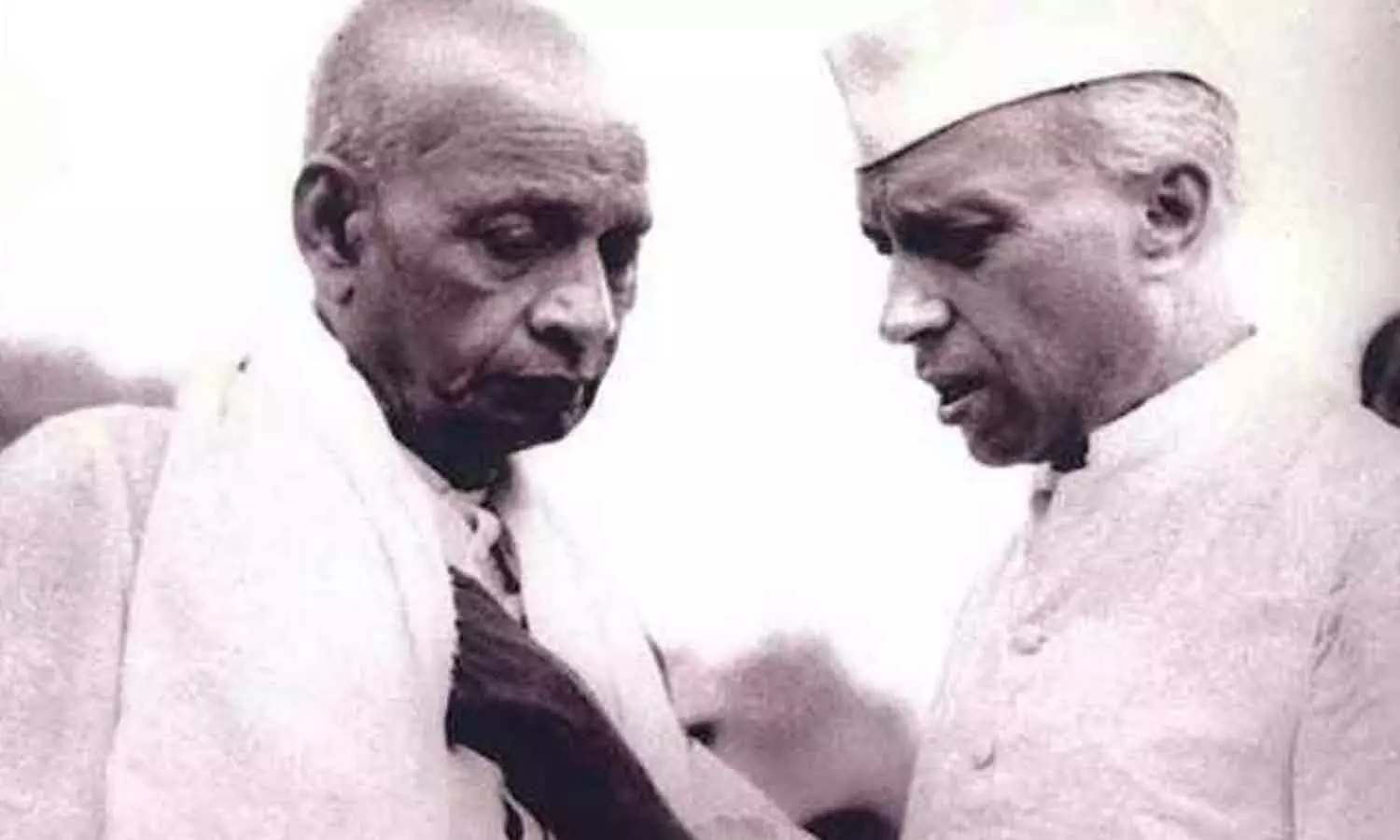
Today is Jawaharlal Nehru’s birth anniversary: Nehru built the house before critics judged the furniture
Jawaharlal Nehru led India from independence in 1947 until his death in 1964. He is often blamed for slow growth, Kashmir, the 1962 defeat too China and a supposedly “wrong idea of India.” Some criticism is deserved. But a fair assessment must distinguish Nehru’s mistakes from the immense problems he inherited—and judge his choices in the context of his time.
India in 1947 was desperately poor, agrarian and technologically weak. Economist Angus Maddison estimated that its share of world output fell from about 24.4 per cent in 1700 to 4.2 per cent in 1950. Though imperfect, the figures reflect a long decline. Between 1900-01 and 1946-47, the GDP grew by only about 1.03 per cent annually, while per-capita income barely rose. Life expectancy was roughly 32 years, and only 18.3 per cent of people aged seven and older could read. Partition displaced millions and brought communal violence. More than 500 princely states remained to be integrated. Industry, scientific expertise and food security were all weak. Nehru inherited a divided, impoverished country. Not a prosperous one he had ruined.
Democracy and development
Many observers doubted democracy could survive in a poor, largely illiterate and diverse society. Nehru’s government nonetheless introduced a universal adult franchise from the start. The 1951-52 election registered more than 173 million voters, most unable to read. Candidate symbols and coloured ballot boxes helped make voting accessible and the turnout was about 45 per cent. Nehru also helped sustain parliamentary accountability, a free press and an independent judiciary. While many newly independent countries turned to military or one-party rule, India continued to hold competitive elections. Democracy was not a side effect of his leadership; it was a foundational achievement.
Nehru’s economic model was a mixed economy, not a Soviet-style command system. The 1944 Bombay Plan, drafted by prominent Indian industrialists and technocrats, argued that basic industry, power and infrastructure required large public investment. Private capital alone could not finance projects with long development periods. The Industrial Policy Resolutions of 1948 and 1956 reserved strategic sectors for the state but left room for private enterprise. The aim was to develop domestic machinery, energy and skills, reducing dependence on imports.
The results fell short of an economic miracle but broke with colonial stagnation. The GDP grew by about 4.1 per cent annually from 1951-52 to 1963-64, compared with 1.03 per cent in the late colonial period. Industrial production grew by about 7.7 per cent annually between 1951 and 1965. Foodgrain output rose from 50.82 million tonnes in 1950-51 to 82.02 million in 1960-61, reaching about 89 million by 1964-65. Literacy among people aged seven and older increased from 18.3 per cent in 1951 to 28.3 per cent in 1961, while life expectancy reached 41.3 years in 1951-61. Progress was substantial, though from a very low base.
Nehru also treated science, education and infrastructure as national foundations. IIT Kharagpur opened in 1951. The UGC and AIIMS were established in 1956. The Atomic Energy Commission, founded in 1948 under Homi Bhabha, laid groundwork for the nuclear programme. INCOSPAR, created in 1962, became a precursor to ISRO, and DRDO was established in 1958. Steel plants at Bhilai, Rourkela and Durgapur, ONGC, and major projects such as Bhakra-Nangal, Hirakud and the Damodar Valley expanded industrial, energy and irrigation capacity. Later achievements in nuclear science, space, technology and software drew on institutions and expertise built during this period.
Nehru’s government abolished zamindari, weakening hereditary landlord power, although land reform was uneven and ceilings on holdings poorly enforced. In 1955-56, Parliament passed Hindu personal-law reforms that strengthened women’s rights to divorce, inheritance and guardianship despite conservative opposition. These reforms challenge the claim that Nehru’s secularism was hostile to Hindus. The Hindu personal law was among the first to be changed.
After Partition and Gandhi’s assassination, India could have defined itself as a Hindu state. Nehru and the Constitution-makers chose equal citizenship, believing that privileging one community could fracture a country of many faiths, languages and castes. The States Reorganisation Act of 1956 likewise gave linguistic aspirations a democratic outlet.
Non-alignment was a pragmatic bid for strategic autonomy during the Cold War. India needed technology, capital goods, food and diplomatic support, and engagement with both blocs helped it avoid becoming a satellite of either. The policy gave a poor country room to manoeuvre and a voice beyond its economic weight.
On Kashmir, Indian troops were airlifted to Srinagar in October 1947 after Maharaja Hari Singh’s accession, helping defend the Valley. Nehru’s decision to take the dispute to the United Nations in January 1948 is open to criticism because it internationalised an issue that India regarded as internal. But it occurred during a war and followed Mountbatten’s strong advice. Article 370 involved wider leadership, including Sardar Patel and N Gopalaswami Ayyangar. The claim that Nehru sidelined Patel is also overstated. They disagreed on Kashmir, Pakistan and economic questions, but worked together until Patel’s death in 1950. Patel integrated the princely states. Nehru helped shape the republic’s institutions.
Nehru’s record includes serious failures. Primary education and public health were underfunded. The Second Plan favoured heavy industry while agriculture lagged. Food imports in the early 1960s exposed the cost. Export promotion was neglected, import substitution went too far, and some public enterprises became inefficient and overstaffed.
The 1962 war with China was a catastrophe for which Nehru’s government bears responsibility. The defeat humiliated India and prompted a military build-up; democracy absorbed the shock rather than collapsing.
Nehru did not create a political dynasty. Congress chose Lal Bahadur Shastri after Nehru’s death, and Indira Gandhi became prime minister only after Shastri died in 1966. Blaming Nehru for later decisions confuses sequence with causation.
Nehru should be judged against the alternatives facing India in 1947. The country might have fractured along religious or linguistic lines, become a military or one-party state, or remained dependent on others for machinery, power and scientific expertise. Instead, it retained democracy and national unity, built industrial and educational capacity, advanced women’s rights, upheld equal citizenship and pursued an independent foreign policy. His failures, especially in education, agriculture and the 1962 war, deserve scrutiny. But dismissing his legacy ignores where India began and the durable institutions built during his leadership.
(The writer is with the Cholleti BlackRobe Chambers, Hyderabad, and his work spans economics, politics and law, bringing legal rigour and public-policy insight to contemporary debates.)


