






- When Deepika Padukone took Rs 10,000 from her mother: I’d make you proud
- Union Minister Jual Oram inaugurates National Tribal Literary Festival
- TN govt announces interest relief for 6496 Housing Board allottees
- 84 lakh missing voters in K’taka: BJP on SIR exercise
- Kerala CM Satheesan unveils startup scale-up mission
- Piyush Goyal to inaugurate 45th India International Trade Fair
- Akhilesh Yadav’s Ram Mandir visit ahead of 2027 UP Assembly polls is opportunistic: BJP
- AP SEC releases notification for 23 pending urban local bodies elections
Water crisis, festival waste, and environmental responsibility
In Short
The joy of festivals should enrich nature, not degrade the environment.

Share :
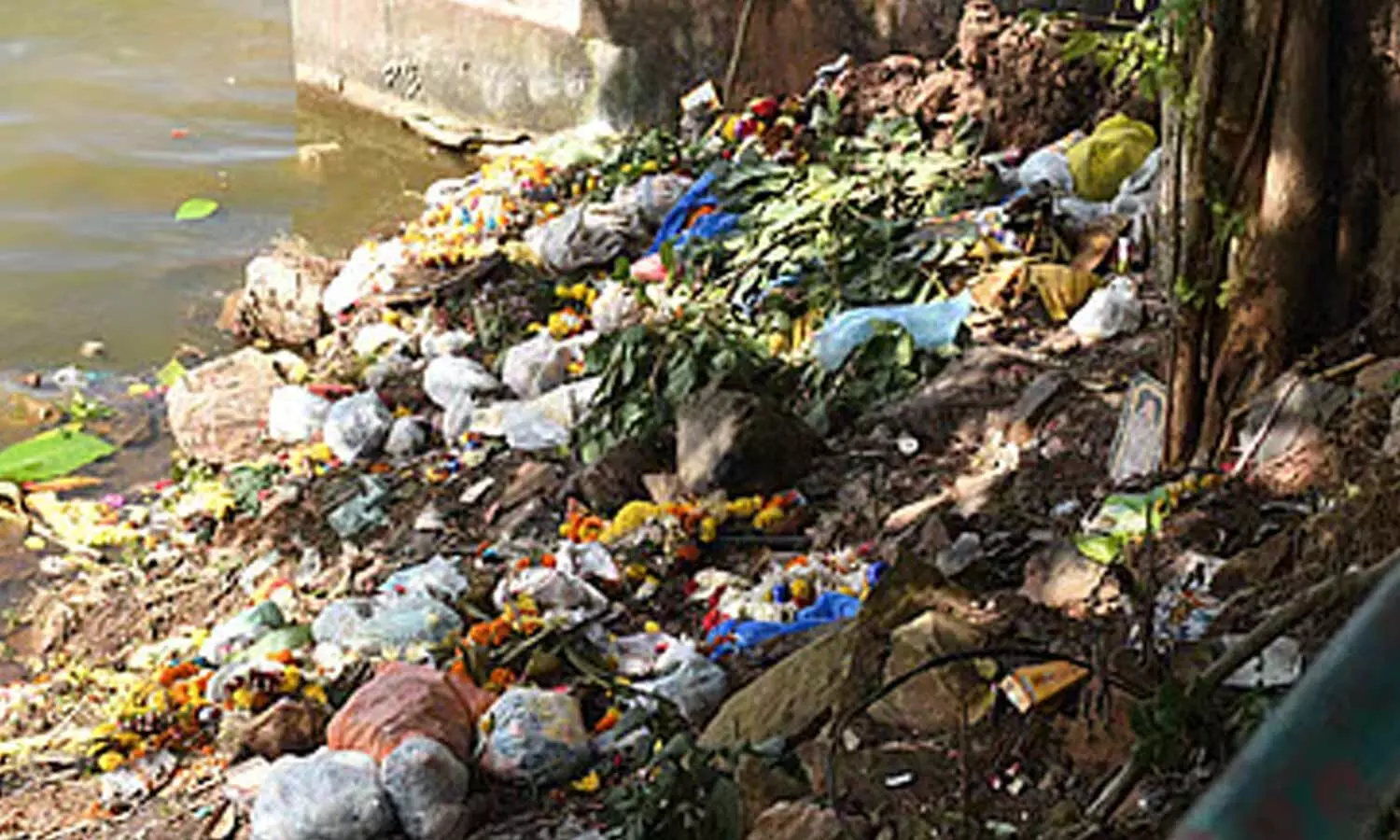
Water crisis, festival waste, and environmental responsibility
Festival celebrations should never become a burden on the environment. Preserving our traditions while protecting nature is the responsibility of the present generation.
Festivals are symbols of our culture, traditions and social unity. They should bring joy, spirituality and a sense of togetherness into our lives. However, destroying nature, placing an additional financial burden on people and polluting the environment in the name of celebrations can never be justified. The joy of festivals should enrich nature, not degrade the environment.
Today, the impact of climate change is being felt severely in people’s lives. Climatic phenomena such as El Nino have contributed to drought conditions, pushing the prices of essential commodities, vegetables, leafy greens, fruits and flowers beyond the reach of ordinary people. Borewells are drying up in many areas, and households are struggling to obtain adequate water. With reduced tap-water supply, thousands of families are forced to depend on private water tankers, often spending a significant portion of their monthly income simply to meet their water needs. In such difficult circumstances, there is an urgent need to use water, electricity and other natural resources more responsibly. Governments, civil society organisations, environmentalists and the media have repeatedly warned about the growing environmental crisis. Yet, the continued disregard for these warnings is deeply concerning.
During festivals, the installation of large idols, the use of environmentally harmful materials such as Plaster of Paris, and the lack of adequate alternative arrangements for immersion create serious problems every year. While respecting people’s faith and beliefs, we must adopt practices that do not harm nature. Eco-friendly idols, artificial immersion ponds and limited use of electricity should be embraced as matters of social responsibility.
Governments, too, must act with greater responsibility. It is inconsistent to advise citizens to conserve water and electricity while simultaneously encouraging the indiscriminate use of resources during festivals. Government support for people’s faith and traditions is important, but such support should never come at the cost of environmental protection.
Another issue that deserves serious reconsideration is the large-scale cutting of green banana trees and other plants for festival decorations. How reasonable is it for people who may never have planted a single tree to cut down healthy plants in the name of celebration? Every green tree is a precious natural resource that provides us with life-sustaining oxygen. Instead of cutting down a tree that has taken years to grow for a single day’s decoration, we should encourage the use of reusable and sustainable decorative materials.
The use of firecrackers has also become a major environmental concern. Spending crores of rupees for a few hours of entertainment while increasing air, water and noise pollution is a practice that deserves serious reflection. The morning after a festival, streets, crossroads and residential neighbourhoods are often littered with the remains of burnt firecrackers, rockets, paper and plastic waste. If the only legacy of a celebration is pollution, garbage and an additional burden of cleaning for society, then it is time to rethink the way we celebrate.
No one is asking for festivals to be stopped. The appeal is simply to celebrate them with greater responsibility and in harmony with nature. Harming the environment in the name of devotion, increasing pollution in the name of enjoyment and wasting natural resources in the name of tradition are injustices to future generations.
Everyone who cuts down a green tree should pause and ask: “What have I given back to nature?” Instead of cutting down a tree for a festival, why not begin a tradition of planting ten saplings? Instead of excessive electricity consumption, why not promote energy-efficient lighting? Instead of polluting firecrackers, why not encourage cultural programmes? Instead of plastic decorations, why not use reusable and environmentally friendly materials?
If we want to secure our future, we must make some difficult but necessary choices. We must conserve water. We must regulate electricity consumption. We must protect trees. We must reduce waste. And we must make our festivals environmentally sustainable.
Only by protecting nature can we ensure that the joy of festivals endures for generations to come. Otherwise, every celebration we hold may leave
behind another wound on the environment. Festivals should spread light among people—not cast darkness upon nature.
CII Summit 2026 Vizag live updates: All set for investments in AP
Bharat Summit set for takeoff in Hyderabad today
Will it be a physical or academic exercise?
Used to arrange chairs for media, says Modi
Special Parliament session to pass women's quota bill planned
PM Modi links farm growth to poverty reduction at Bharat agriculture conference


