




IIT Hyderabad trains MBBS students in AI applications in medicine and drug development
In Short
The training aimed to familiarise medical students with computational methods and machine learning tools, which are not typically a central part of conventional medical education.

Share :
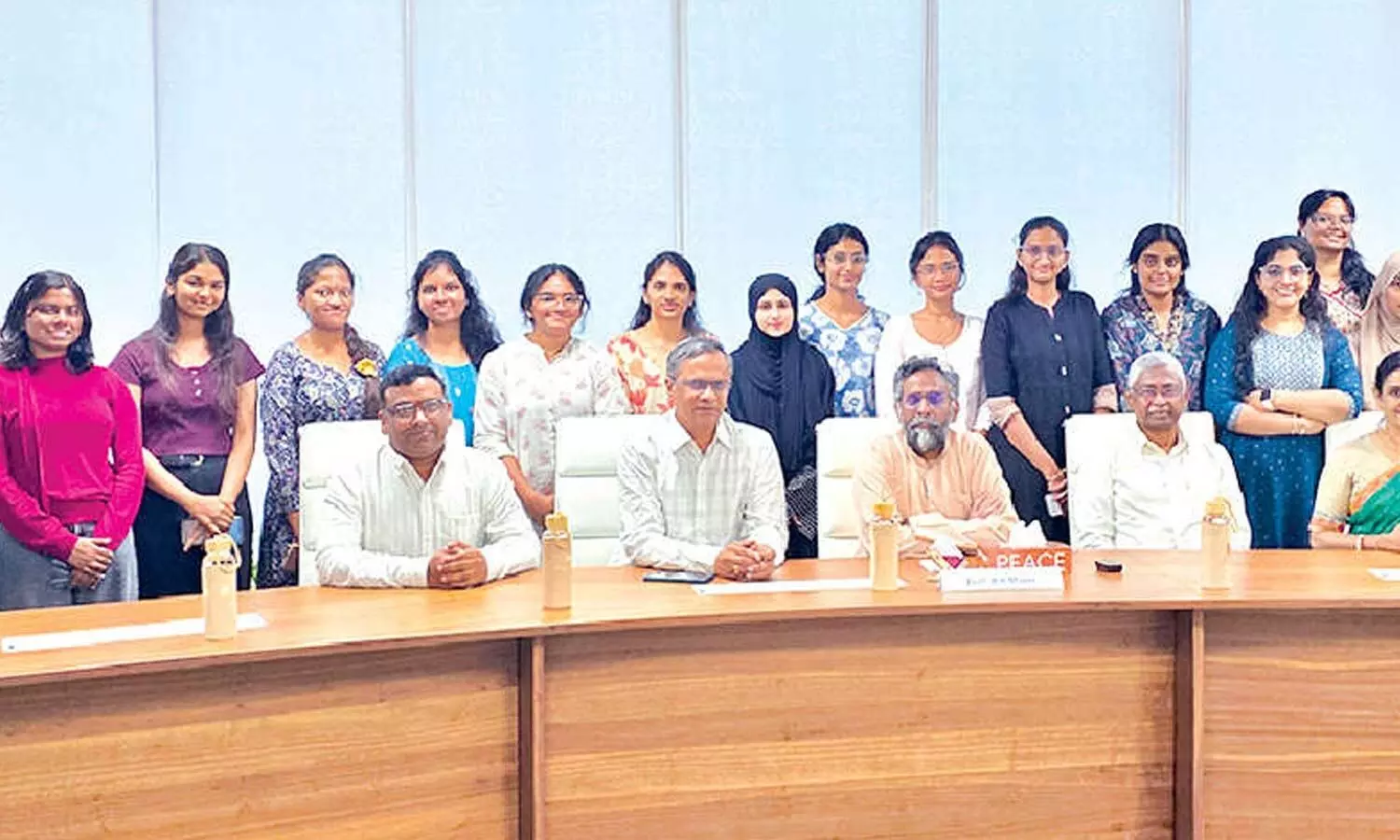
IIT Hyderabad trains MBBS students in AI applications in medicine and drug development
The Indian Institute of Technology Hyderabad (IIT Hyderabad) conducted a 10-day academic training programme on ‘AI in Medicine, Drug Development and Biology’ for 15 final-year MBBS students from Apollo Institute of Medical Sciences and Research (AIMSR), Hyderabad. The programme introduced students to the applications of artificial intelligence (AI) in clinical practice, biomedical research and drug discovery.
Organised by the research group of Prof. G. Narahari Sastry, faculty member in the Department of Biotechnology and Dean (Sponsored Research and Consultancy) at IIT Hyderabad, the programme combined lectures, demonstrations, mentoring sessions and hands-on projects. The AIMSR delegation was led by Dr. K. Manohar, Dean; K. Aparna Reddy, Chief Operating Officer; Dr. Neetha Kundoor, Associate Dean (Academics); and Dr. Patchva Dorababu, Professor of Pharmacology and Research Coordinator.
The training aimed to familiarise medical students with computational methods and machine learning tools, which are not typically a central part of conventional medical education. Participants explored how data-driven approaches could help investigate clinical questions and support biomedical research.
As part of the programme, students worked on exploratory projects using existing open-access datasets. The topics included early cancer identification through long-term blood parameters, antibiotic prescription informed by antimicrobial resistance profiles, disease detection using medical images, and prediction of metabolic disorders based on clinical and demographic factors.
The projects also highlighted the importance of medical expertise in interpreting data, evaluating model predictions and understanding the limitations of AI-based tools. Discussions identified gaps in the availability of open clinical datasets representing the Indian population, alongside potential areas for future research. These included personalised medicine using genomics, early detection of non-communicable diseases, medical image analysis, decision support during critical surgeries, and simulations and virtual reality for surgical training.
IIT Hyderabad Director Prof. B. S. Murty said interdisciplinary training and research involving emerging AI technologies were important for addressing complex challenges.
He encouraged medical students and practitioners to participate in campus training programmes and explore collaborative research opportunities.
Prof. Sastry said the programme included research-oriented projects culminating in presentations and three-minute videos, allowing students to investigate scientific questions, apply analytical thinking and communicate findings.
Dr. Manohar highlighted the potential of technology to complement clinical examinations and strengthen disease diagnosis, including earlier identification of conditions such as diabetes. Dr. Kundoor said exposure to IIT Hyderabad’s research could help students contribute clinical perspectives to projects involving medical devices, clinical models and biochemical pathways.
Both institutions intend to continue their collaboration through foundational AI training and opportunities for joint research in diagnostics, drug development, biology and patient care.


