




- Top court: Enforce seat belt law strictly
- BJP to hold ‘Maha Dharna’ over 22A land issue
- Prof Sujatha takes charge as SU academic audit cell director
- Dhanpal seeks Rs 200 cr for Nizamabad development
- ‘Mandaadi’ clears censor with U/A, set for a grand release
- Monsoon care tips for pretty hands this season
- Saba Pataudi shares rare 1980s family album featuring young Sharmila Tagore & family
- IIT Kharagpur students design and fly aircraft in international competition
Let them navigate: Why teenagers need space to make their own choices
In Short
Teenagers need guidance, but they also need room to make choices, test ideas and learn from small failures

Share :
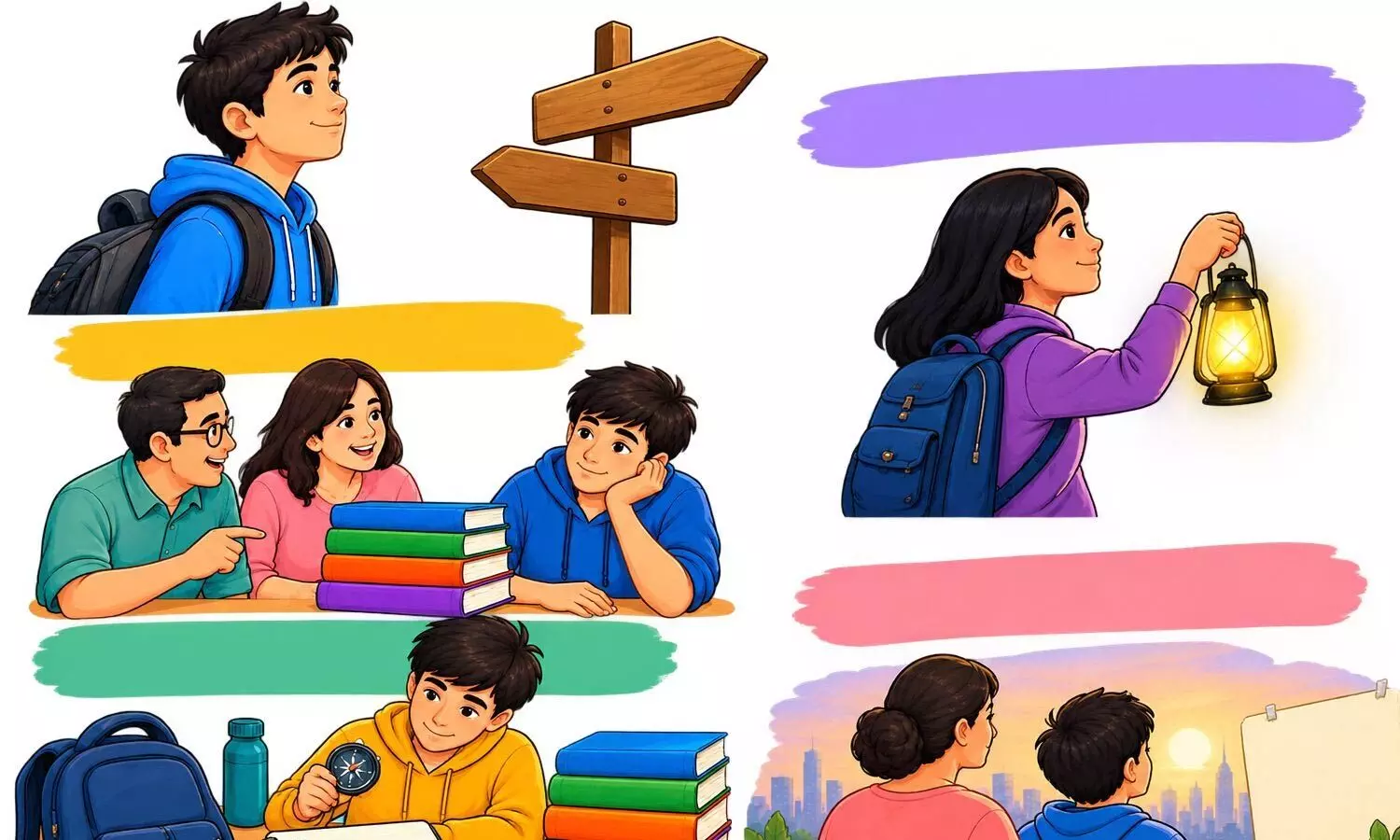
Let them navigate: Why teenagers need space to make their own choices
Every parent has heard it: “I have other commitments.” The commitment might be a group call, a game with friends or simply time spent doing something that adults may not consider particularly important. But these moments matter. They are part of how teenagers build friendships, practise independence and learn to navigate life without someone evaluating every decision.
Parents have always worried about how much freedom to give their children. Yet growing up requires more than academic success. Teenagers also need opportunities to make choices, handle disagreements, manage their time and understand the consequences of their decisions.
The family business of expectations
Between the first school performance and the repeated question, “What do you want to be?”, parents can gradually develop a set of expectations for their children. These expectations often come from love and a desire to see their children secure and successful. Sometimes, however, parents may also project their own experiences or unfinished ambitions onto the next generation. Having hopes for children is natural. The challenge begins when a hope becomes a fixed destination, with little room for a different interest or career path. When every decision is made for them, teenagers may become good at meeting expectations without necessarily learning how to make decisions independently. A student who performs well academically but is afraid to ask questions, explore unfamiliar subjects or make mistakes may be missing an important part of education. Learning is not only about getting the correct answer. It is also about asking questions, testing ideas and understanding why something did not work.
Lanterns, not rockets
A sky lantern does not rise by fighting every movement of the wind. It adjusts to the conditions and continues upwards, sometimes moving sideways before finding its direction.
Teenagers can need something similar: guidance without complete control. When a parent says, “I want you to become a doctor,” the statement may be about more than a particular profession. It may reflect hopes for financial security, stability and respect. Understanding that underlying concern can open a more productive conversation.
A teenager might respond by asking, “I understand that you want me to have a secure future. Can we talk about what that means and explore different ways of getting there?” That shifts the discussion from disagreement to negotiation.
Parents can also begin with curiosity. Asking, “Why do you want to try this?” creates an opportunity to understand a child’s thinking before saying no. Curiosity can help build trust and make difficult conversations less confrontational.
A small toolkit for navigating choices
• Start with a shared goal: “We both want me to do well” can create a better starting point than “You never listen.”
• Suggest a trial: Trying something for a term or a few months can be less intimidating than making a permanent decision.
• Bring a plan: Interest becomes more convincing when accompanied by a practical plan for managing time, studies and responsibilities.
• Allow small failures: A manageable mistake during the teenage years can become an opportunity to develop resilience, reflect and try again.
Let the lantern wobble. A change in direction does not necessarily mean that a teenager is losing their way. Sometimes, it is part of learning how to navigate.
For parents, in the margins
A parent’s “just a suggestion” can sometimes sound much stronger to a teenager than intended. The way advice is delivered matters.
If a child’s ambition sounds smaller than a parent’s expectations, it is worth asking whether it is genuinely less ambitious or simply unfamiliar. Different interests do not automatically mean lower aspirations.
Parents can provide boundaries while still allowing teenagers to participate in decisions that affect their education and future. The objective is not to remove every obstacle or prevent every mistake. It is to help young people develop the judgement and confidence to handle challenges when parents are no longer there to make every decision for them. Education, after all, is not only preparation for examinations or careers. It is also preparation for making choices, responding to setbacks and finding a direction of one’s own.
(The author is a Talent Strategy leader at KniTT, and Co-Founder of edutech startup)
Delhi on high alert
Govt-staff JAC talks fructify; stir move dropped
Ghatkesar-Kazipet multitracking project gets Centre's nod
Will safeguard people's land rights, asserts CM Chandrababu Naidu
Boost To AP: Renigunta, Arakkonam rail expansion gets approval
Union Cabinet okays Rs 20,804-crore railway projects across 9 states


