




- Identity, Traumatic Memory, and the Naming of Kodagu University
- Vice-President Radhakrishnan to visit Mumbai, Pune tomorrow
- You Should Fear AI, Warns OpenAI CEO Sam Altman
- 'Grew up and played together': PM Modi's childhood friend recalls memories on his birthday
- Stop theatrics, focus on governance: Palaniswami to Vijay
- BRS activists torn down banners of Malla Reddy 's daughter-in-law Preethi Reddy in Medchal
- Centre to host 2-day state finance ministers' meet to discuss policy priorities
- Nitin Nabin arrives in Indore on first MP visit as BJP chief, will launch welfare outreach campaign
Identity, Traumatic Memory, and the Naming of Kodagu University
In Short
As state governments across India leverage higher education infrastructure to project subregional identity, naming public universities has evolved from routine administrative policy into a high-stakes arena for identity politics.

Share :
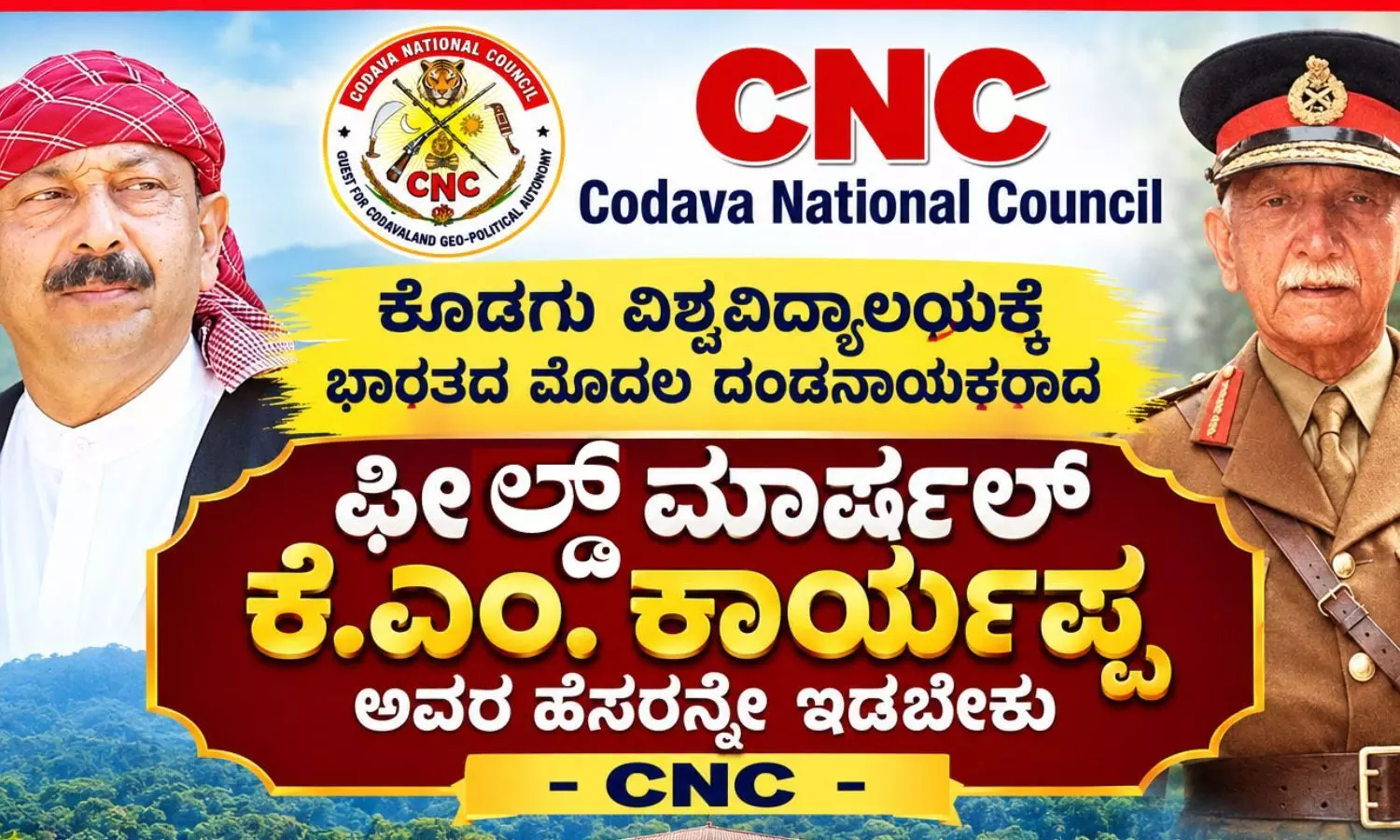
Codava National Council (CNC), whose convenor, N. U. Nachappa
Madikeri: As state governments across India leverage higher education infrastructure to project subregional identity, naming public universities has evolved from routine administrative policy into a high-stakes arena for identity politics. The ongoing debate over naming Kodagu University in Karnataka highlights how historical narratives continue to shape modern community assertions, particularly when regional heritage collides with indigenous memory.
Central to this opposition is the Codava National Council (CNC), whose convenor, N. U. Nachappa, has strongly condemned proposals prioritising Haleri ruler Doddaveeraraja for the institution's name. Nachappa argues that honoring the 18th-century king ignores deep-seated historical trauma, pointing to documented massacres and the systemic persecution of native Codava populations during turbulent geopolitical conflicts involving Tipu Sultan and the British. From the perspective of the CNC, elevating a monarch associated with historical betrayal and internal conflict inflicts a direct insult on the region's indigenous identity.
Instead, Nachappa and the CNC advocate for honouring modern national icons who reflect the district’s celebrated military legacy—specifically India’s first Commander-in-Chief, Field Marshal K.M. Cariappa, followed by General K.S. Thimayya, or historical native leaders like Ajjikuttira Achunayaka. This demand reflects a broader tension in regional governance: the friction between feudal dynastic legacies favored by administrative historians and the lived, inherited memories of indigenous communities.
The debate underscores a delicate dilemma for policy-makers. While state authorities often view pre-modern rulers as neutral regional figures, local groups evaluate them through the lens of community rights and historical justice. Selecting a university's namesake requires more than bureaucratic consensus; it demands an understanding of public memory. As the Karnataka government weighs its options, the decision will signal whether civic institutions choose to perpetuate contentious feudal divisions or embrace unifying symbols of modern national service. (eom)
‘Hanuman Ansh’ hits Rs 300 crore mark at worldwide box office
HBD PM Modi: Chiranjeevi, Nagarjuna And Pawan Kalyan Drop Heartfelt Birthday Wishes For PM Modi
78 years on, September 17 still a political battleground
KTR challenges CM Revanth Reddy for probe on KCR and CM's assets
AP CM Chandrababu Naidu Visits Varanasi, offers prayers at Kashi
Mukesh Ambani’s Jio Rs 399 Recharge Offers Benefits Worth Rs 4,000


