






Frankly Wearing Scales Up and Articore Builds an India Capability Centre
In Short
Frankly Wearing scales up its operations while Articore establishes an India Capability Centre, highlighting business expansion, strategic growth, and increasing investment in India's business and technology ecosystem.
Share :
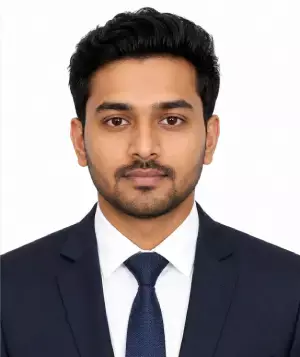
Months after selling their bootstrapped creator-merchandise platform to ASX-listed Articore Group, Angad Singh Puri and Naman Wadhwa are building out a full-stack Global Capability Centre in India for the Group.
New Delhi: Most founders who sell a company spend the following year quietly looking for the exit. Angad Singh Puri and Naman Wadhwa have spent theirs writing job descriptions.
The two founders built Frankly Wearing into one of India’s largest creator-merchandise platforms without institutional capital. The business was profitable from inception, bootstrapped for years, and run on a model that never required them to buy a single unit of inventory. In March 2026, ASX-listed Articore Group (ASX: ATG), the global print-on-demand operator behind Redbubble, TeePublic and Dashery, agreed to acquire it. The transaction completed at the end of May.
Growth has always been in the cards. India's largest creators were brought on board, as were its first Global Capability Centre in India, as part of the rationale for Articore's acquisition. The centre will not be just an engineering and product centre, but a complete engineering, product, design, marketing, creator operations and customer support centre for the Group worldwide and not for the Indian business alone.
Puri said that they were not selling and moving out. It came with more work, not less, which is why it was a good deal for us to do because we're creating something that is a much bigger project than we sold.
A business without a safety net.
The initial concept was not a glamorous one and, in retrospect, opportune. Independent Indian creators, whether illustrators, writers, photographers, community pages or non-profits, had audiences, but they didn't have a practical means to bring them to fruition. The old way involved minimum order quantities, cash payment and an unsold box in the garage and the hassle of packing boxes.
Frankly Wearing took all of it off. Creators upload a design, the platform prints and takes care of shipping, payments– no actual product exists until someone actually purchases it. No stock, no minimum, no down payment.
The model was also, inconspicuously, a financial discipline. There was no funding from outside the business and so the business had to make a profit each month.
“Growth was never an option for us. It is a difficult, yet necessary, way to create a business in the early days and is the only reason we survive to this day.”
Staggeringly, by the end of 2025, over 25,000 creators and organisations had registered on the platform including Humans of Cinema, The Alipore Post and the Internet Freedom Foundation. The catalogue had swelled to 500,000 designs, from regional-language jokes to feminist slogans, queer pride to fan art and cause-led merchandise. In November 2025, the company raised Rs 10 crore in its first-ever outside funding from investors in the city of Delhi.
Going after the top of the creator market
Frankly Wearing's success so far was built on the long tail – thousands of independent artists & small communities. The next phase is intentionally distinct, with less creators, much more bigger audiences, and help from each audience.
Puri said that the long tail was validation that the model works. “Now we want the top of the market. A creator with millions of followers has very specific needs. They want speed, they want high quality they are willing to put their name on, and they don't want to think about operations, and with a scale like Articore, we can solve them, properly.”
The larger option: a full-fledged capability centre
The more impactful one might be the one not related to t-shirts.
It's India today where Global Capability Centres, the in-house centres where Multinational Companies develop engineering, products, designs and manage operations, instead of outsourcing, have become the de facto location. The same is true of Articore, except that it is being built by start-up builders operating in the business here, not by an offshore transition team.
“It's not a support desk in a different time zone we are constructing,” said Puri. This is a “full stack centre”, seconded by the engineers, product, design, marketing, creator operations and the support people here will be responsible for outcomes of the Group, not just India.”
The founders consider their own history a strength. They claim that a team that has created a profitable platform without any outside funding will have a cost sense that is hard to obtain in a centre established from the outside.
“This is a business where every rupee has mattered, said Wadhwa.” “Thanks to Articore's support, we'll be able to maintain that discipline and go at a much larger scale from here.
What comes next
The top priorities for the next year are clearly outlined – to attract big creators to the platform, expand the product offering beyond clothing, develop the technology connecting a creator's audience with a completed offering and recruit to the Global Capability Centre.
India has so much creative talent and not enough of means to monetize that. Scaling is the entire job, and this is a big toolkit that we've been given.
About Frankly Wearing
Frankly Wearing is a creator-merchandise platform where creators, artists, communities and non-profits can create, launch and sell merchandise without any inventory or investment. The platform operates on a print on demand basis, taking care of printing, logistics and payment, and has more than 500,000 designs by over 45,000 creators and organisations. In 2026, Frankly Wearing was acquired by ASX-listed Articore Group (ASX: ATG) and remains headquartered in New Delhi and continues to be run by its founders, Naman Wadhwa and Angad Singh Puri.
By using web payday loan lenders, you can increase your chances of getting approved.Web payday loan lenders have the ability to raise your odds of being accepted.


